Pneumatic Chain Hoists


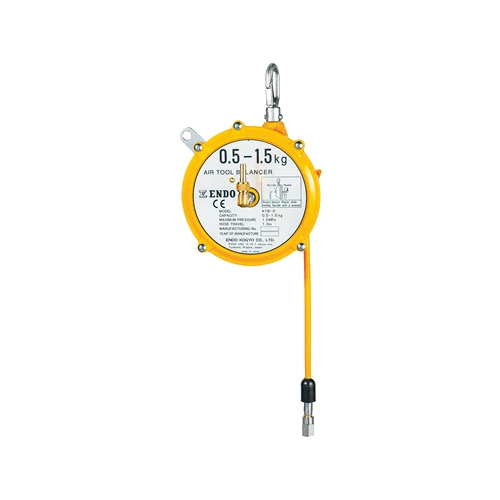
ENDO ATEX Pneumatic Chain Hoist (ATC Series) 60/125 kg

ENDO ATEX Pneumatic Chain Hoist (EHV Series) 250-1000 kg

ENDO ATEX Pneumatic Chain Hoist (EHL-TS Series) 250-3000 kg

ENDO ATEX Pneumatic Chain Hoist (EHL-TW Series) 1000-6000 kg
How to choose
What it is for
- Air-powered hoist for explosive (ATEX), wet or dusty areas where electricity is unwanted.
- Chemical, paint, offshore, food washdown zones.
- Very high duty cycles (air motors do not overheat).
Check before you choose
- Air supply pressure and flow available
- ATEX zone/category required
- WLL and lift height
- Control: pendant, rope, remote
Not suitable for
- Places without compressed air
- General use where an electric hoist is cheaper to run
What we will ask you before recommending a model
Pneumatic chain hoist Technical check — we confirm a few parameters and compatibility with you before the order.
- Air pressure AT THE HOIST and required flow; supply line diameter and length; other consumers on the network? The compressor must deliver pressure and flow at the hoist after losses; '6 bar' alone is not enough.
- Heaviest load and how often per hour / per day? Duty class (FEM/ISO) must match the cycle rate or the hoist overheats and wears fast. WLL alone never decides the model.
- Lift height (hook path) and headroom available between beam/hook and the load? Chain length must cover the hook path; hoist + trolley + hook height must fit the headroom, measured on the whole assembly.
- Is there a certified suspension point: beam, jib crane, gantry, runway? Beam profile (IPE/HEA/HEB) and flange width/thickness? Without a suspension point the hoist cannot be used; the trolley must fit the flange and the beam must carry the load.
Typical mistakes to avoid
- Pressure alone does not confirm performance — pressure at the hoist, flow and line size are required.
Helpful to have ready: Pressure/flow · Piping · Mass/hook path/duty · Zone · Beam profile
Pneumatic chain hoists
Air-powered hoists earn their place where electric hoists struggle: they are inherently suited to explosion-risk zones, tolerate dust, humidity and heat, control the load with air-valve sensitivity and run 100 % duty cycles without overheating. The ENDO ATEX programme covers the compact AT and ATC series (60/125 kg), the EHV series (250–1000 kg) and the EHL-TS / EHL-TW series up to 6000 kg.
Where the site standard is electric, electric chain hoists (including ATEX versions) cover 100–6300 kg; for weightless positioning of workpieces rather than plain lifting, see pneumatic balancers. Contact us with the load, duty cycle and zone classification and we will recommend the hoist.
Frequently asked questions
When does a pneumatic hoist beat an electric one?
In explosion-risk zones (air drive has no electrical ignition source), in continuous duty (100 % duty cycle without overheating), and where dust, humidity or heat would punish an electric motor. It also gives very sensitive load control via the air valve.
What capacities do pneumatic chain hoists cover?
The ENDO ATEX programme runs from 60 kg (AT/ATC) through the EHV mid-range up to 6000 kg (EHL-TW). All series carry ATEX certification — state your zone classification and we will confirm the configuration.
What air supply is required?
A standard industrial compressed-air network with dry, filtered air; the operating pressure and consumption per model are stated in its documentation and depend on load and duty.
How quickly can a pneumatic hoist be delivered?
Request a quote on the product page with capacity, lift height and zone classification and we will confirm the current lead time and delivery cost for your location.