















Back to catalog
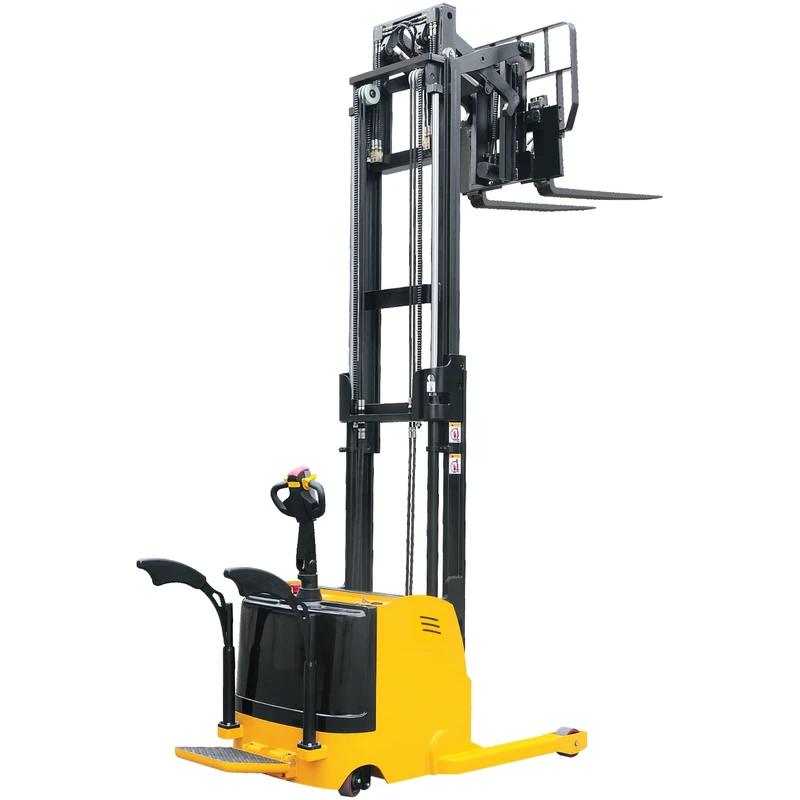
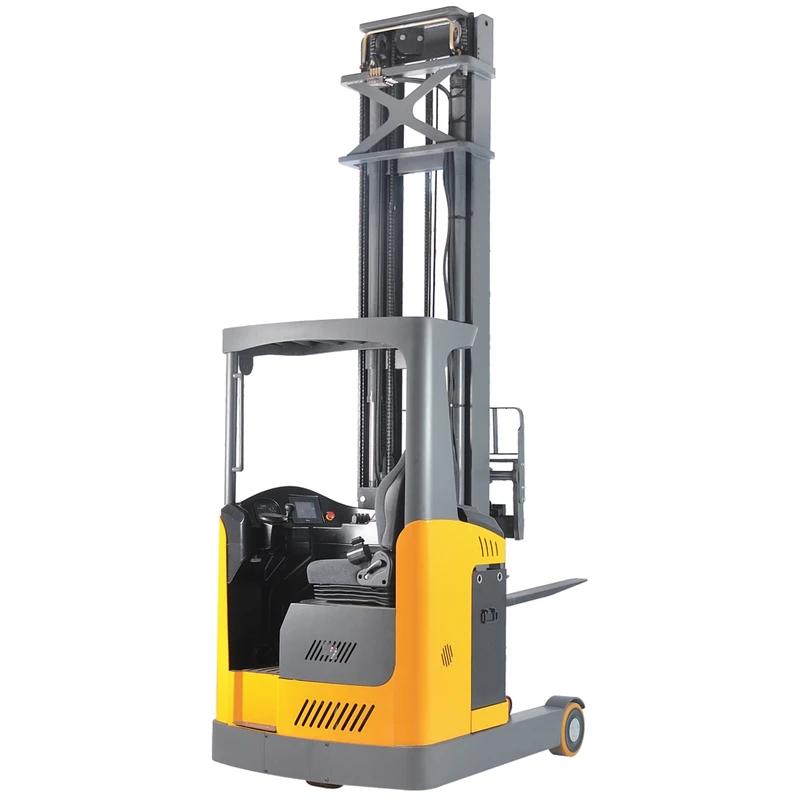
Counterbalanced Reach Truck (CQD25-D) 2500 kg 3000-12500 mm
Price
On request
Direct factory order
— 16–20 weeks · 40% deposit
Direct factory order
Produced to order at the manufacturer’s plant and shipped directly — the factory discount is already included in the price shown.
- Production & delivery: 16–20 weeks
- Deposit at order: 40%
- Balance: 60% before dispatch or collection
Factory-order prices are outside the automatic volume and bundle discount programme. Because production and sea freight are scheduled months ahead, we reserve the right to adjust the balance in the event of significant exchange-rate or container-freight cost changes before dispatch — we will always contact you first. B2B sales only.
Direct factory order (made to order)
Shipping quoted post-order
Shipping estimate
This product
—
Weight
—
Packaging
—
Your cart
—
Select your delivery country for an instant freight estimate.
Categories:
Reach Trucks
Need a tailored offer?
Send us your requirements through the quote form — this product will be prefilled and you can add more items in one request.
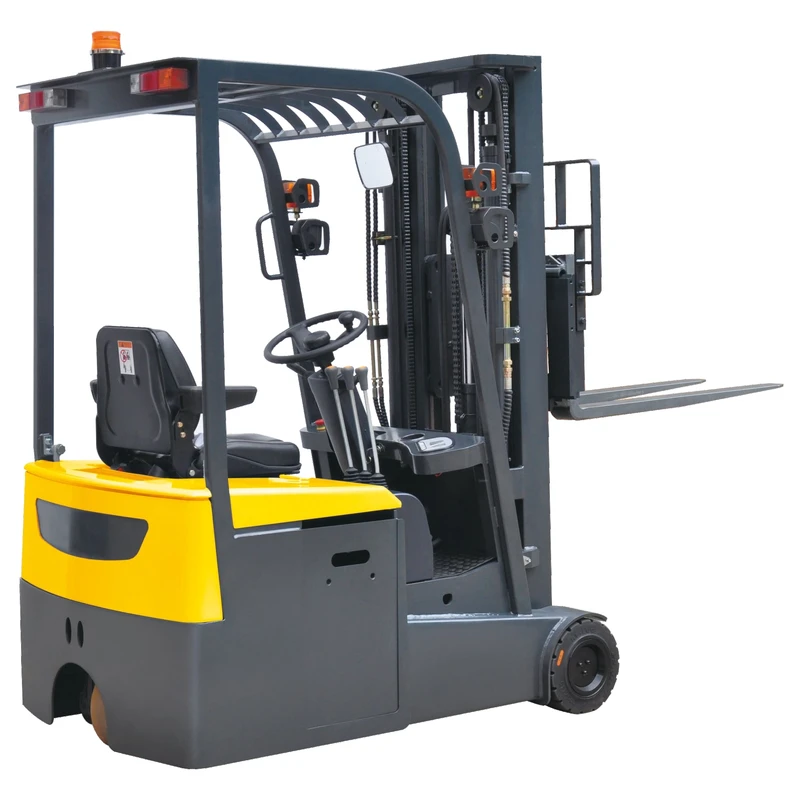
Where ordinary reach trucks give up - eleven, twelve metres of rack - this machine still puts a tonne away. The counterbalanced chassis carries 2500 kg up to six metres and 1100 kg at the full 12 m mast, and the cab electronics are a class above anything else in this category.
Seeing and placing at 12 metres
- Stainless fork camera (IP69, 10G shock rating) shows the pallet pockets on the cab display
- Height positioning by absolute wire encoder, with fixed-height and fixed-floor operation as options
- Offset mast design and wide-view roof guard keep the sight lines open
- ASC active stabilisation locks the service brake while the mast reaches, so the truck cannot creep
Driving
- AC drive, 10.5/11 km/h with four speed programmes and turning speed automatically matched to tyre angle
- Electric power steering with 180/360-degree switchable steering mode
- One-key start with password login; ELOBAU finger-tip controls on a padded armrest
Batteries and service
- Lead-acid packs from 700 to 930 Ah, lithium option; the battery rolls out sideways together with the mast for service
- One-piece opening cover exposes controller, pump and drive in one step
Price and delivery
Price on request. This truck is built to order in our supplier's factory, with a typical lead time of 16 to 20 weeks from order confirmation. Contact us for the current quotation, the dimension drawing and the full data sheet for the configuration you need.
What it is for
- Stacking to great heights (7–13 m) in narrow aisles — high-bay warehouses.
- Very-narrow-aisle (VNA) trucks for maximum storage density; multi-directional for long goods.
This model
Counterbalanced (no straddle legs): closed-bottom pallets, side-loading of vehicles, longer chassis. Reach truck: high-bay racking; check residual capacity at top level and aisle width. Capacity options: 2500 kg.
Check before you choose
- Lift height and residual capacity at top level
- Aisle width (reach vs. VNA guidance)
- Floor flatness class
- Operator position: seated, stand-on, man-up
- Battery capacity for shifts
Not suitable for
- Outdoor or rough floors
- Occasional low-height stacking (over-specified)
Before you order Project product — the final configuration is confirmed by our technical team before the order.
To confirm the right configuration we will ask you:
- Heaviest load including pallet, packaging and any attachment? Rule of thumb: use at most 80 % of rated capacity for safety and service life.
- Dimensions (L×W×H) of the largest and of the heaviest load? Is the centre of gravity known and centred? The load centre moves away from the mast as the load gets longer; real capacity falls with load-centre distance and lift height (capacity diagram). Tall loads raise the COG.
- Is the load always on a EUR pallet (open bottom)? Or CHEP / closed-bottom / plastic pallets, boxes, or goods placed directly on the forks? Dimensions of the pallet underside? Forks with support legs underneath need an open-bottom pallet. Goods without a pallet load the forks at points and bend them. Pallet compatibility matters more than capacity.
- How high must the load be lifted — top rack beam, vehicle bed, machine table? How many rack levels? Capacity at maximum height is much lower than nominal (residual capacity). Customers know 'the rack', not millimetres — ask them to measure the top beam.
- Lowest passage in the working area (doors, beams, pipes, mezzanine, container, lift)? Ceiling height where stacking happens? Lowered mast height must pass every obstacle; extended mast must fit under ceiling, lighting and sprinklers.
- Aisle width between racks and the narrowest passage / door? Every truck has a stacking-aisle width (Ast). Compare with Ast, not with the truck width.
- Floor flatness class (DIN 15185 / EN 15620), rack quality and depth? At 8–13 m a few mm of unevenness becomes a large sway at the fork tips; capacity at the top can be far below nominal.
- Are there gradients (ramps, slopes) in the working area? How steep (%) and how long (m)? Pedestrian and stand-on trucks are designed for level floors; motor, brakes and drive-wheel traction are sized for occasional short ramps. On a long or steep slope they overheat, lose traction or cannot hold the load.
- How long must the truck run continuously, how many hours per day and shifts? Pallets per hour, distance per trip? Battery capacity and truck class follow from this. Most buyers under-specify on price and end up with a truck that stops mid-shift.
Typical mistakes to avoid
- At great heights capacity may be far below nominal; floor flatness and rack quality become critical.
Helpful to have ready: Rack drawing · Pallet · Mass/COG · Top beam height · Aisle (Ast) · Floor · Shifts
Attributes
| Load capacity | 2500 kg (to 6 m), 1100 kg (at 12 m) |
|---|---|
| Lift height | 3000-12500 mm (15 masts) |
| Operator type | Seated |
| Service weight | 5830 kg |
| Turning radius | 1850 mm class |
| Travel speed | 10.5/11 km/h laden/unladen |
| Fork dimensions | 45/125/1070 mm |
| Reach distance (l4) | 600 mm |
| Battery | 700-930 Ah lead-acid, Li-ion option |
| Steering | EPS, 180/360 degree modes |
Related products


Seated Counterbalanced Reach Truck (REV15SJ) 1500 kg 3000-6200 mm
On request
Simple product
Request a quote
Counterbalanced Reach Truck (CQD25-D) 2500 kg 3000-12500 mm
On request