













Forklifts
Choose a category to explore


How to choose
What it is for
- Everything that moves or lifts pallets from the floor: from hand pallet trucks to reach trucks and forklifts.
- Choose by lift height, weight, distance and shifts.
Check before you choose
- Weight, lift height, pallet type, aisle width, floor, shifts, battery
Not suitable for
- Suspended lifting
What we will ask you before recommending a model
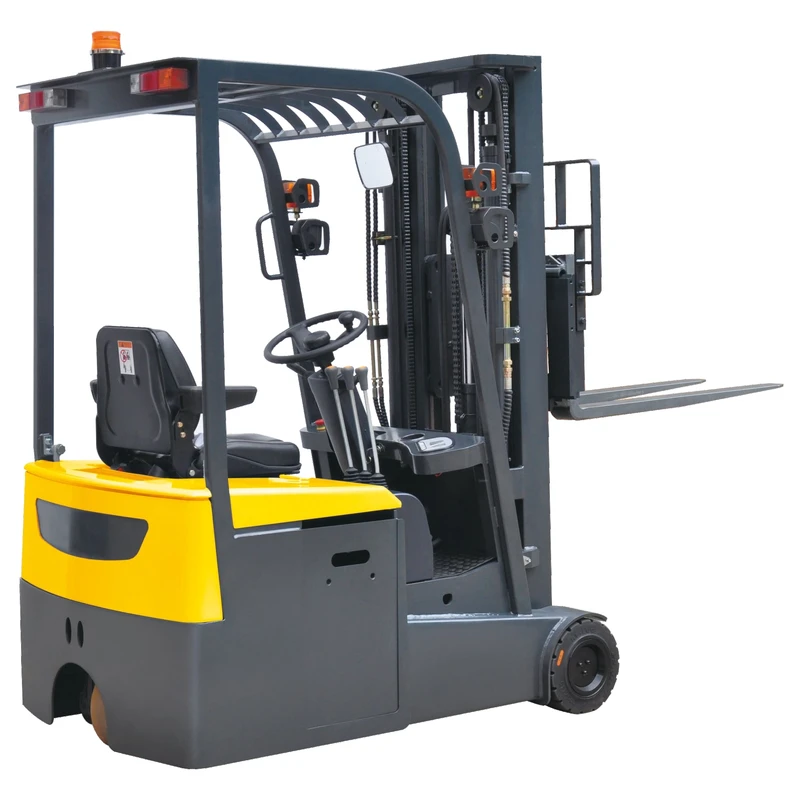
Electric counterbalance forklift Technical check — we confirm a few parameters and compatibility with you before the order.
- Heaviest load including pallet, packaging and any attachment? Rule of thumb: use at most 80 % of rated capacity for safety and service life.
- Dimensions (L×W×H) of the largest and of the heaviest load? Is the centre of gravity known and centred? The load centre moves away from the mast as the load gets longer; real capacity falls with load-centre distance and lift height (capacity diagram). Tall loads raise the COG.
- How high must the load be lifted — top rack beam, vehicle bed, machine table? How many rack levels? Capacity at maximum height is much lower than nominal (residual capacity). Customers know 'the rack', not millimetres — ask them to measure the top beam.
- Lowest passage in the working area (doors, beams, pipes, mezzanine, container, lift)? Ceiling height where stacking happens? Lowered mast height must pass every obstacle; extended mast must fit under ceiling, lighting and sprinklers.
- Aisle width between racks and the narrowest passage / door? Every truck has a stacking-aisle width (Ast). Compare with Ast, not with the truck width.
- Indoor, outdoor or both; floor surface; gradients? Tyre type and drive follow; the counterbalance forklift is the only truck type designed for gradients > 5 % over > 20 m.
- 3-wheel or 4-wheel: tight manoeuvring or stability with heavy loads/outdoor?
- How long must the truck run continuously, how many hours per day and shifts? Pallets per hour, distance per trip? Battery capacity and truck class follow from this. Most buyers under-specify on price and end up with a truck that stops mid-shift.
- Attachments (side shift, fork positioner, clamp, rotator)? Every attachment changes mass, COG and residual capacity.
Typical mistakes to avoid
- Each attachment changes mass, COG and residual capacity — confirm the combination truck + attachment + height.
Helpful to have ready: Load/COG · Pallet · Max height · Plan · Doors · Floor/gradient · Shifts · Desired attachment
Forklifts and warehouse trucks
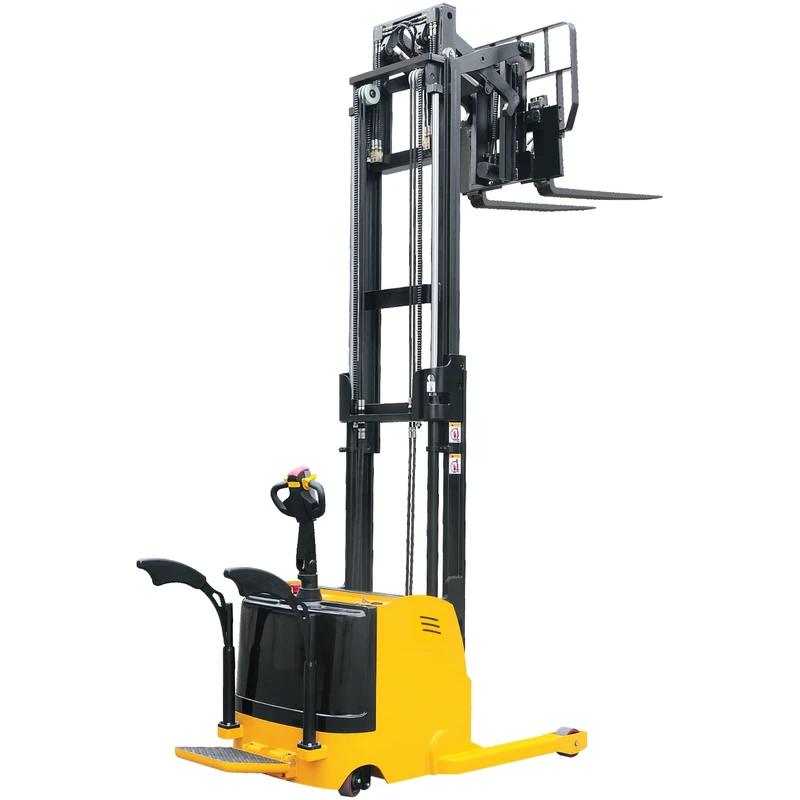
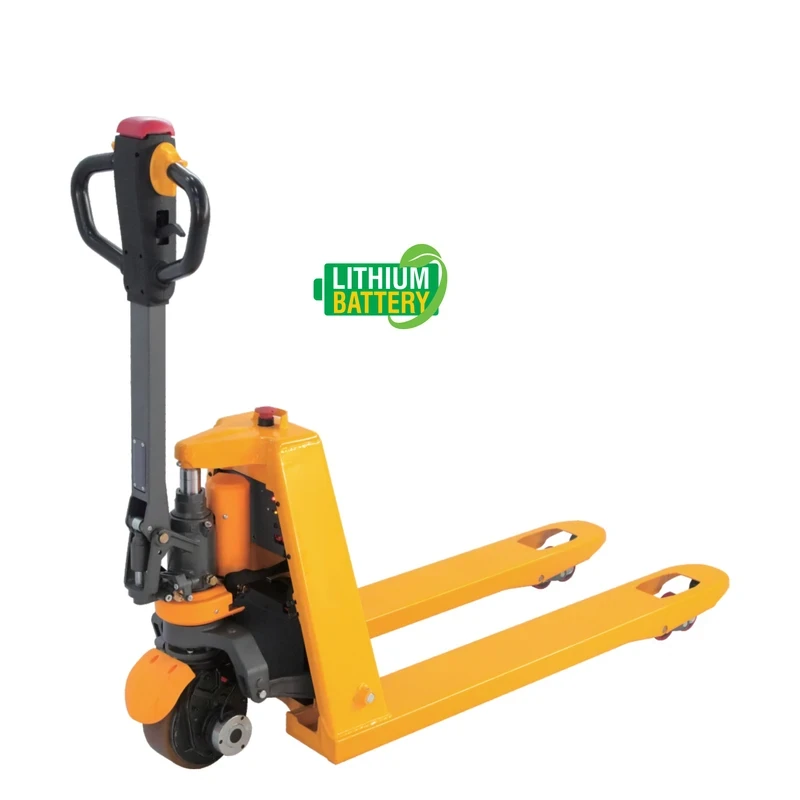
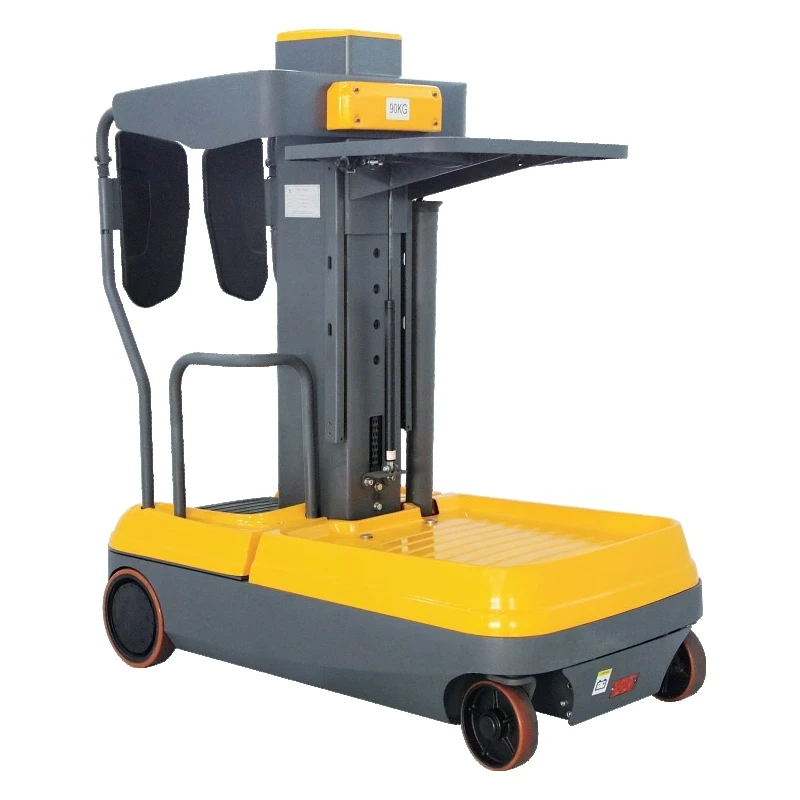
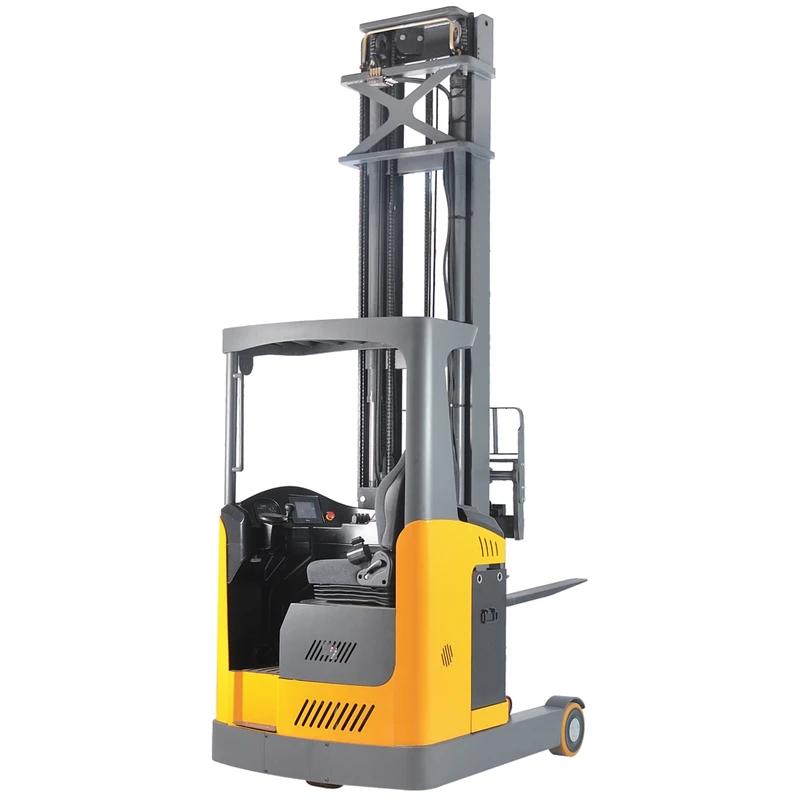
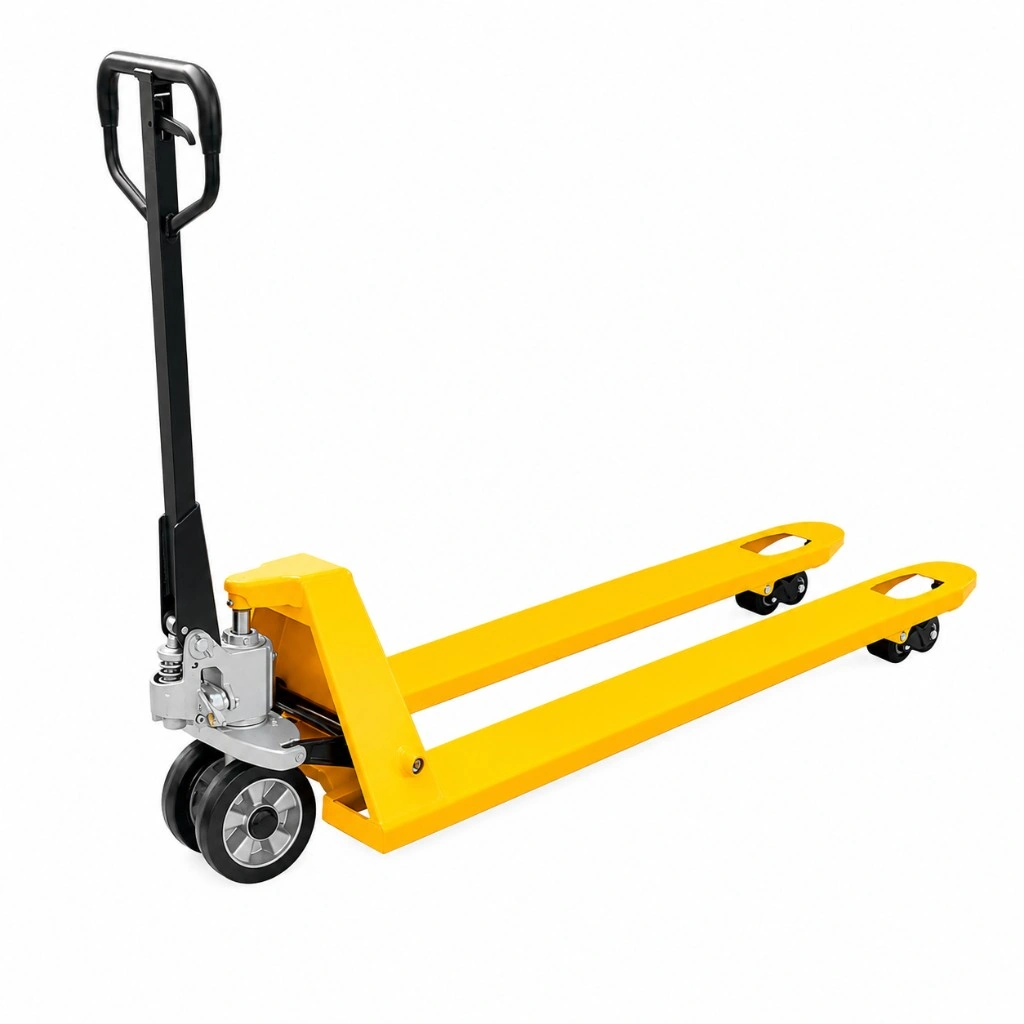
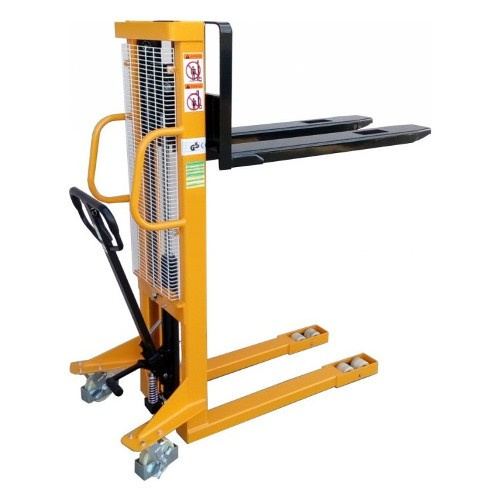
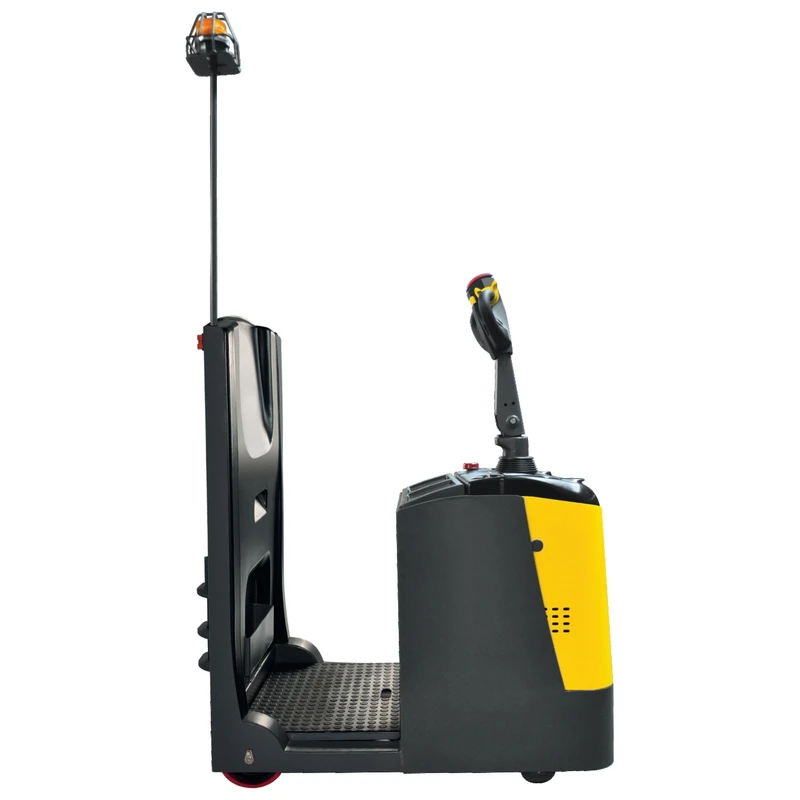
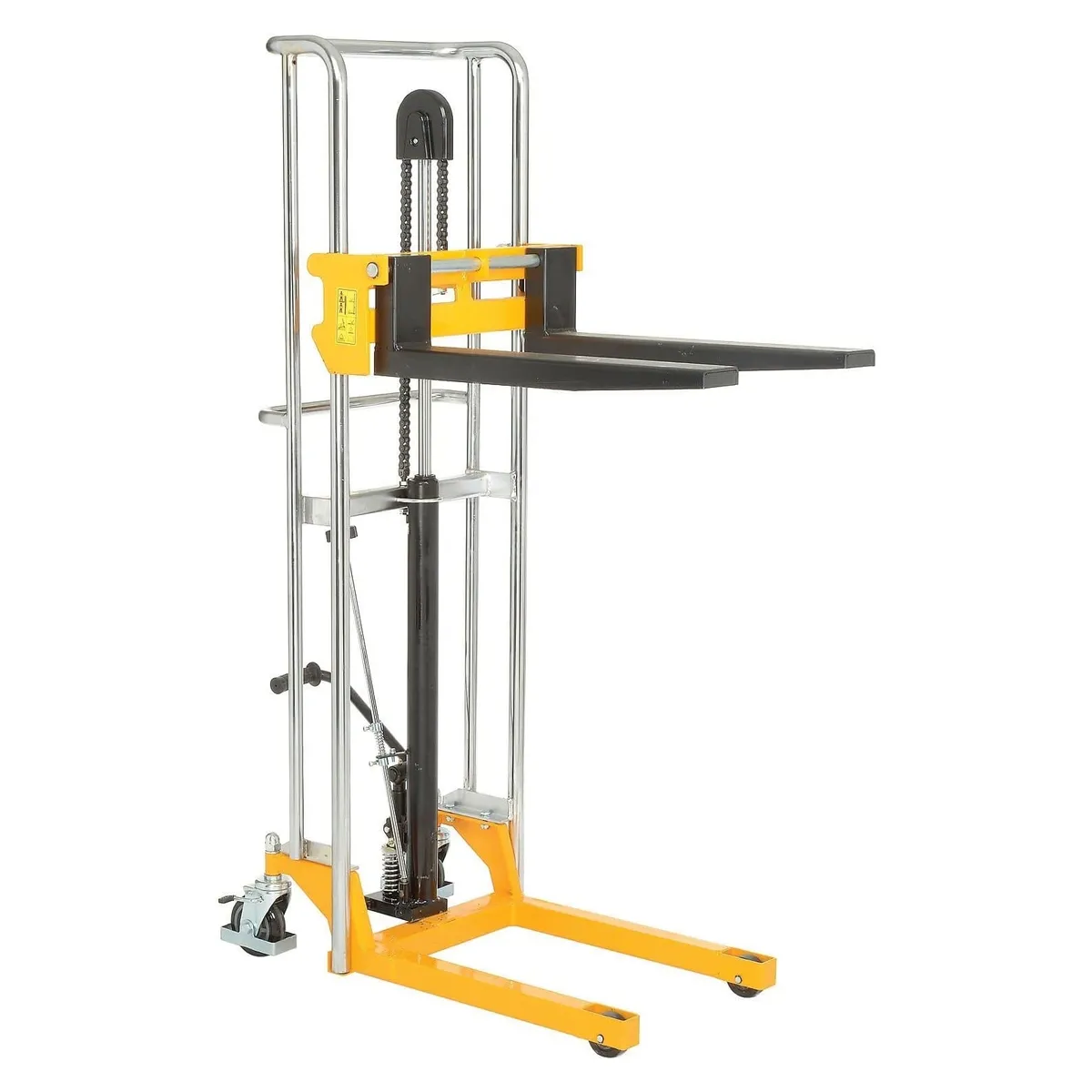
This is the widest family in the catalogue — everything that moves a pallet, from the hand truck to the very-narrow-aisle machine. Horizontal transport is covered by hand pallet trucks, electric pallet trucks and tow tractors that pull whole trains. Stacking runs from manual and delivery stackers through the electric stacker families up to electric forklifts. High racking belongs to reach trucks (to 13 m), and piece-picking to order pickers.
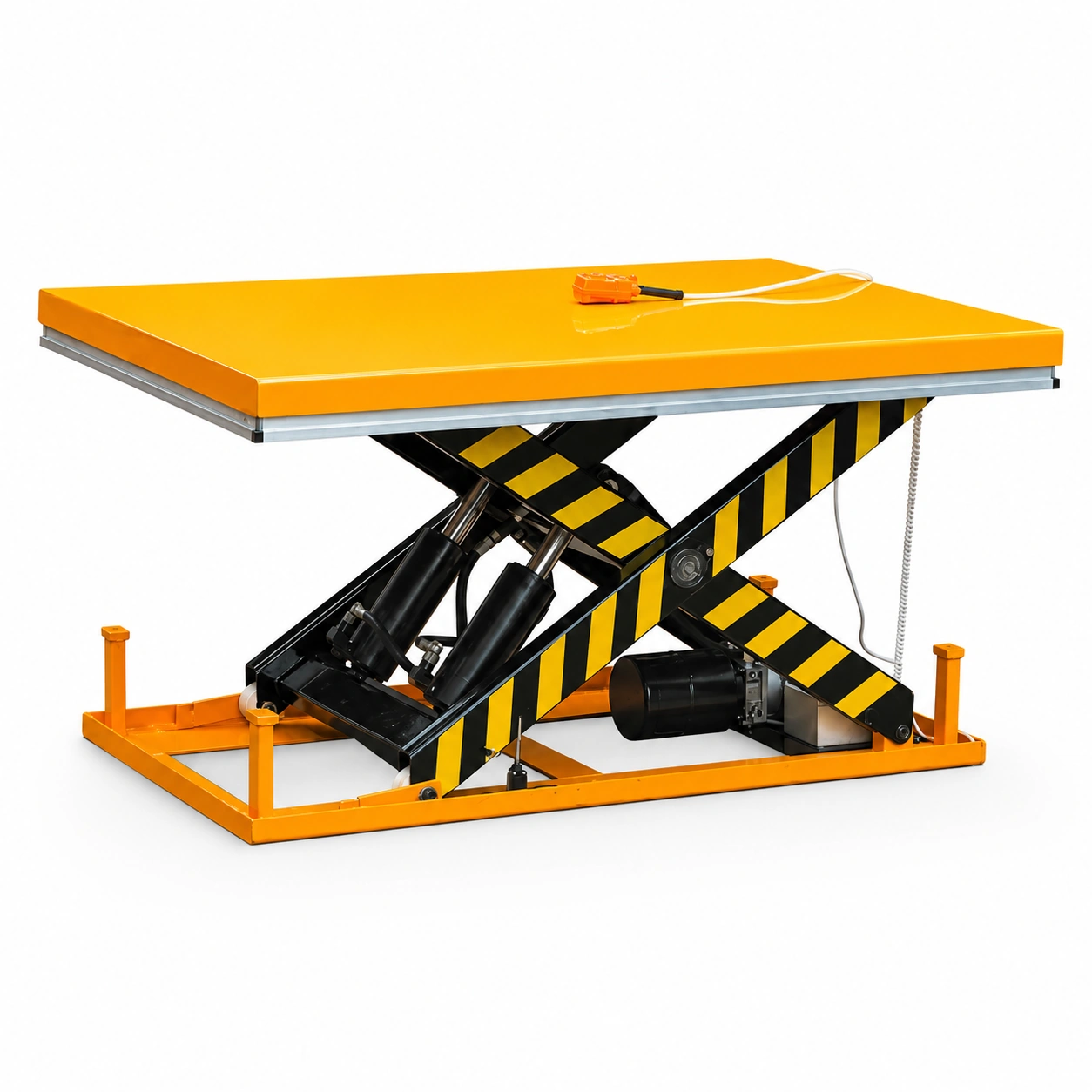
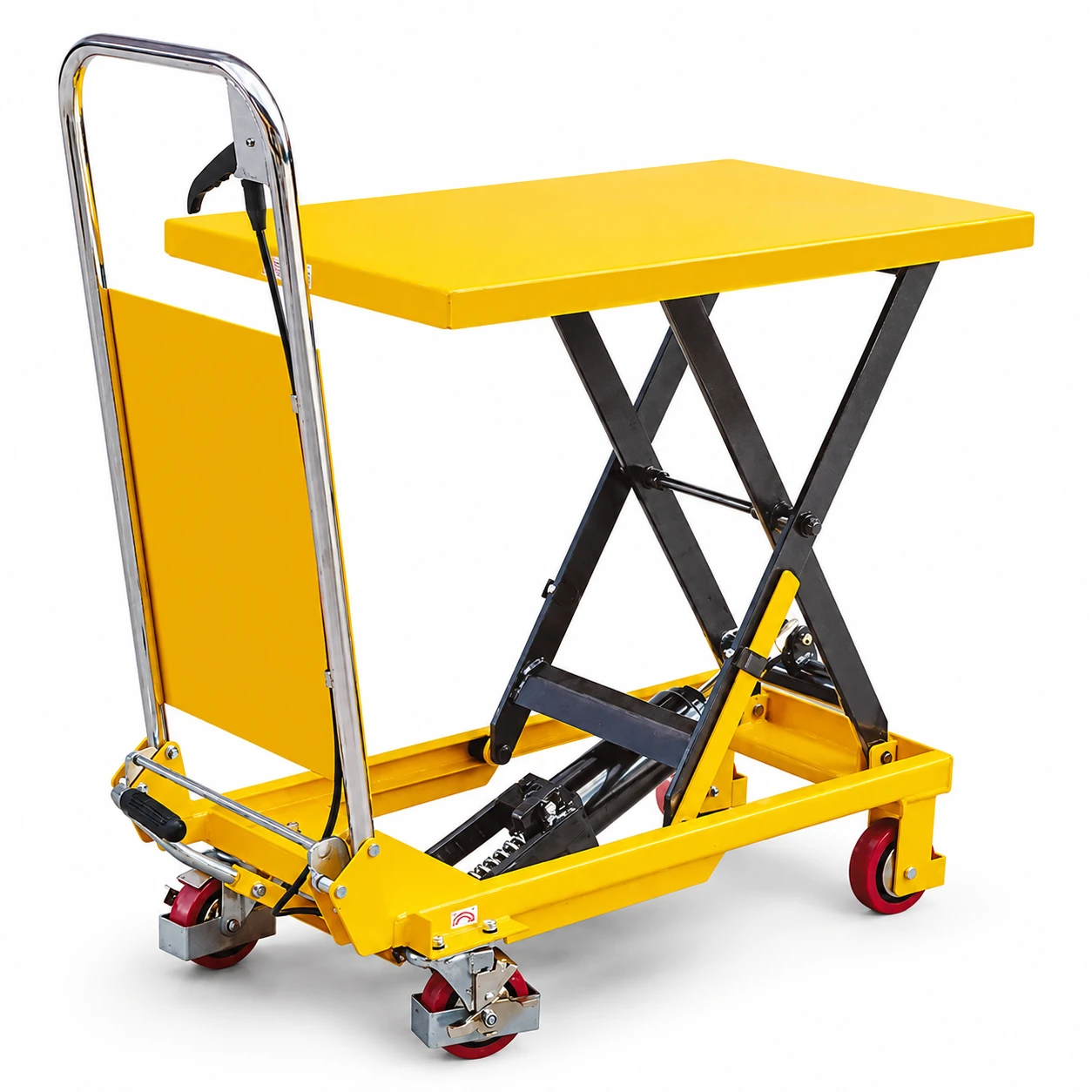
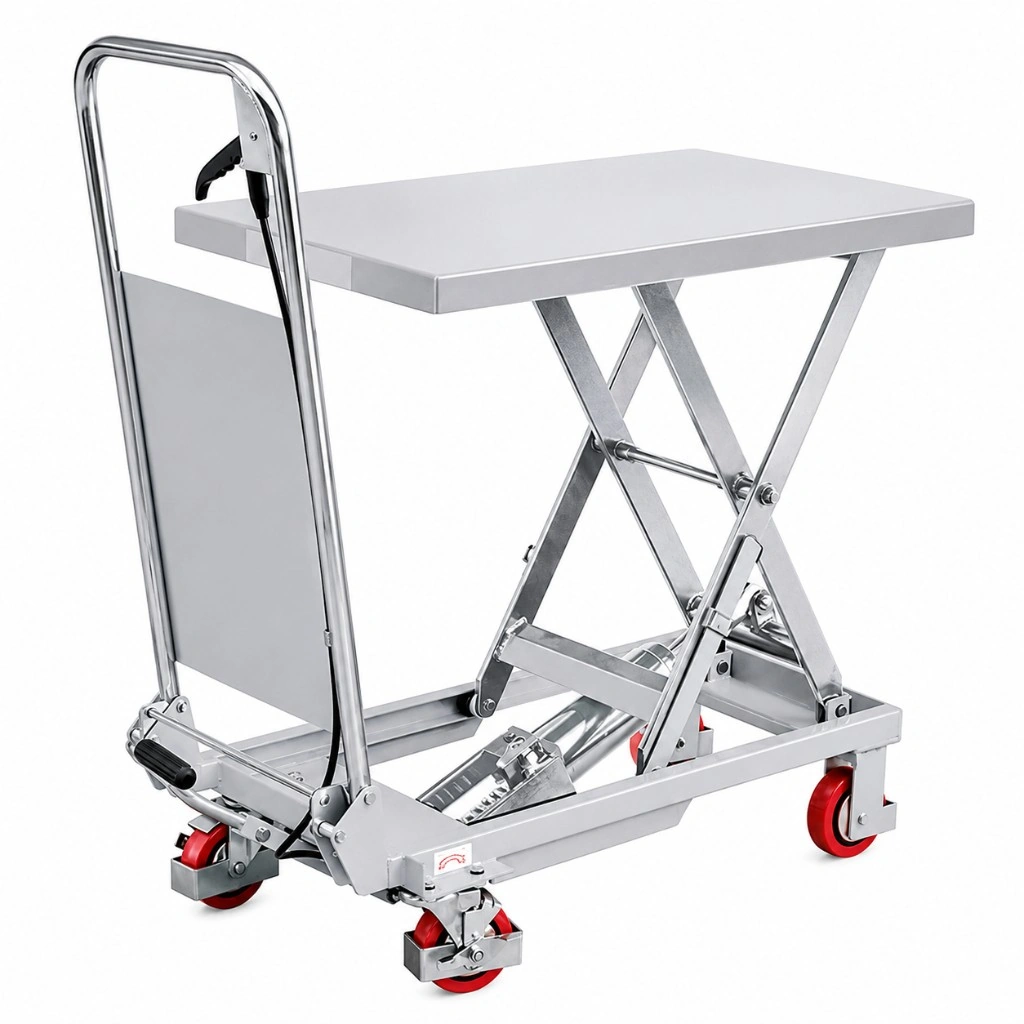
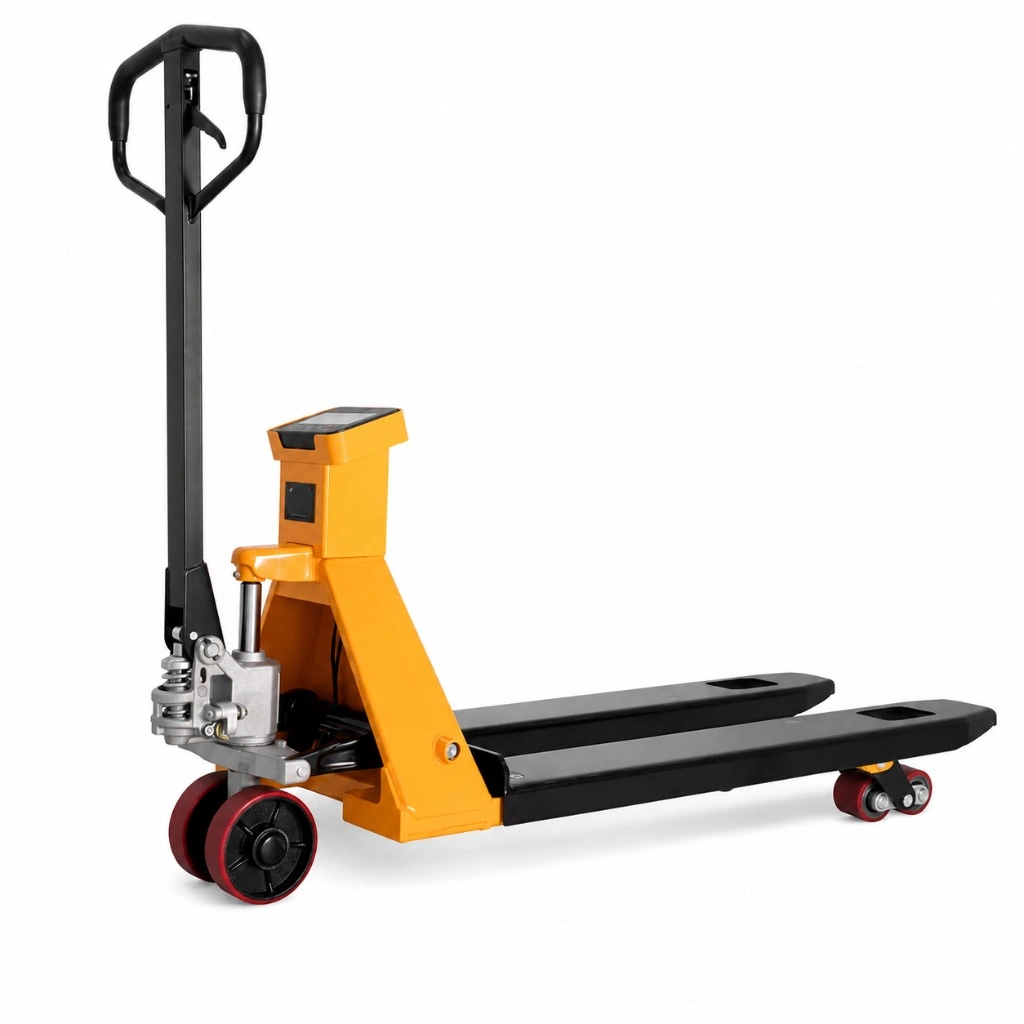
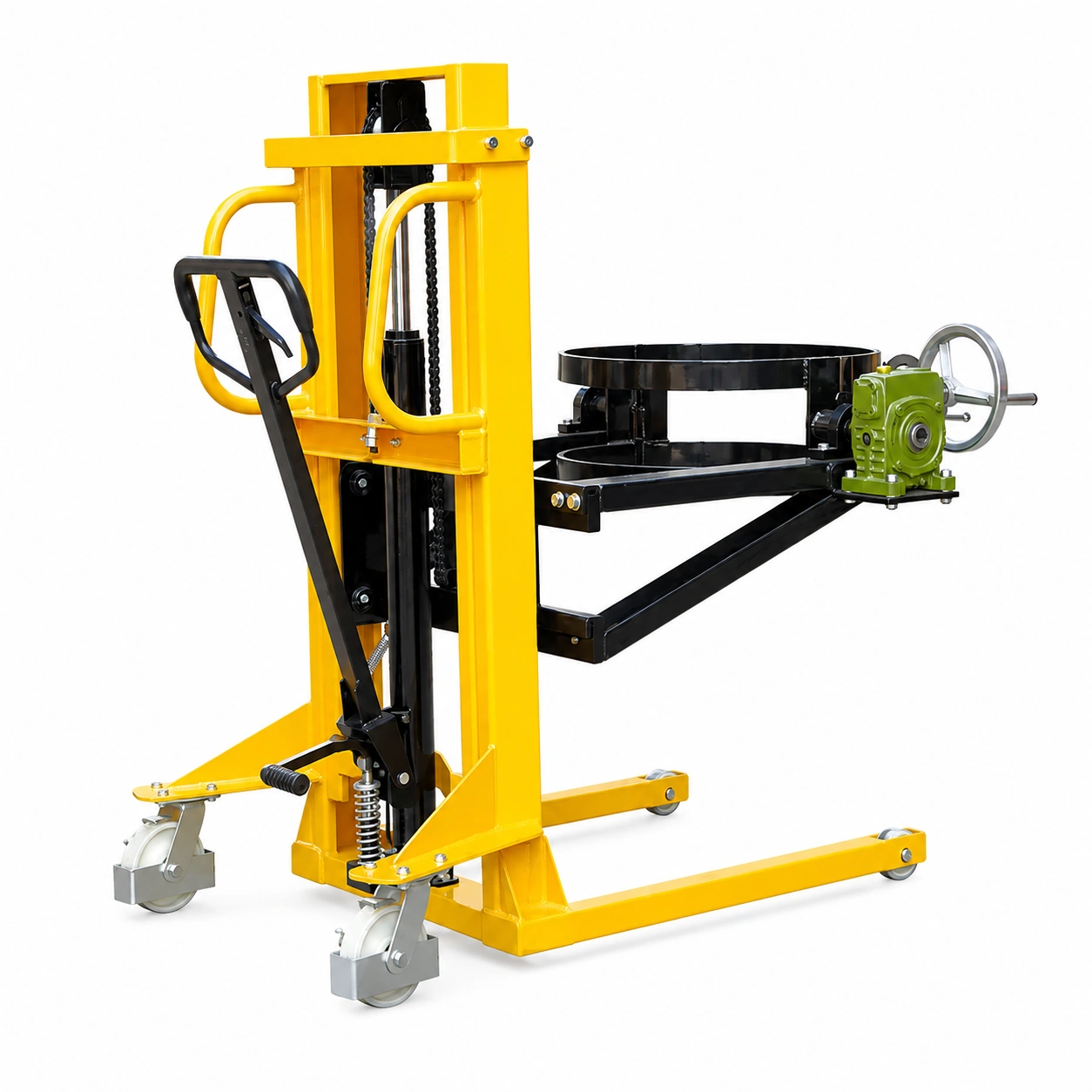
Specialised needs have their own corners: pallet trucks with scales that weigh during transport, scissor pallet trucks that double as work tables, and drum stackers. The fastest route to the right machine: tell us what you move, how heavy, how high and how far — those four answers narrow 90+ products down to two or three.
Frequently asked questions
How do I choose between a pallet truck, stacker, forklift and reach truck?
By what the load must do: travel horizontally (pallet truck or tow tractor), go into racking up to ~6 m (stacker), work universally including outdoors (forklift), or go high in narrow aisles (reach truck). Weight, height and distance decide the class; duty intensity decides manual vs electric.
Manual or electric — where is the break-even?
Manual equipment wins for occasional use and short distances. Once an operator moves loads for a substantial part of the shift, walks hundreds of metres per hour or pushes loads up ramps, electric drive repays its price in productivity and injury prevention.
Do you help with fleet selection?
Yes — send us your pallet types, load weights, rack heights, aisle widths and shift pattern and we will propose the machine mix, including battery technology and charging that fits your operation.