















Powered Winches and Hoists
Choose a category to explore
How to choose
What it is for
- Powered lifting from a fixed point, trolley or crane — electric chain hoists for production, pneumatic for ATEX/wet areas.
- Speed and duty beyond what manual hoists offer.
Check before you choose
- WLL and duty class (FEM/ISO M-group) for the cycles per hour
- Lift height (chain length) and headroom
- Speed: single/dual speed, variable
- Control: pendant, radio remote
- Suspension: hook, push or electric trolley, beam flange width
- Power: 3×400 V, 230 V, compressed air
Not suitable for
- Floor-standing loads without a suspension point
- Lifting persons
What we will ask you before recommending a model
Electric chain hoist – standard Technical check — we confirm a few parameters and compatibility with you before the order.
- Heaviest load and how often per hour / per day? Duty class (FEM/ISO) must match the cycle rate or the hoist overheats and wears fast. WLL alone never decides the model.
- Lift height (hook path) and headroom available between beam/hook and the load? Chain length must cover the hook path; hoist + trolley + hook height must fit the headroom, measured on the whole assembly.
- Is there a certified suspension point: beam, jib crane, gantry, runway? Beam profile (IPE/HEA/HEB) and flange width/thickness? Without a suspension point the hoist cannot be used; the trolley must fit the flange and the beam must carry the load.
- Power available: 3×400 V, 230 V, frequency; or compressed air (pressure and flow at the hoist)? Decides electric vs. pneumatic; single-phase limits capacity; air pressure at the compressor is not pressure at the hoist.
Typical mistakes to avoid
- Never choose by WLL alone — duty cycle, headroom, power supply and beam geometry usually decide the model.
- Side pull is not permitted unless explicitly designed for.
Helpful to have ready: Mass/COG · Hook path · Cycles per hour, hours per day · Beam profile and flange width · Voltage · Photo of the location
Powered hoists
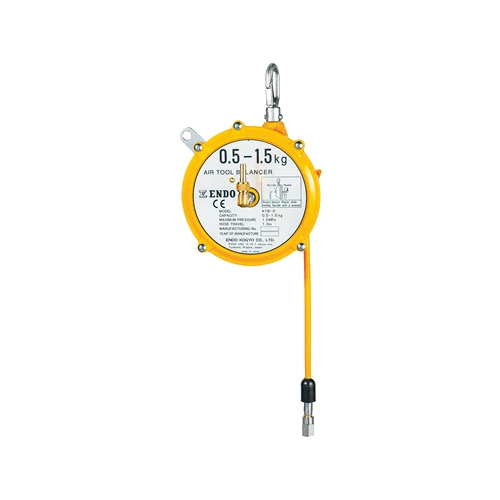
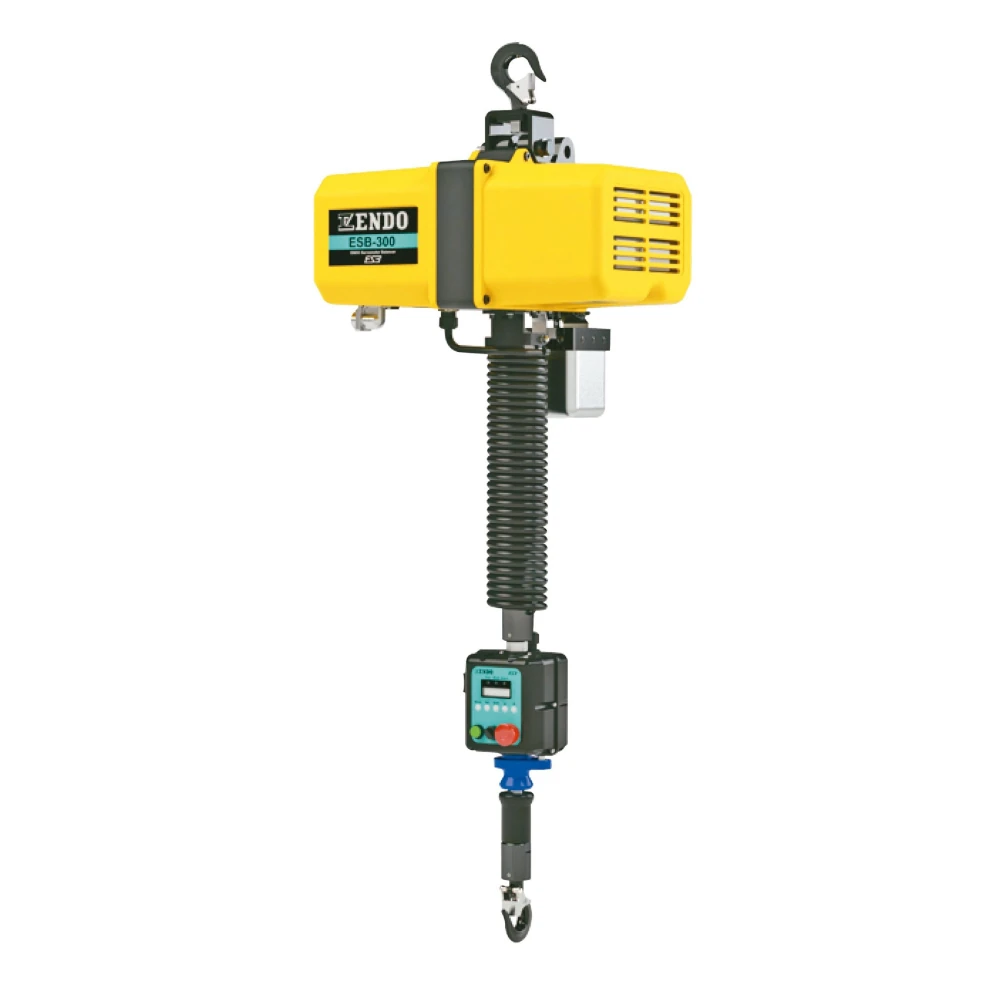
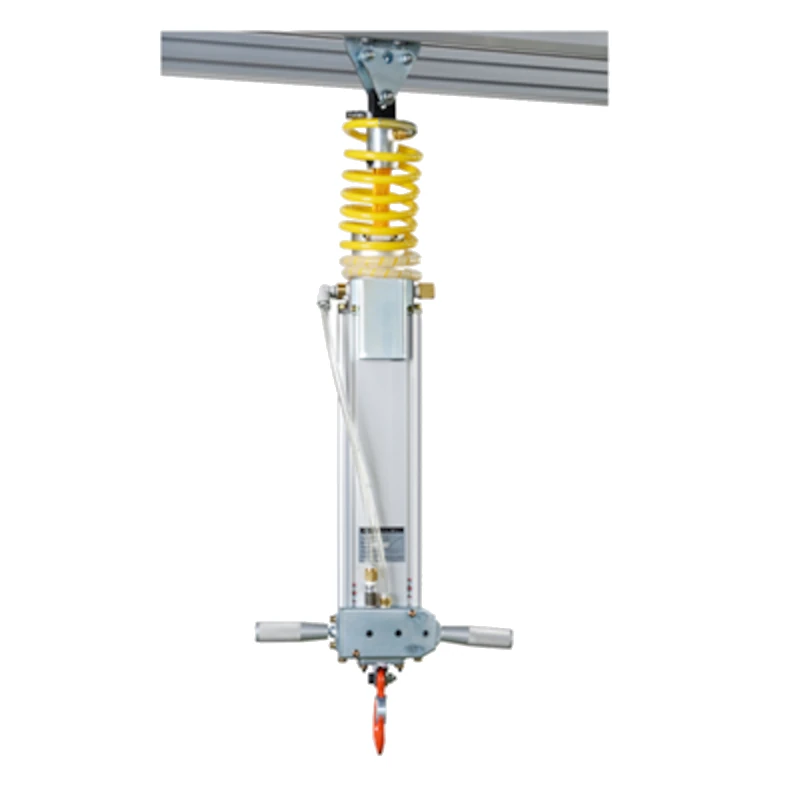
Powered lifting for daily industrial duty splits into two families. Electric chain hoists — built around the Swiss GIS GP programme — cover 100 to 6300 kg with one or two lifting speeds, a 42 V control circuit and variants for corrosive environments, ATEX zones and frequency-inverter precision. Pneumatic chain hoists run on compressed air, offer sensitive load control and 100 % duty cycles, and are inherently suited to explosion-risk environments.
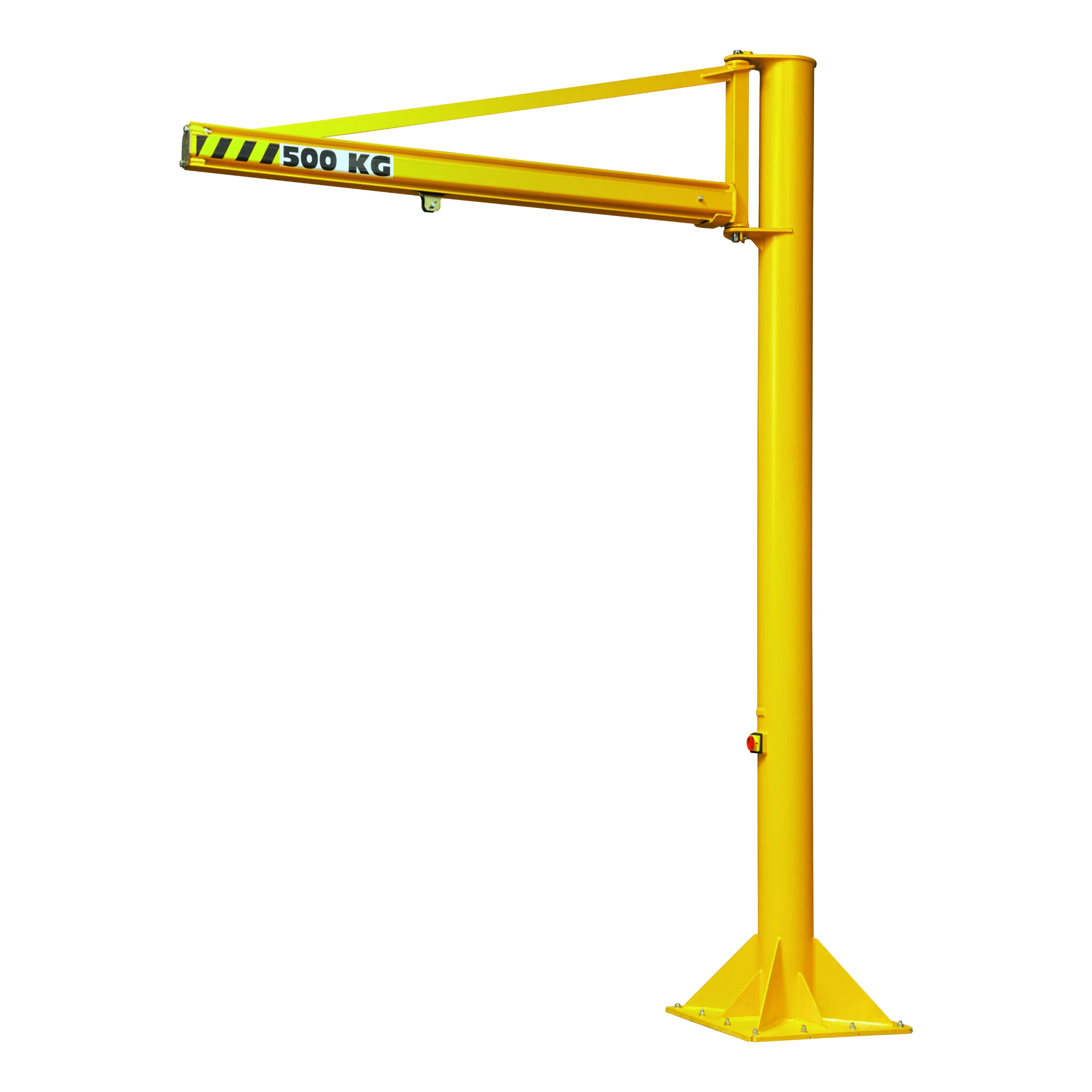
Any hoist can be combined with a manual or motorised trolley for travel along a beam — the options are built into the configurator on each product page — and mounted on a jib crane or gantry to complete the workstation. For lifting without any power supply, see manual hoists. Contact us with the load, lifting height and duty and we will recommend the right hoist.
Frequently asked questions
Electric or pneumatic chain hoist?
Electric is the default: efficient, easy to install and covering 100–6300 kg. Pneumatic wins where compressed air is the site standard, where 100 % duty cycles or very sensitive load control are needed, and in explosion-risk environments — though ATEX-certified electric hoists cover those zones too.
What power supply do electric chain hoists need?
Standard models run on 400 V three-phase supply with a 42 V low-voltage control circuit for operator safety; smaller portable models are available for 230 V single-phase sockets.
How quickly can a powered hoist be delivered?
Because of the many variants and options, hoists are built to order — average production time is 4–5 weeks, extending by 1–2 weeks in periods of high demand and holiday seasons. Request a quote and we will confirm the current lead time.