















Cranes
Choose a category to explore
How to choose
What it is for
- Providing the lifting point where none exists: jib cranes at workstations, gantry cranes for mobile lifting, runways.
- Serving machines, assembly stations and loading areas with a hoist.
Check before you choose
- Capacity incl. hoist and trolley weight
- Outreach / span and slewing angle
- Lift height and hall height
- Floor or wall able to take the anchor forces (foundation/wall check)
- Power supply for electric hoist
- Manual or electric slewing/travel
Not suitable for
- Floor-level pallet transport — use trucks/stackers
- Outdoor use unless specified
What we will ask you before recommending a model
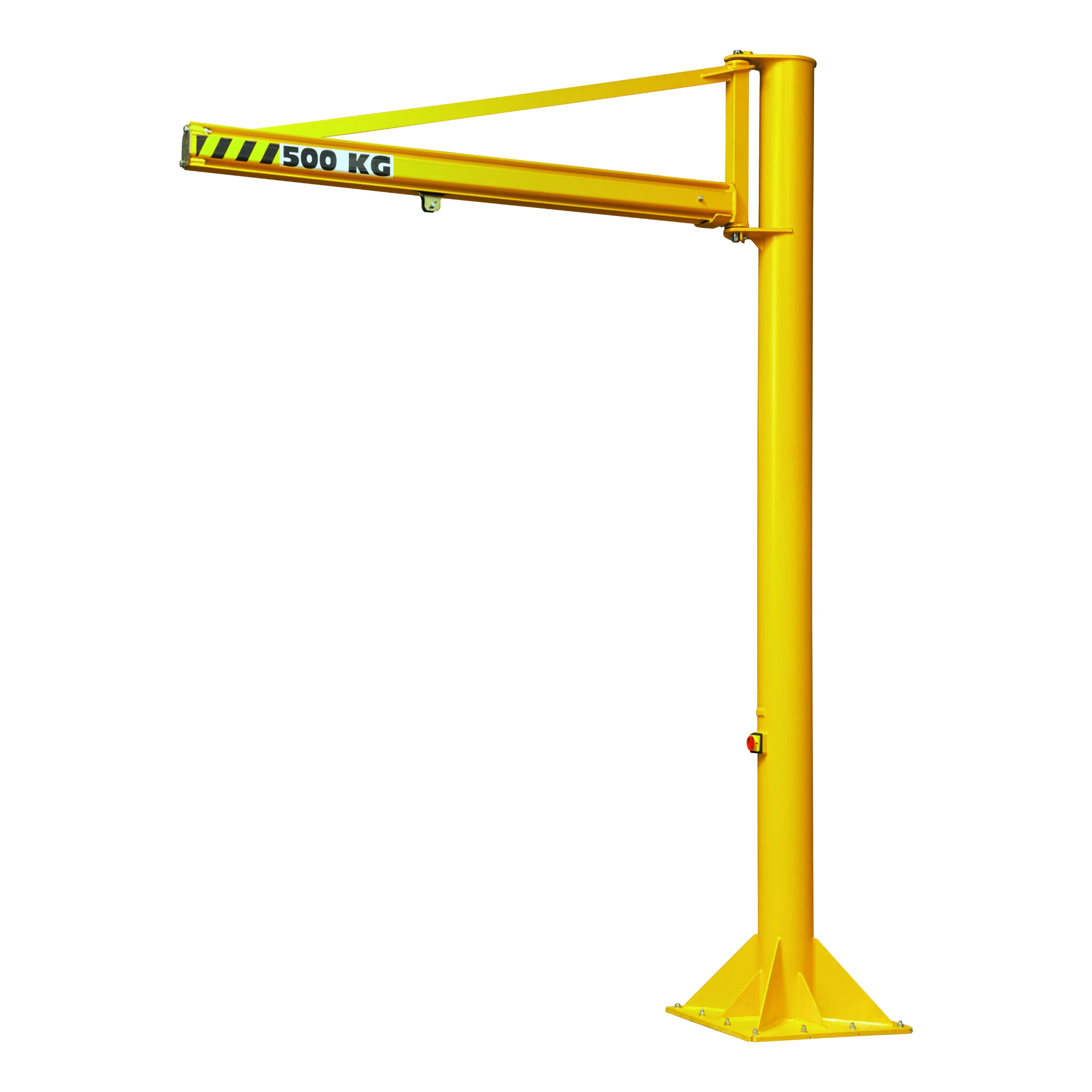
Pillar jib crane Project product — the final configuration is confirmed by our technical team before the order.
- Load weight including hoist, trolley and attachments; heaviest lift? Crane capacity must cover hoist + trolley + load. Do not size by WLL alone.
- Jib outreach (span) and the farthest point to reach? Slewing angle needed (180°/270°/360°)? Radius defines the reachable circle; the farthest point sets the span.
- Required hook height and hall height / obstacles (lights, pipes, doors, sprinklers)? Hook height = clearance − crane − trolley − hoist headroom − hook.
- Cycles per hour, hours per day; manual or motorised slewing / travel? Heavy or frequent loads are hard to slew by hand; duty defines hoist class.
- Floor: reinforced concrete thickness and quality at the pillar position? Is a foundation check possible? The pillar creates large overturning moments; anchoring must match the reaction forces of the specific model.
Typical mistakes to avoid
- Foundation and anchoring must match the reaction forces of the specific model — never choose by WLL alone.
- Headroom must be calculated with crane + trolley + hoist + hook.
Helpful to have ready: Sketch/plan of the area with pillar position · Load mass, dimensions, COG · Farthest point to reach · Required hook height · Photos of the floor · Voltage · Description of the duty cycle
Workstation cranes
This family covers cranes that serve a defined work area rather than a whole hall: jib cranes fixed to a column or a wall, and mobile gantries that bring the lifting point to the job. Pillar jib cranes stand on their own foundation and slew 270° over the workstation; wall jib cranes bolt to a load-bearing wall or building column and keep the floor completely clear; full-rotation models cover the whole circle up to 10 000 kg; and gantry cranes need no structure at all — they roll to the load on castors.
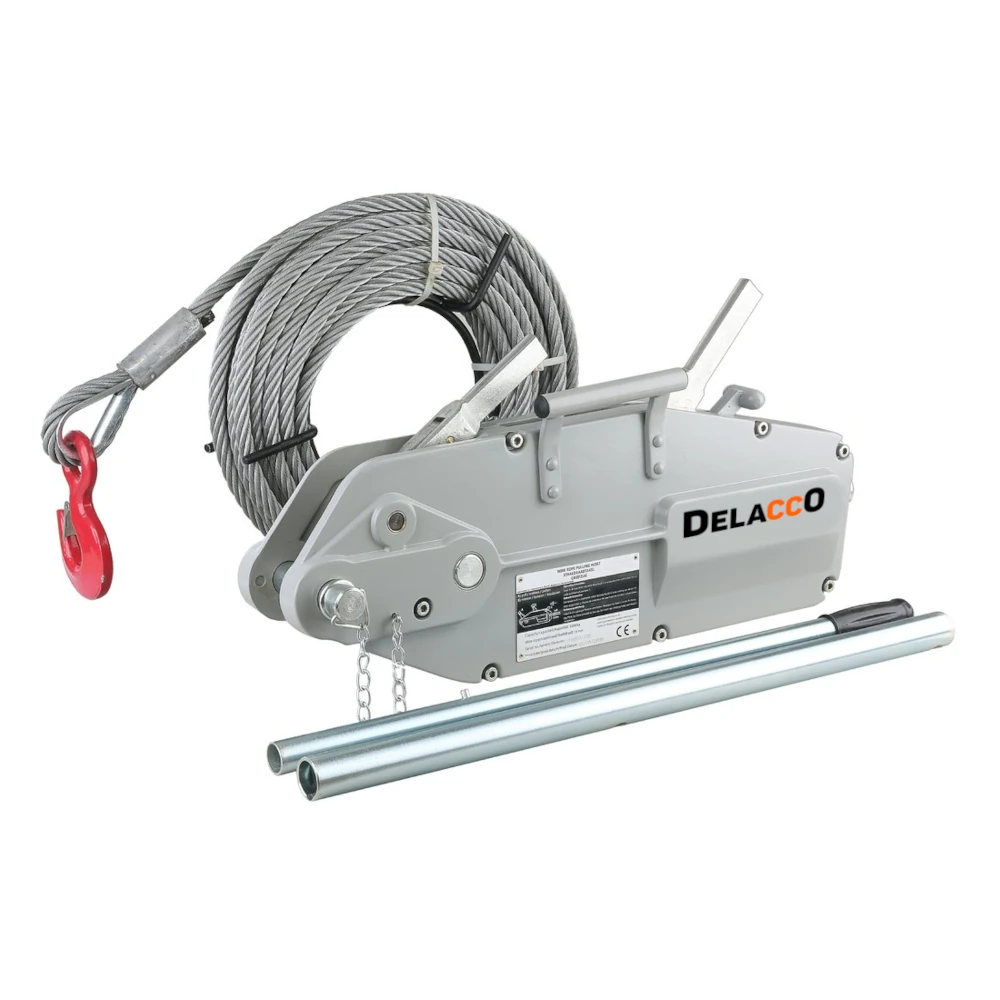
Every crane is completed with a hoist sized to its capacity — usually an electric chain hoist, or a manual chain block for occasional duty — and can be supplied as one ready-to-work station. Contact us with the load, reach and mounting conditions and we will help you select the crane, hoist and anchoring together.
Frequently asked questions
Pillar, wall or gantry crane — how do I decide?
If a load-bearing wall or column exists at the workstation, a wall crane is usually cheapest and takes no floor space. Where nothing suitable exists, a pillar crane on its own foundation covers the station. If the lifting point must move between jobs — or the building may change — a mobile gantry avoids installation entirely.
What capacities do these cranes cover?
Standard jib cranes cover 50 to 2000 kg (low-profile wall models to 4000 kg, full-rotation pillar models to 10 000 kg); mobile gantries cover 500 to 5000 kg. The crane's rated capacity must cover the load plus the hoist and trolley weight.
Is the hoist included with the crane?
The crane, hoist and trolley are configured and quoted together, so the station arrives as one matched unit — select the hoist option in the configurator on the crane's product page or ask us to recommend the combination.
How quickly can a crane be delivered?
Cranes are manufactured to order in the selected configuration. Request a quote on the product page and we will confirm the current production lead time, delivery and installation options for your location.