














ENDO Balancers
How to choose
What it is for
- Making a tool or part weightless at a workstation so the operator positions it effortlessly.
- Assembly lines, machining, welding, food processing (stainless).
- Reducing operator fatigue and tool damage.
Check before you choose
- Tool/part weight within the balancer's range (min–max)
- Cable/stroke travel needed
- Mounting height and trolley/rail
- Environment: pneumatic tools (air hose through balancer), food (stainless), ATEX
Not suitable for
- Lifting loads — a balancer holds, it does not hoist
- Loads outside the set range
What we will ask you before recommending a model
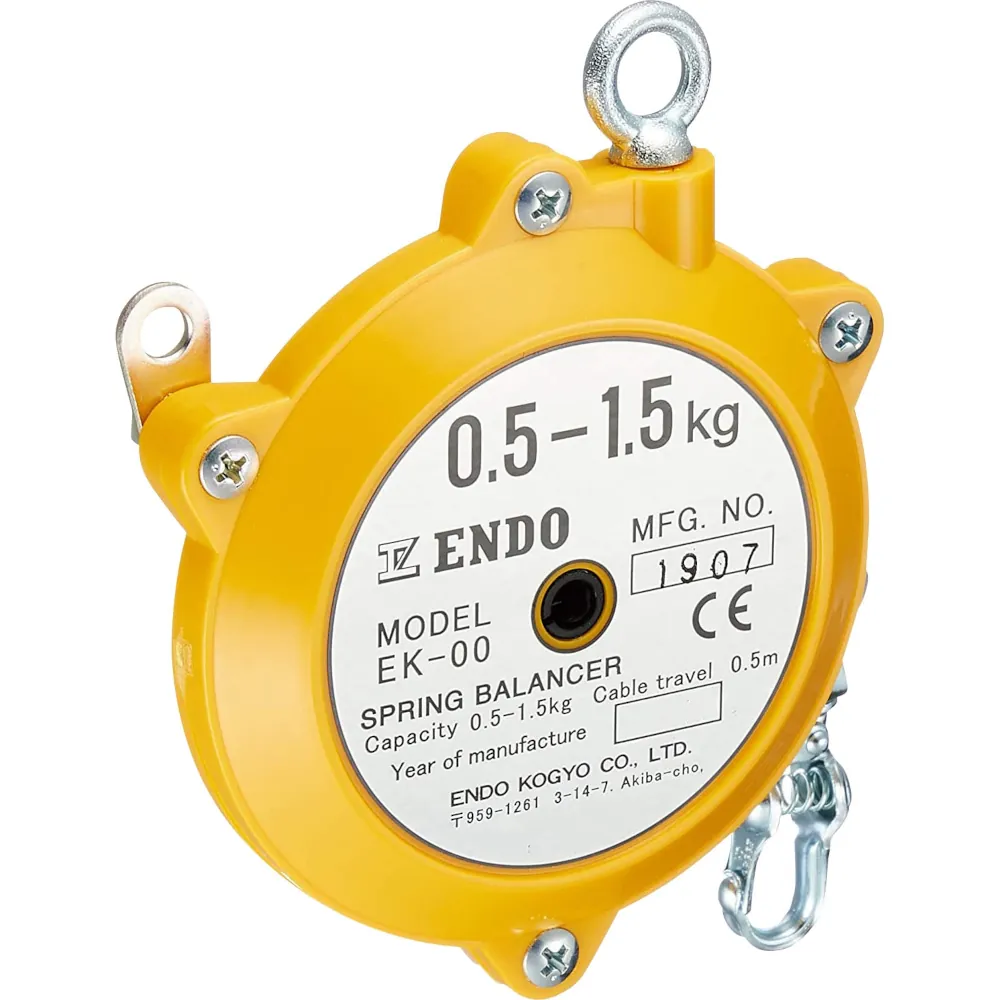
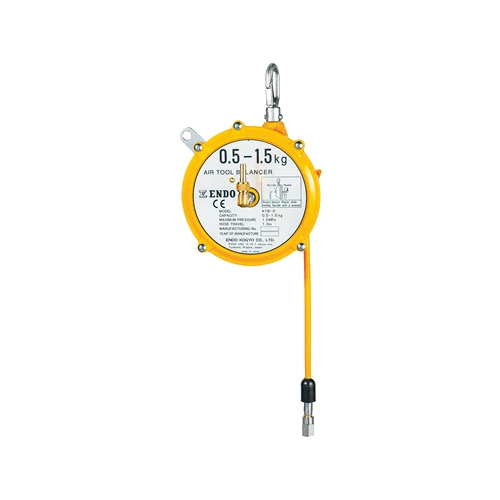
Spring balancer – standard Standard selection — the parameters above are enough to choose the right model.
- Total suspended mass: tool + adapters + the part of hose/cable the balancer carries? Any mass change during work? Mass must be inside the working range; an oversized balancer gives too much return force, an undersized one sinks.
- Cable stroke needed; mounting height; highest and lowest working point? Stroke must cover the working range.
Typical mistakes to avoid
- Mass must be inside the working range; too large a balancer gives excessive return force.
Helpful to have ready: Measured total mass · Required stroke · Photo of the suspension point
ENDO balancers
ENDO (Japan) has made balancers for over half a century, and the principle is unchanged: the balancer carries the weight, the operator only guides — hundreds of times per shift, without fatigue. Spring balancers suspend tools from 0.5 up to 200 kg; versions with integrated air supply feed pneumatic tools through the balancer itself; stainless food-industry models add washdown-proof construction with food-grade lubrication.
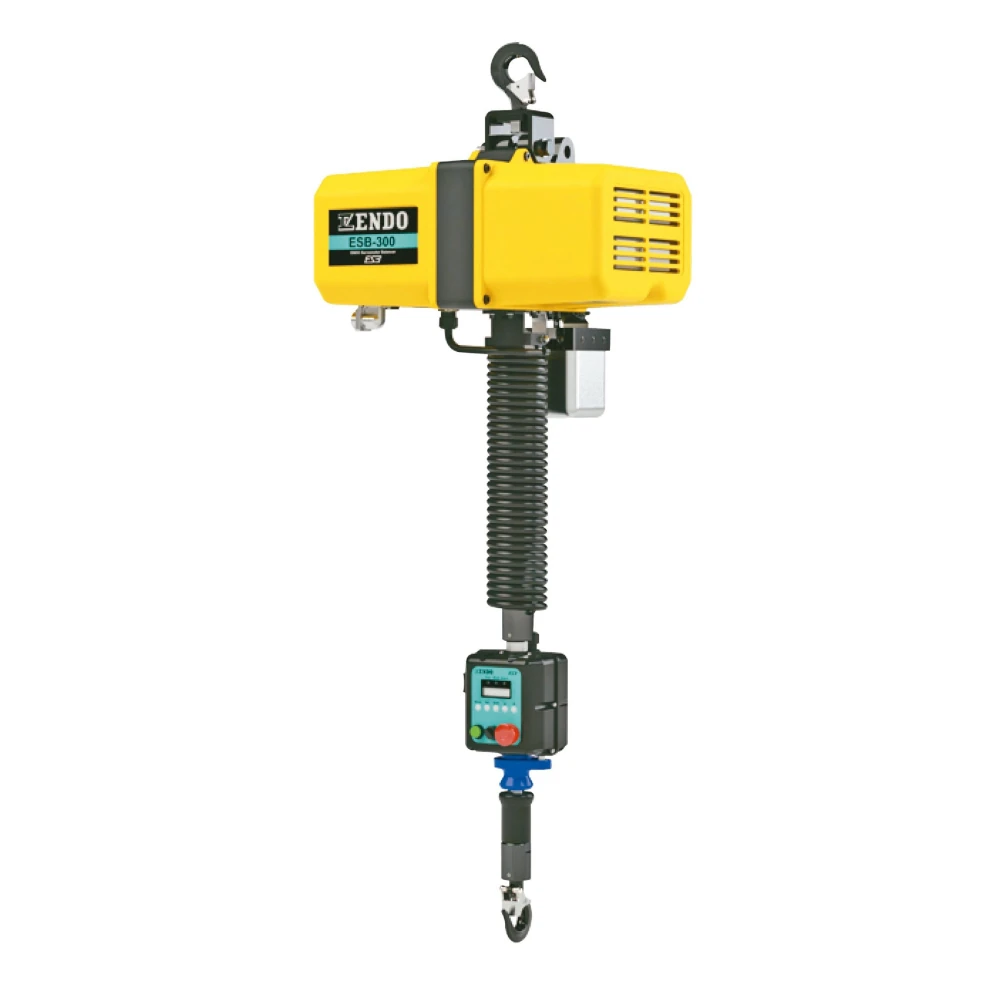
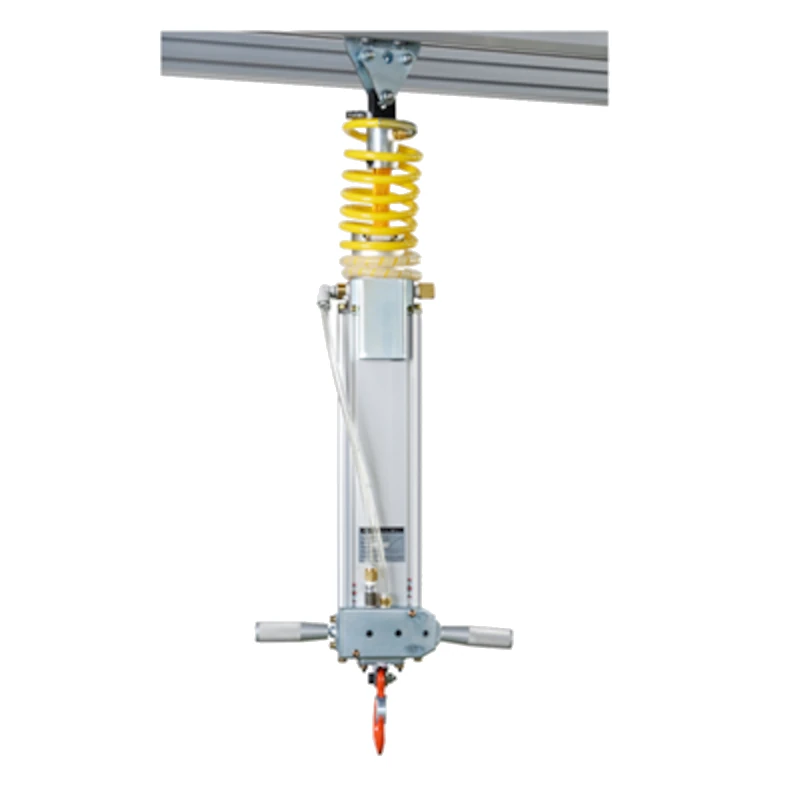
Where the task is positioning workpieces rather than suspending tools, pneumatic balancers handle loads up to 450 kg with fingertip control and ATEX options, and electric balancers bring servo-controlled positioning to the workstation. Contact us with the tool or part weight and the workflow and we will recommend the right balancer.
Frequently asked questions
Spring, pneumatic or electric balancer?
Spring balancers suspend a tool of constant weight — simplest and cheapest. Pneumatic balancers position loads precisely, adapt to varying weights and reach 450 kg. Electric balancers add servo-controlled handling. The deciding questions: is it a tool or a workpiece, how heavy, and does the weight vary?
What capacity range do ENDO balancers cover?
Spring models run from 0.5 kg hand tools to 200 kg; pneumatic models cover loads up to 450 kg. Within each family, pick the model whose working range contains your tool or part weight near its middle.
Are there versions for special environments?
Yes — stainless steel spring balancers with food-grade lubrication for food and pharmaceutical production, and ATEX-certified pneumatic balancers for explosion-risk zones, including automatic and anti-sway variants.
How quickly can a balancer be delivered?
Request a quote on the product page with the model and capacity range and we will confirm availability, the current lead time and the delivery cost for your location.