Semi-Electric Stackers

How to choose
What it is for
- Electric lift, manual push — stacking to ~3.5 m where travel distances are short.
- Small warehouses, workshops upgrading from manual.
Check before you choose
- Capacity and lift height
- Pallet type (straddle option)
- Travel distance short enough to push by hand
Not suitable for
- Long routes, ramps, multi-shift
What we will ask you before recommending a model
Semi-electric stacker Technical check — we confirm a few parameters and compatibility with you before the order.
- Heaviest load including pallet, packaging and any attachment? Rule of thumb: use at most 80 % of rated capacity for safety and service life.
- How high must the load be lifted — top rack beam, vehicle bed, machine table? How many rack levels? Capacity at maximum height is much lower than nominal (residual capacity). Customers know 'the rack', not millimetres — ask them to measure the top beam.
- Is the load always on a EUR pallet (open bottom)? Or CHEP / closed-bottom / plastic pallets, boxes, or goods placed directly on the forks? Dimensions of the pallet underside? Forks with support legs underneath need an open-bottom pallet. Goods without a pallet load the forks at points and bend them. Pallet compatibility matters more than capacity.
- Lowest passage in the working area (doors, beams, pipes, mezzanine, container, lift)? Ceiling height where stacking happens? Lowered mast height must pass every obstacle; extended mast must fit under ceiling, lighting and sprinklers.
- What is the floor: industrial concrete, asphalt, paving, gravel, uneven, potholes, sharp edges, expansion joints, thresholds, drains? Small polyurethane wheels and no suspension: tolerance for unevenness is very low. Sharp edges cut the PU tread; gaps stop the small load rollers.
- Cycles per day, battery/charger, socket, manual pushing distance, gradients? Electric lift only — travel is manual; not for long routes or significant slopes.
Typical mistakes to avoid
- Only lifting is electric; travel is manual — not a solution for long routes or significant gradients.
Helpful to have ready: Mass · Height · Pallet · Cycles · Distance · Floor · Charging
Semi-electric stackers
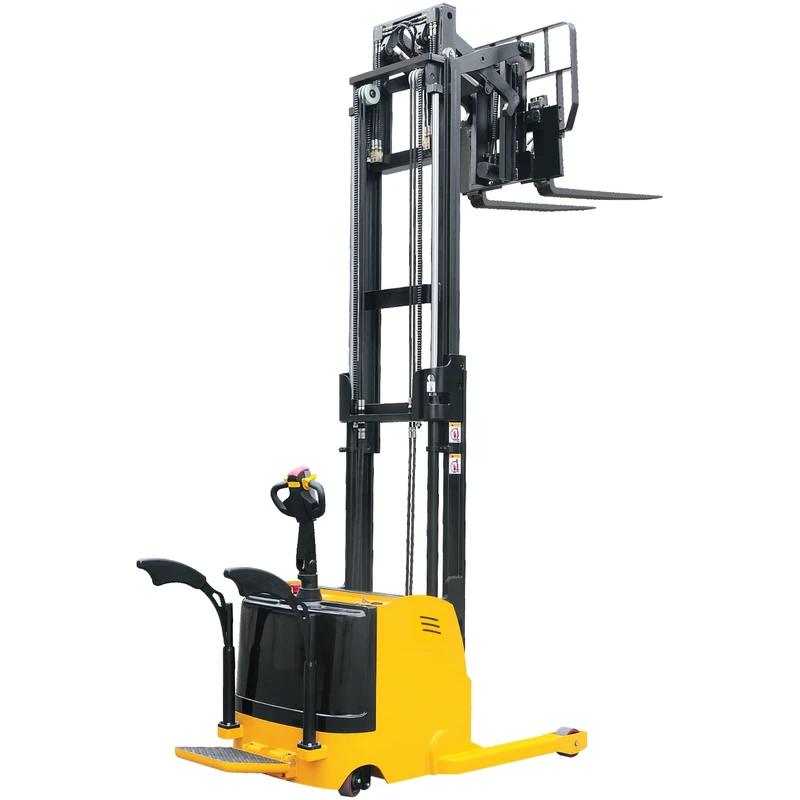
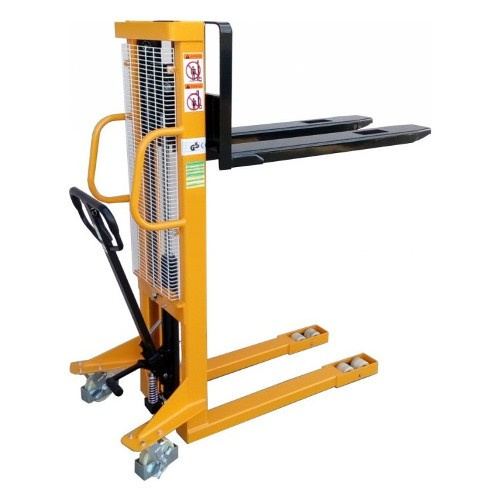
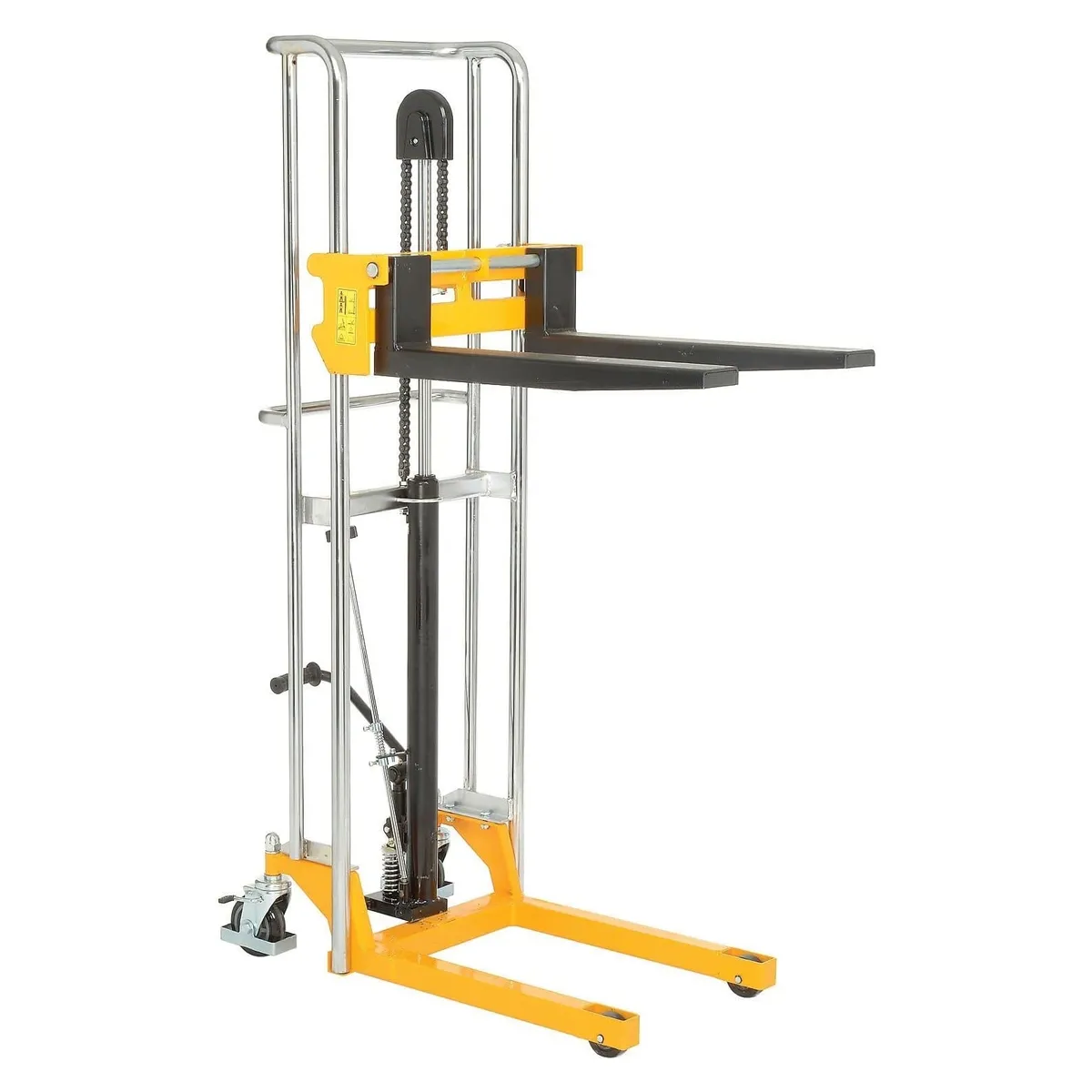
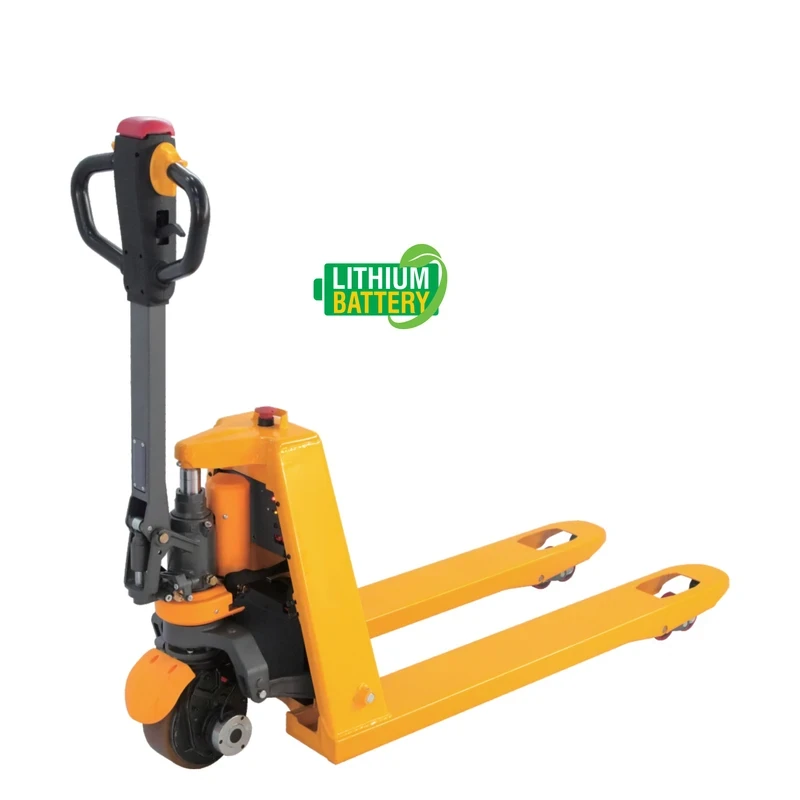
The semi-electric stacker powers the part that hurts — the lifting — while travel stays manual: the most economical entry into powered stacking for operations that lift regularly but travel short distances. The range covers the PEVV10/PEVV15 warehouse stackers (1000–1500 kg, up to 3500 mm), the PEVV15-PV pallet stacker and the straddle version PEVV-DPV with adjustable legs for closed pallets.
Below sit manual stackers for occasional lifts; above, full-electric models once travel distances grow. Contact us with your daily cycle count and we will confirm which class pays off.
Frequently asked questions
Semi-electric or manual stacker?
Count the lifts: pumping a 1000 kg pallet to 3 m takes real time and effort. If stacking happens more than a few times per hour, the powered lift of the semi-electric class pays for itself in operator time and consistency.
Semi-electric or full-electric?
The dividing line is travel: with short distances (one hall, adjacent racks) manual pushing is fine and semi-electric saves money. Once the stacker travels tens of metres per cycle, powered drive — full-electric — wins.
How quickly can a semi-electric stacker be delivered?
Request a quote on the product page with the capacity and lift height and we will confirm availability, the current lead time and the delivery cost for your location.