
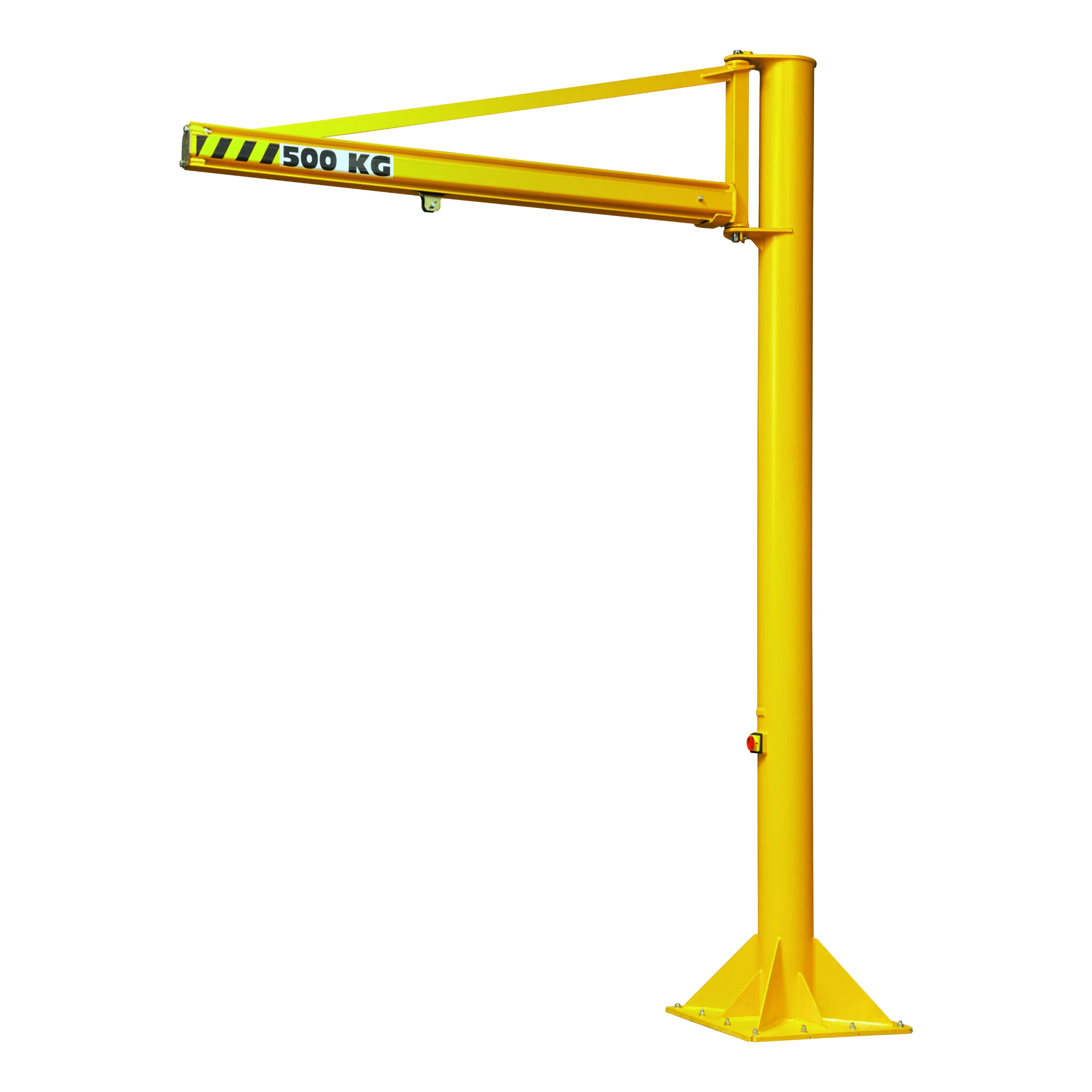


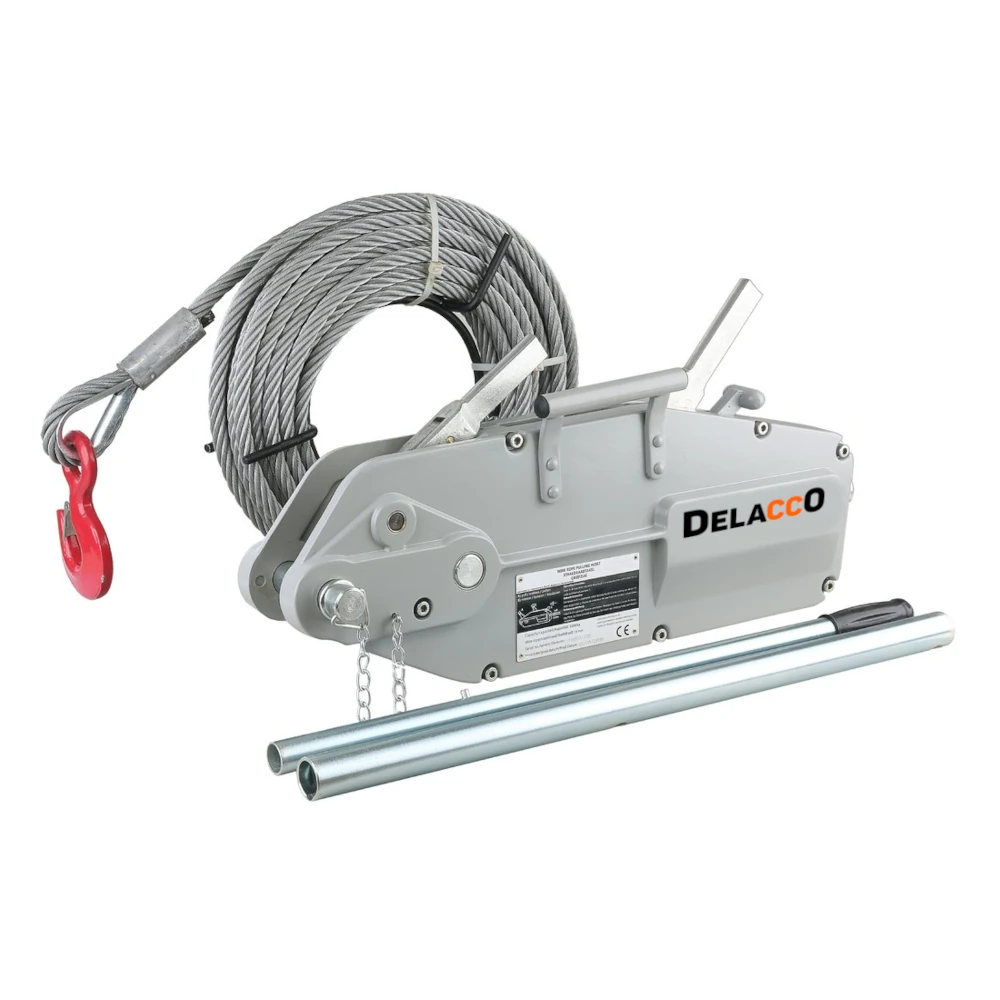

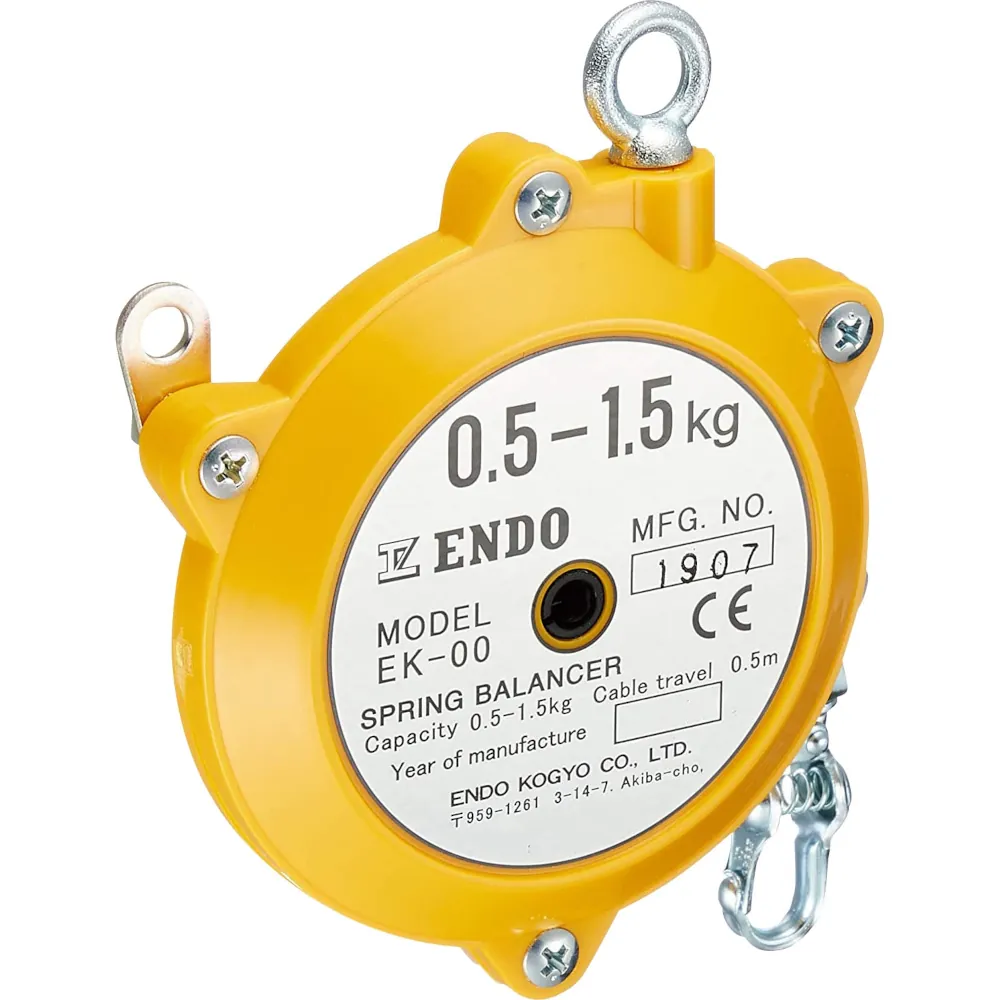












Pillar Jib Crane with Trolley (SDSK) 270° 50-1000 kg 2-8 m
From 1.579,00 EUR



Helpful to have ready: Sketch/plan of the area with pillar position · Load mass, dimensions, COG · Farthest point to reach · Required hook height · Photos of the floor · Voltage · Description of the duty cycle
Helpful to have ready: Plan with pillar position, machines and target points · Obstacle heights · Mass and COG
A pillar jib crane turns a single workstation into a served lifting zone: the column is anchored to the floor, the jib slews over the work area and a hoist travels along it. The choice comes down to load capacity, jib length (reach), slewing range and the height available under the ceiling. Our core range covers capacities from 50 to 2000 kg with jib lengths of 2–8 m: the SDS 270° as the standard workhorse, the low-profile NSD for halls where every centimetre of headroom counts, and the SDSK supplied with a trolley for immediate use.
Where dead weight matters, the aluminium ASDS combines a light jib with capacities up to 2000 kg and noticeably easier manual slewing. For work around obstacles, articulated models — the ZSD and the self-supporting ZSD-S — let the load reach behind machines and through door openings where a rigid jib cannot follow. Light assembly stations are covered by the LSDS toolholder crane (50–100 kg), and if you need full 360° coverage, the RSD full-rotation crane goes up to 10 000 kg.
A jib crane is completed with a hoist: most stations pair naturally with an electric chain hoist sized to the crane's capacity, while low-duty stations can run a manual chain block. If the crane cannot be floor-mounted at your station, look at wall-mounted jib cranes instead. Unsure about foundations or reach? Contact us with your load, reach and floor details and we will spec the crane, hoist and anchoring together.
The standard range covers 50 to 2000 kg with jib lengths from 2 to 8 m, depending on the model. For heavier duties the full-rotation RSD series goes up to 10 000 kg. As a rule, pick the capacity from the heaviest load you handle and the jib length from the furthest point the hook must reach.
The column is anchored to a reinforced concrete foundation or to an existing floor slab of sufficient thickness and quality; the required dimensions depend on the crane's capacity and jib length and are given in the documentation for each model. Self-supporting articulated models (ZSD-S) are designed to work without a special foundation on adequate industrial floors. Send us your floor details and we will confirm the anchoring for your configuration.
Standard pillar cranes slew 270°, which covers a typical workstation while allowing the crane to stand close to a wall or a machine. If the crane stands free in the hall and must serve the full circle around the column, choose the full-rotation RSD series with 360° slewing.
Most workstations pair the crane with an electric chain hoist matched to the crane's rated capacity, either on a push trolley or a motorised trolley. Low-duty stations can use a manual chain block instead. The hoist and trolley can be configured and supplied together with the crane so the station arrives ready to work.
When the load has to reach around obstacles — behind machine frames, through door openings, under mezzanines — a two-arm articulated jib (ZSD, ZSD-S) follows paths a rigid jib cannot. Articulated models cover 50–1000 kg and are also easier to slew by hand close to the column.
Jib cranes are manufactured to order in the configuration you select (capacity, jib length, height, hoist and trolley). Request a quote on the product page and we will confirm the current production lead time, delivery cost and installation options for your location.
Select your delivery country for an instant freight estimate.