

































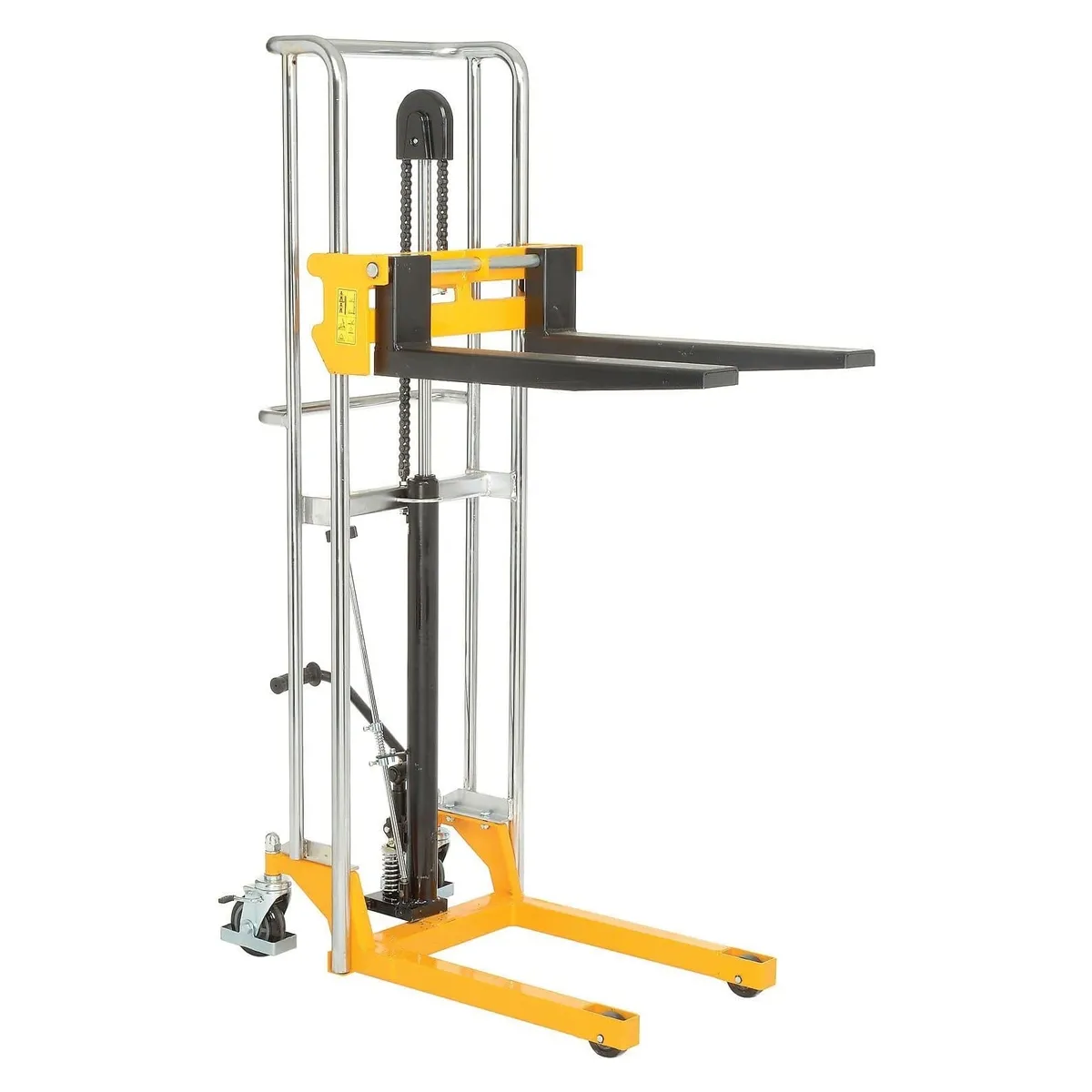
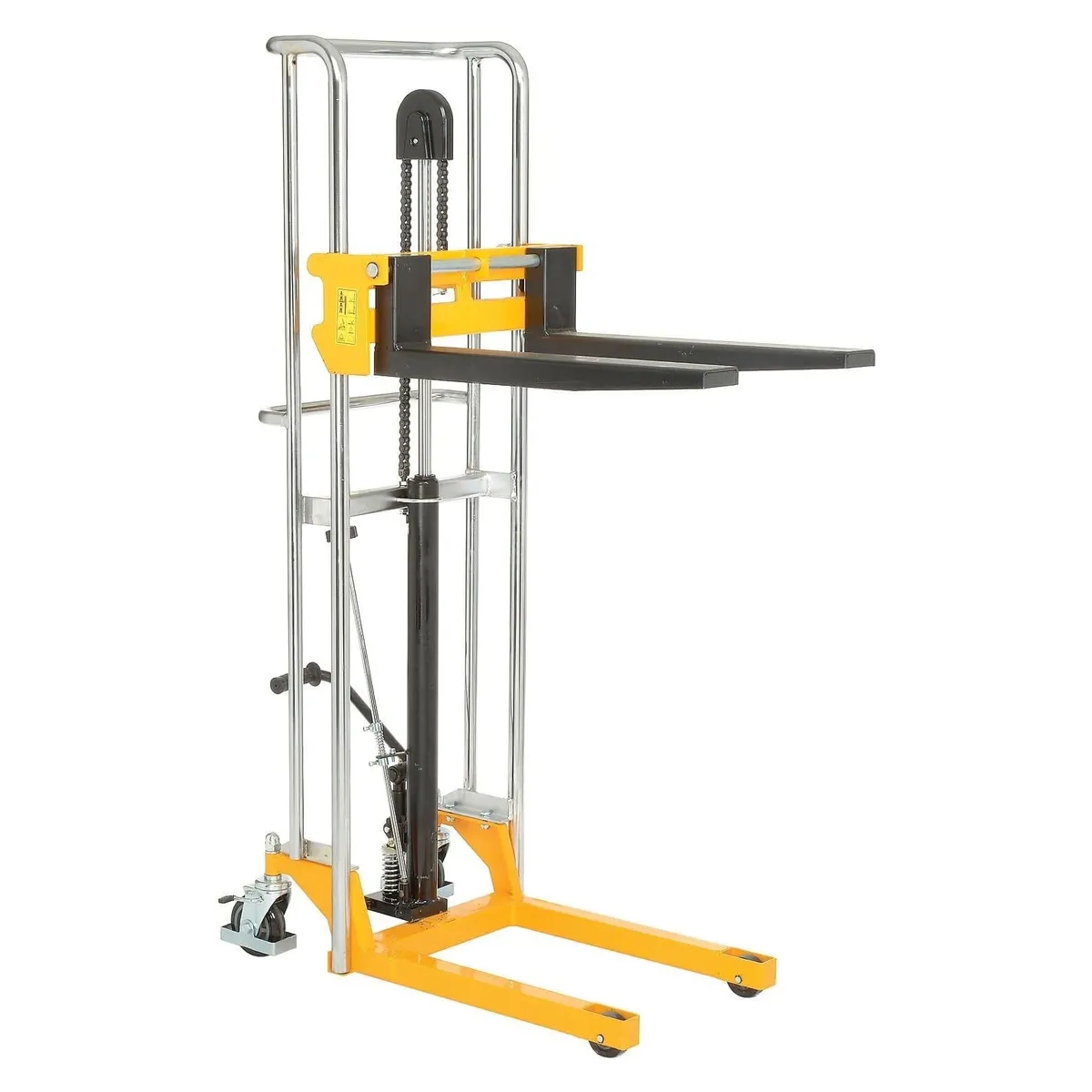
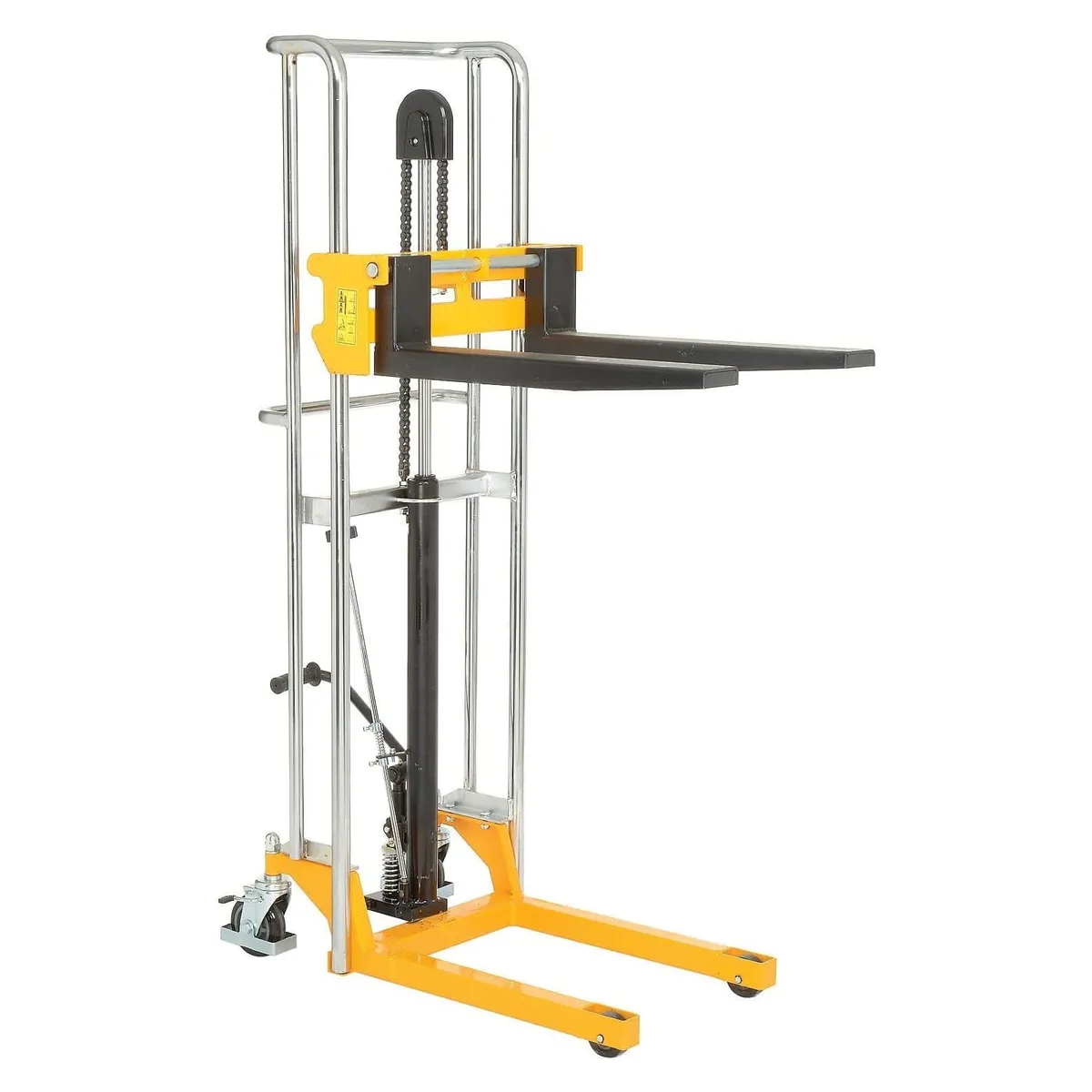
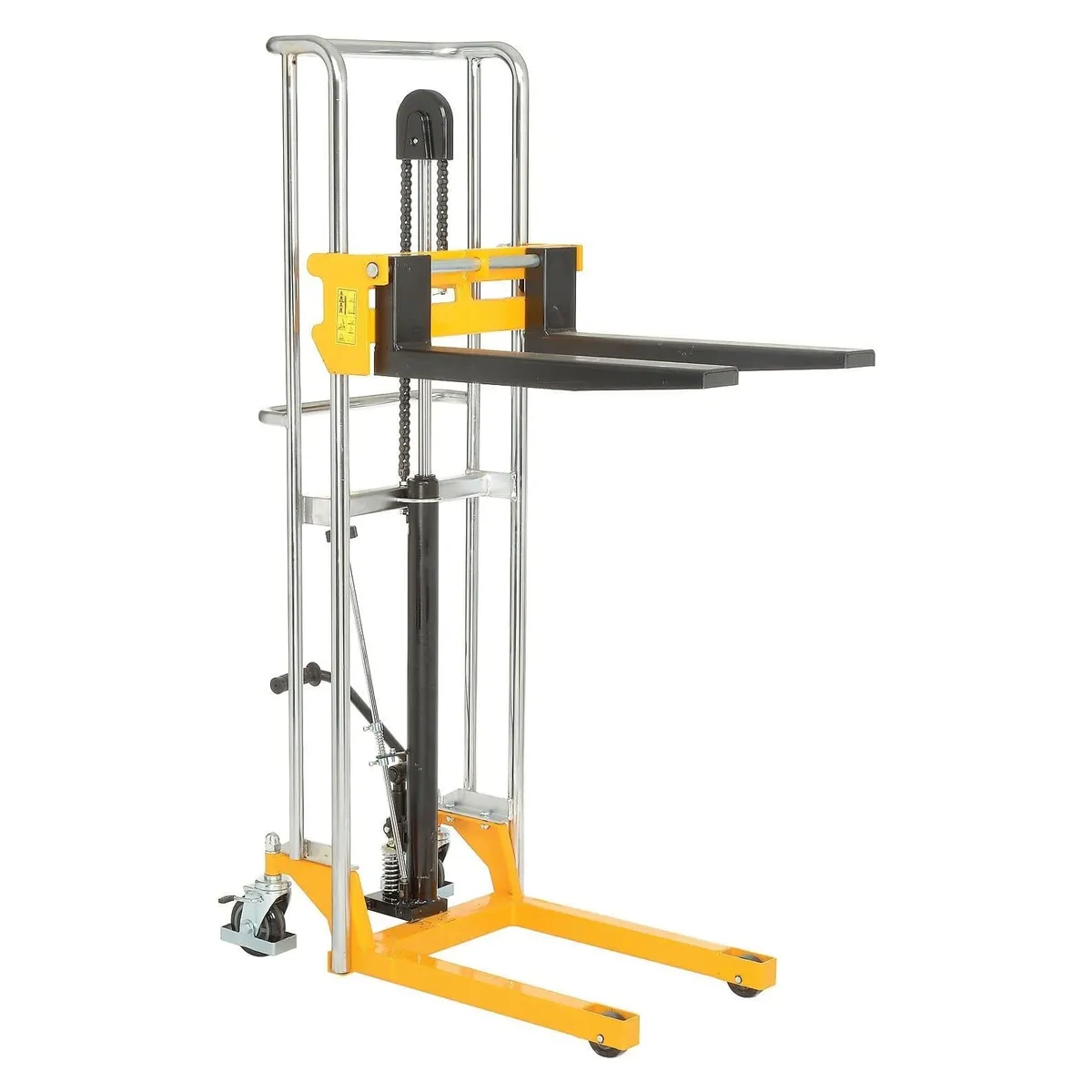














Hydraulic Lift Tables
How to choose
What it is for
- Bringing work to ergonomic height: loading machines, packing, assembly, level bridging.
- Lifting goods between floor levels and vehicles.
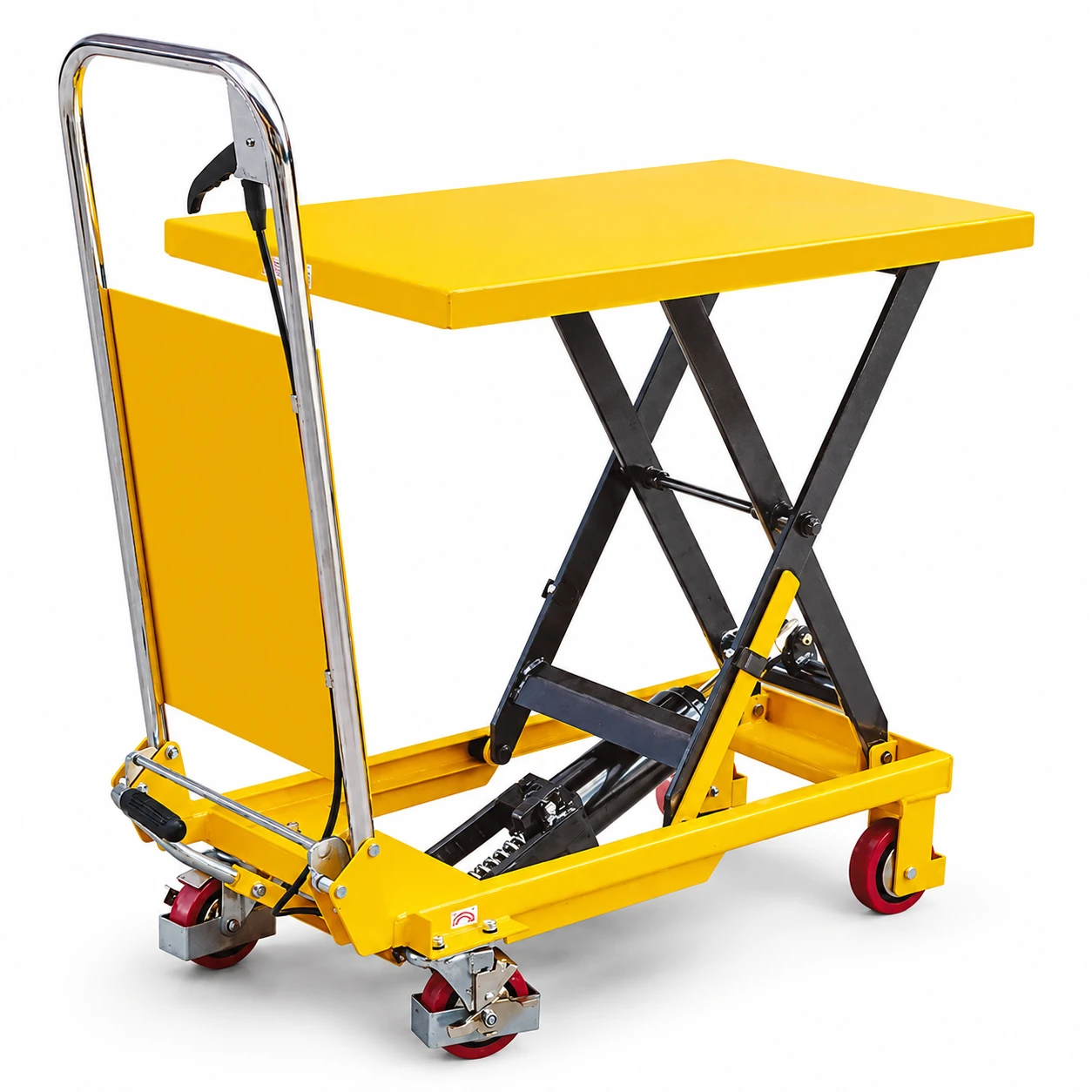
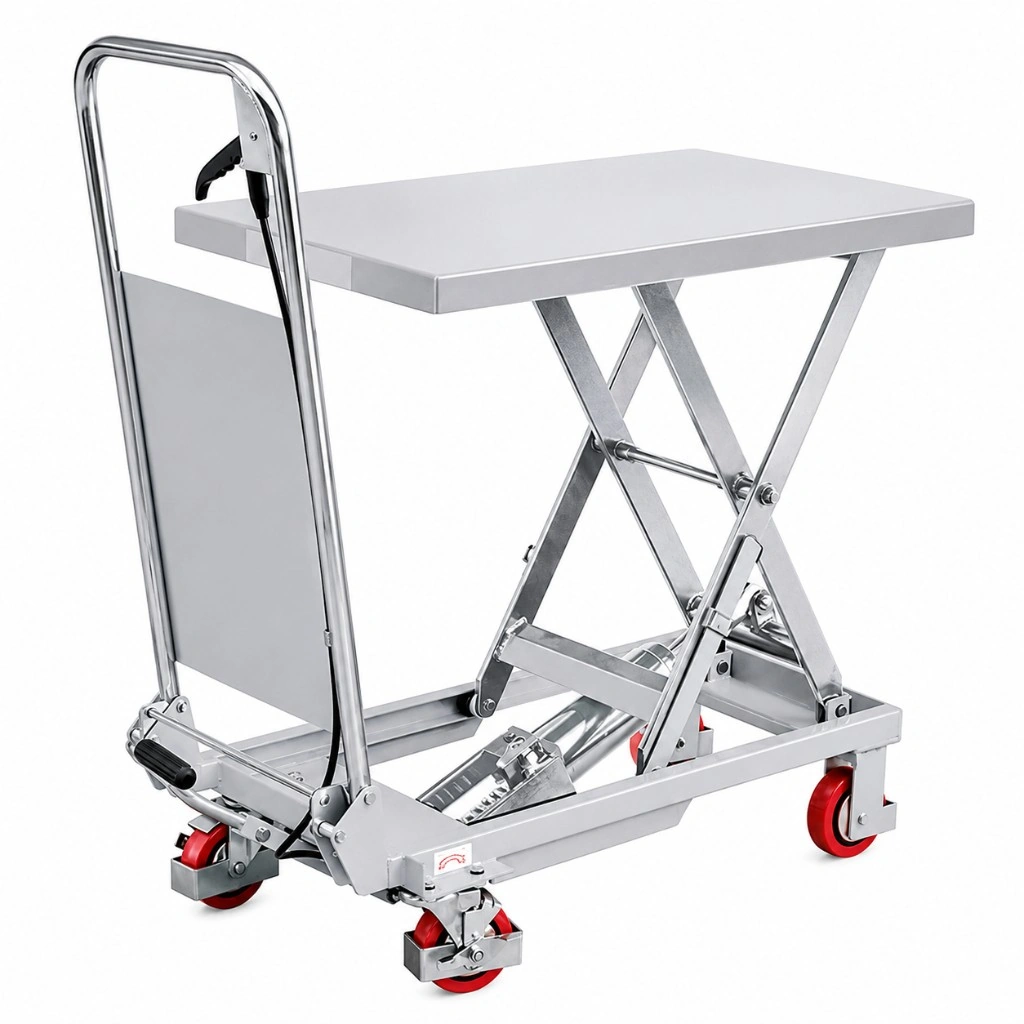
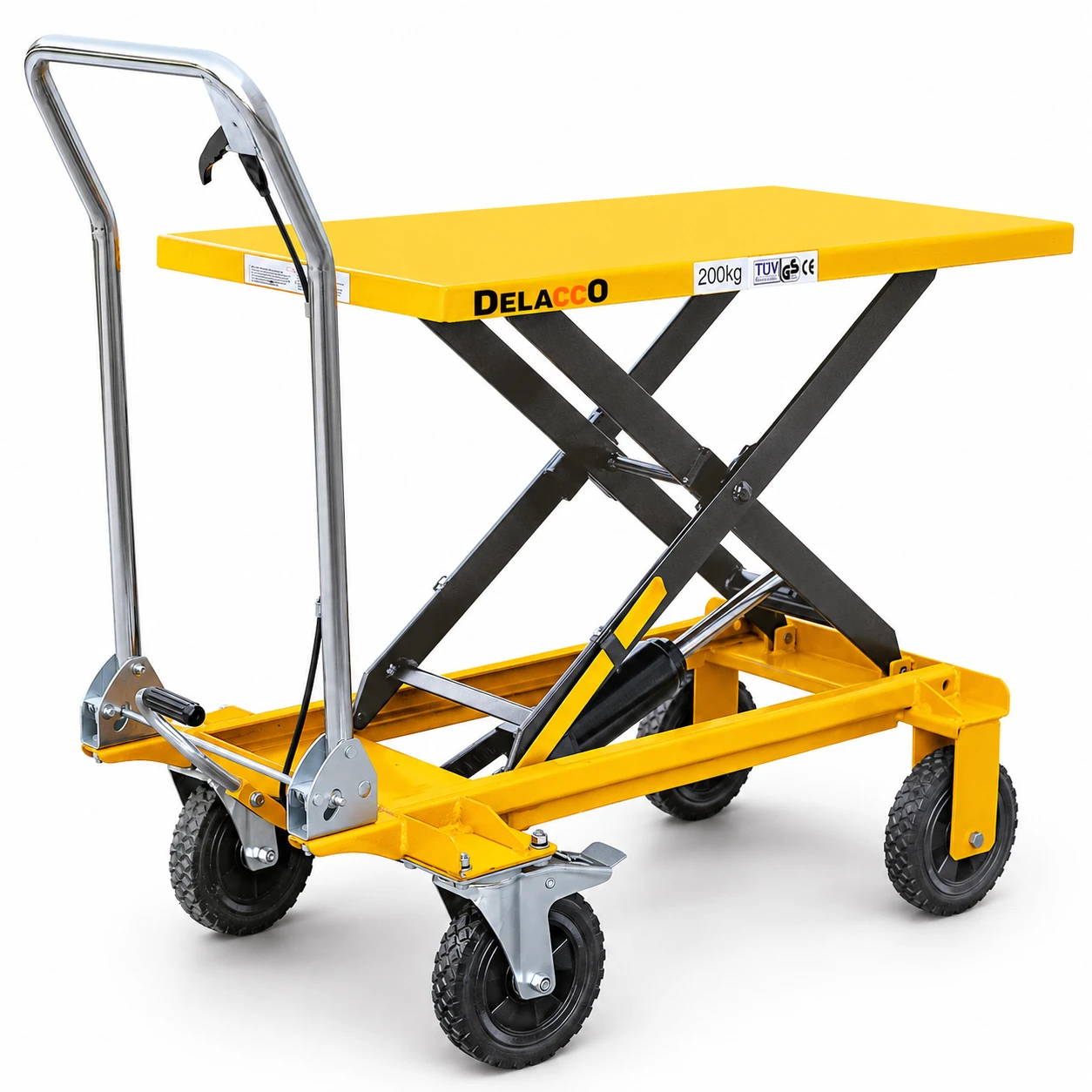
- Mobile tables as movable workbenches.
Check before you choose
- Capacity and platform size for the load footprint
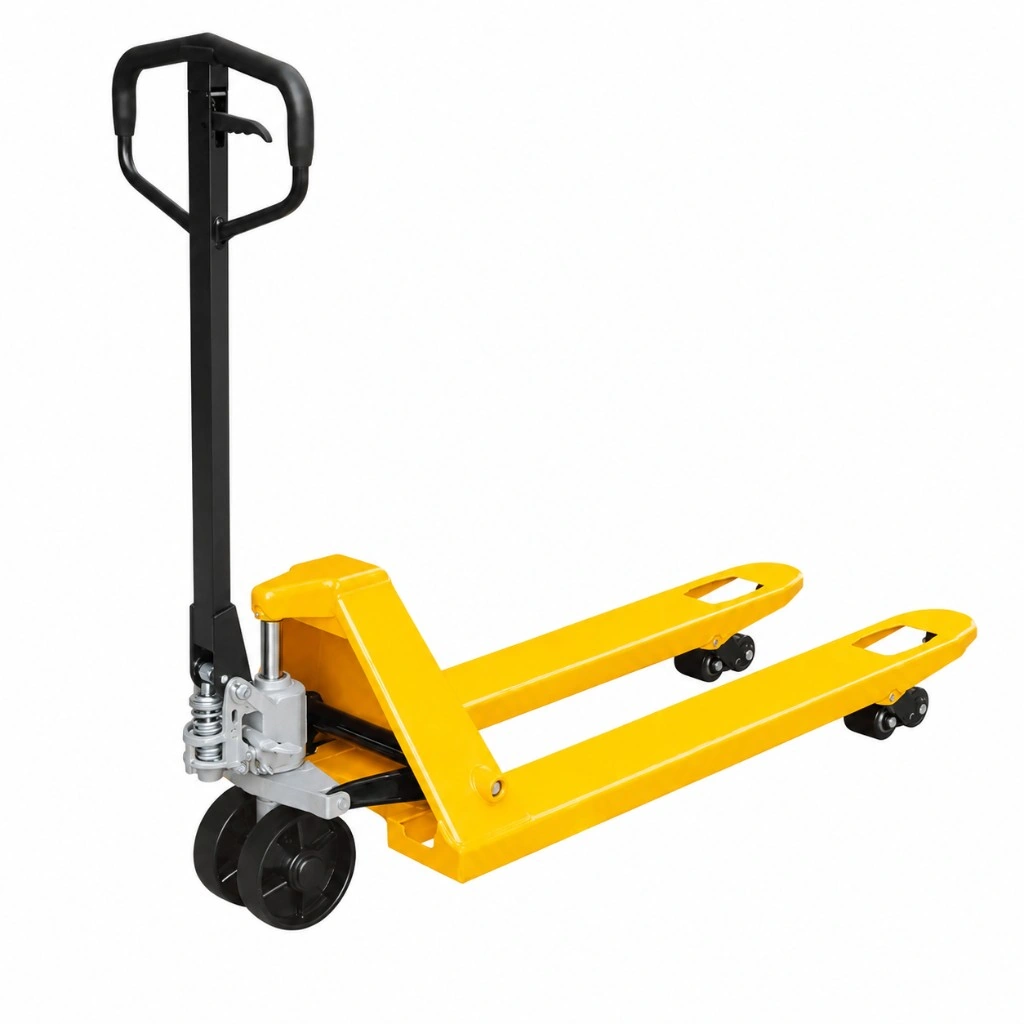
- Lift height and lowered height (low-profile for pallet trucks)
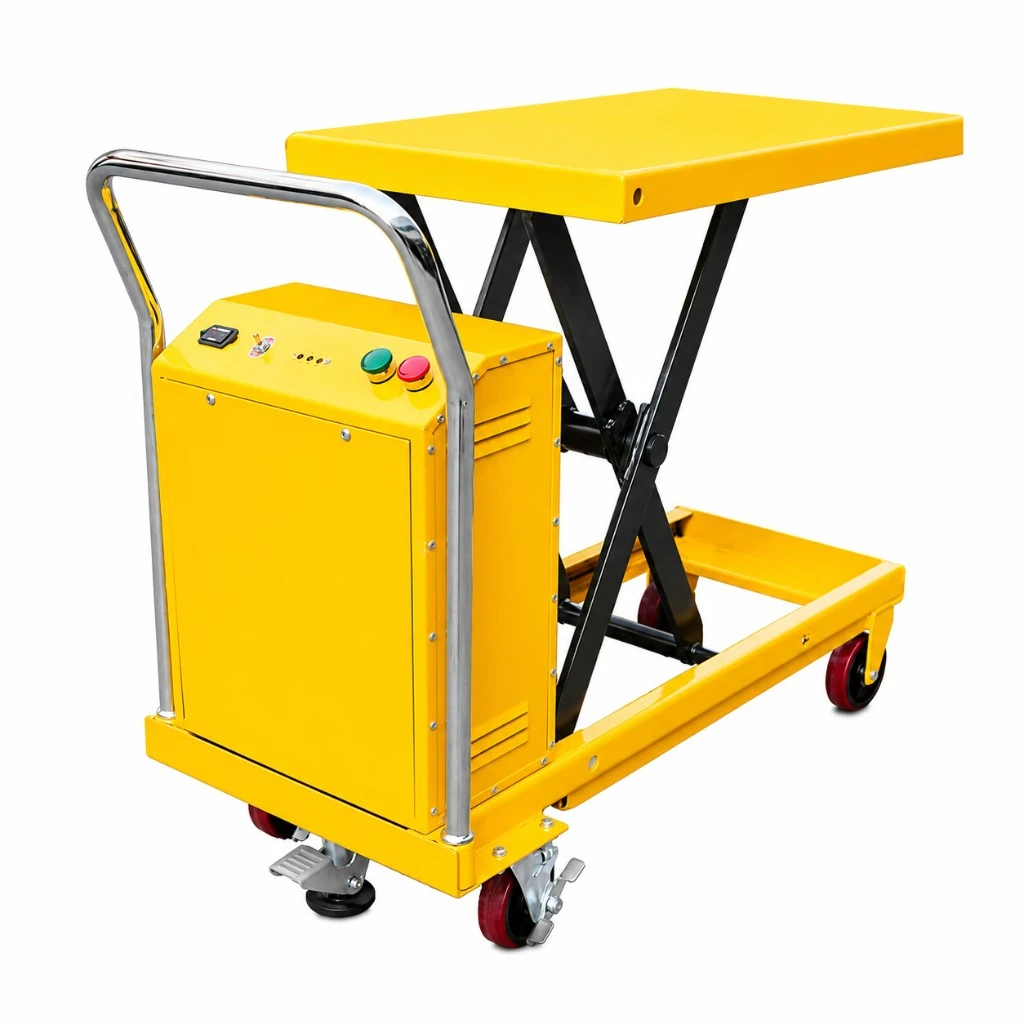
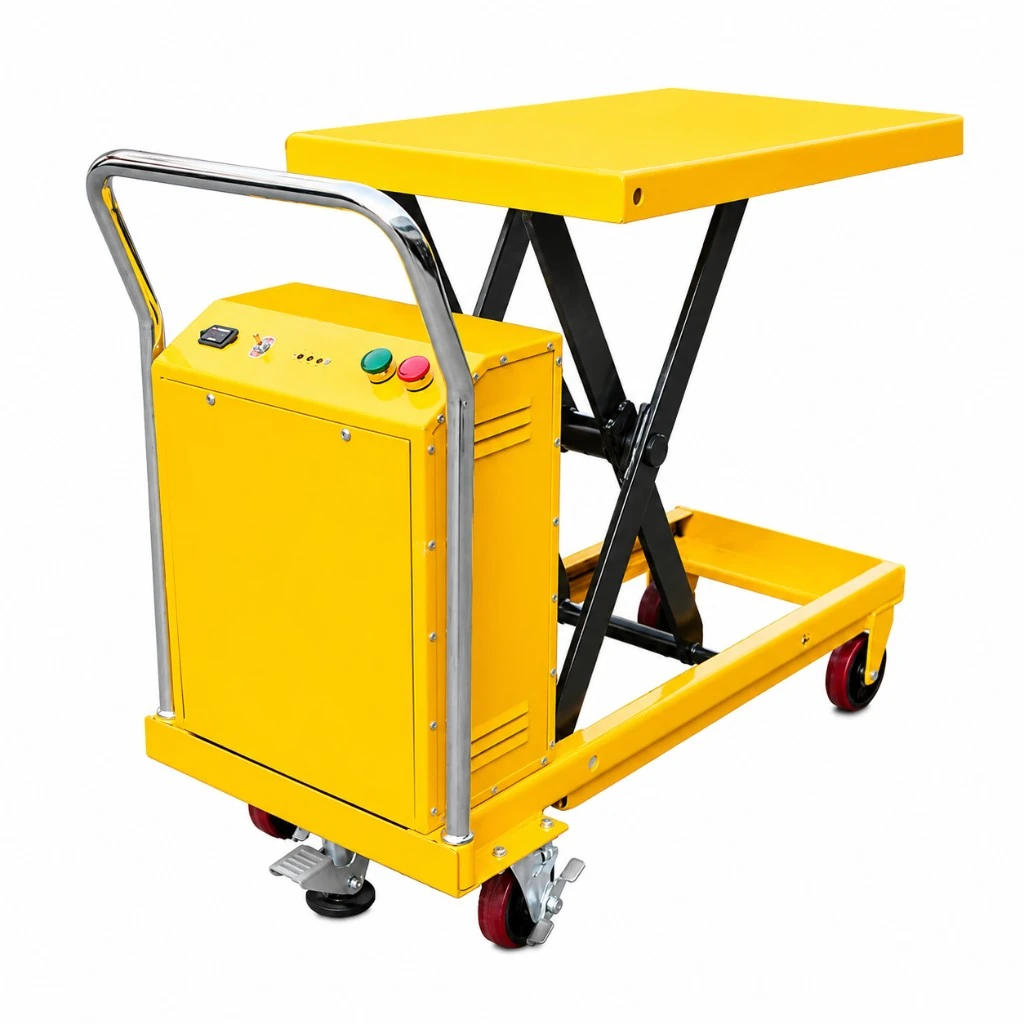
- Manual (foot pump) vs. electric
- Stationary vs. mobile
- Stainless for food/pharma
Not suitable for
- Lifting persons unless designed as a work platform
What we will ask you before recommending a model
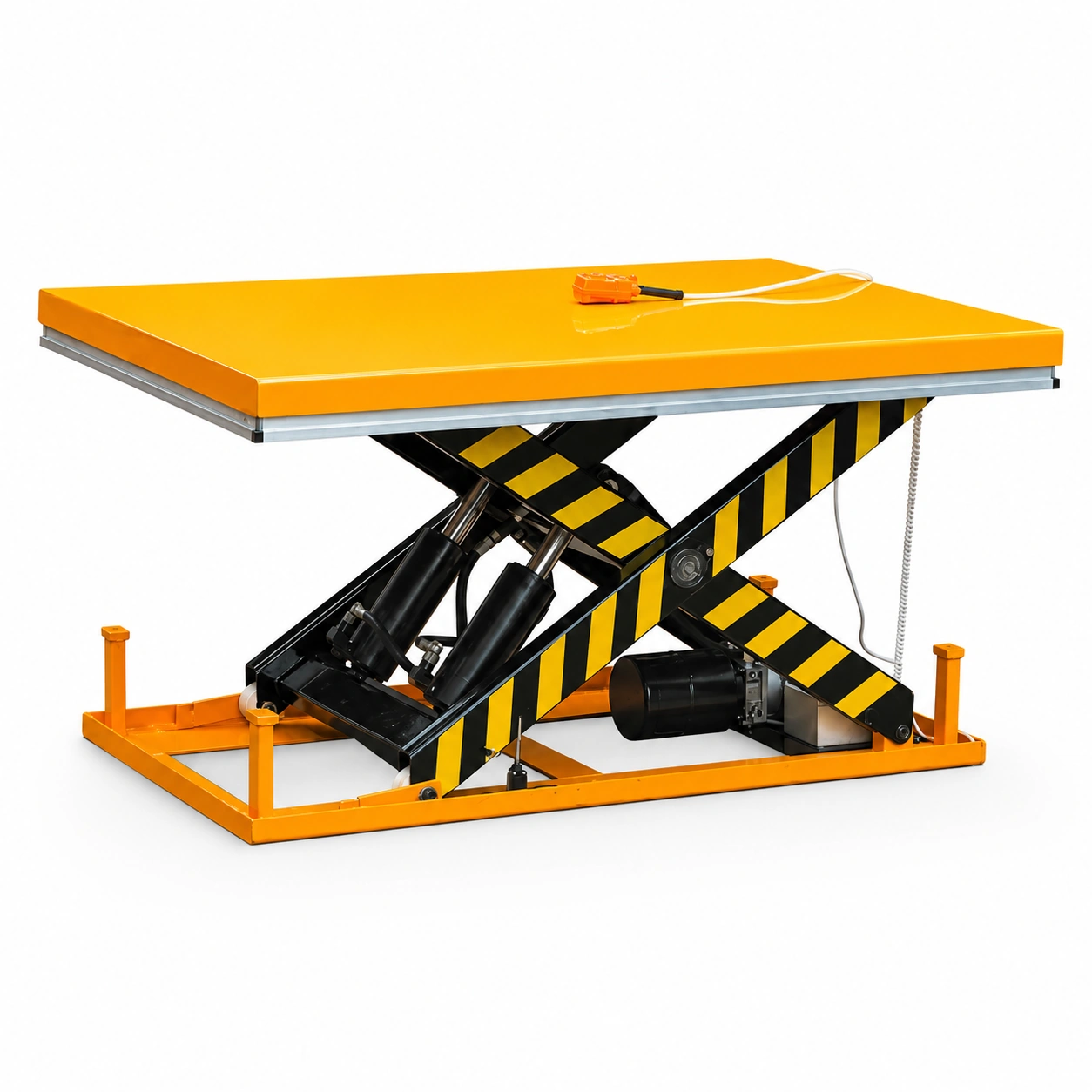
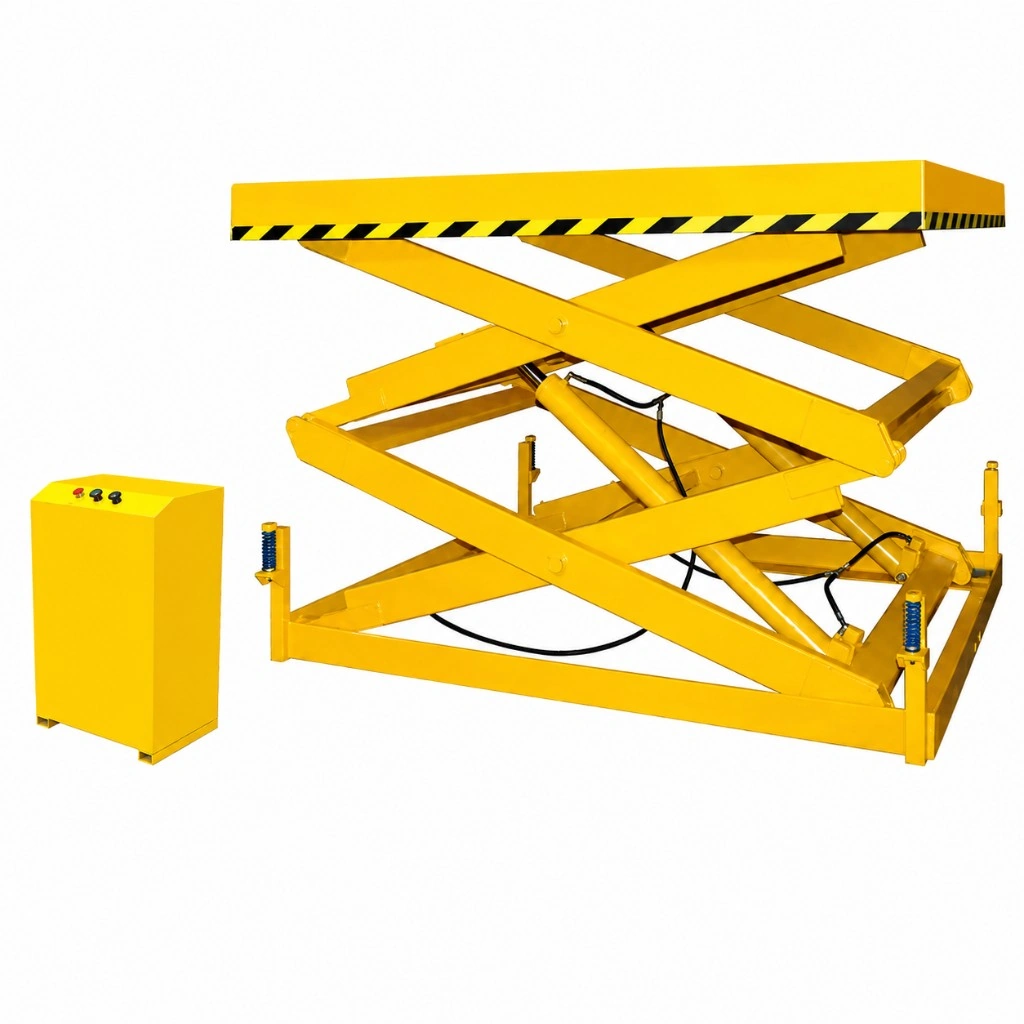
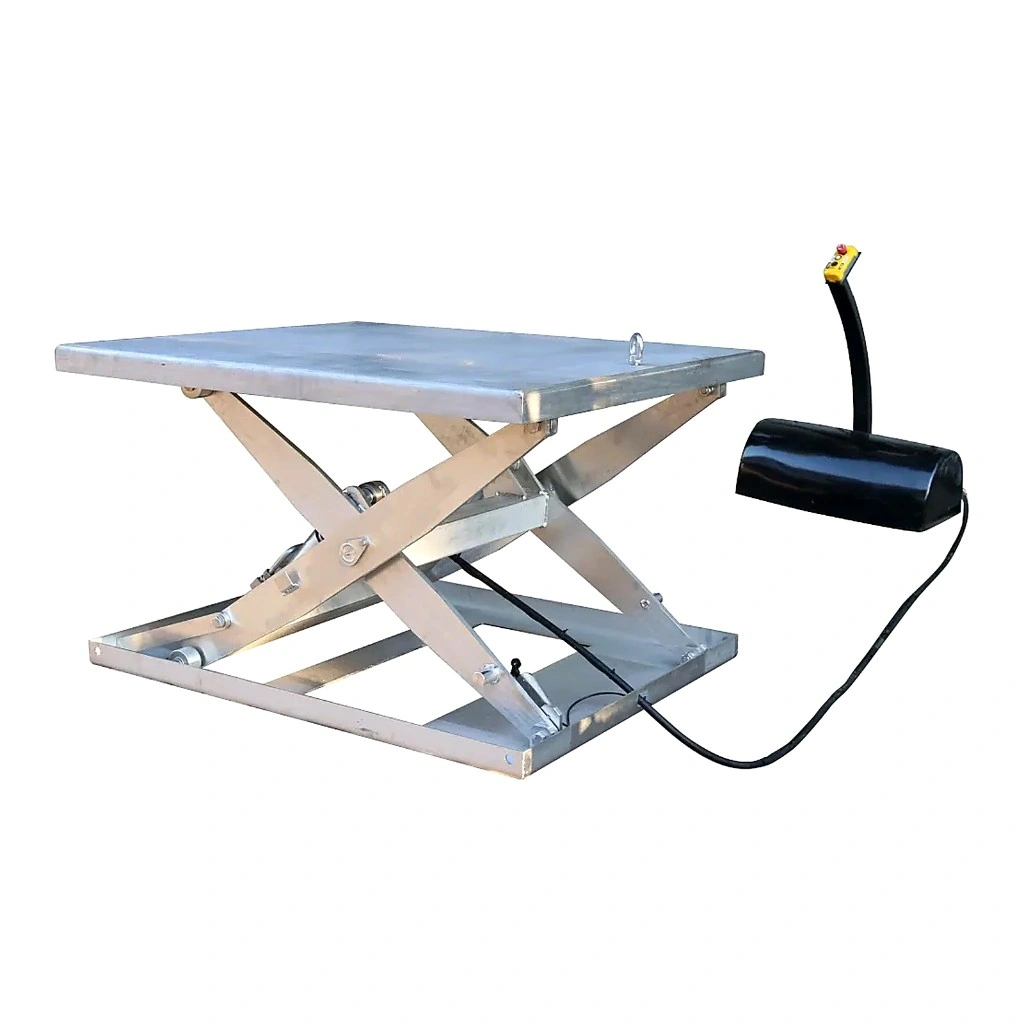
Stationary single-scissor lift table Technical check — we confirm a few parameters and compatibility with you before the order.
- Load mass, dimensions and how it is placed: centred, at an edge, rolled on, point load? Does a pallet truck or forklift drive onto the platform? Rated capacity does not permit any point or eccentric load; edge/rolling loads count as 50 % / 33 %; a vehicle on the platform adds wheel loads.
- Platform size vs. load footprint; lowered and raised height; travel; cycles per hour; lifting time? Lowered height decides pit or ramp; travel decides single/double/triple scissor; cycle rate sizes motor and hydraulics.
Typical mistakes to avoid
- Nominal capacity does not allow arbitrary point or eccentric loading — check the permitted distribution.
Helpful to have ready: Mass/dimensions/COG · Heights · Cycles · Power · Drawing of pit/space · Loading method
Hydraulic lift tables
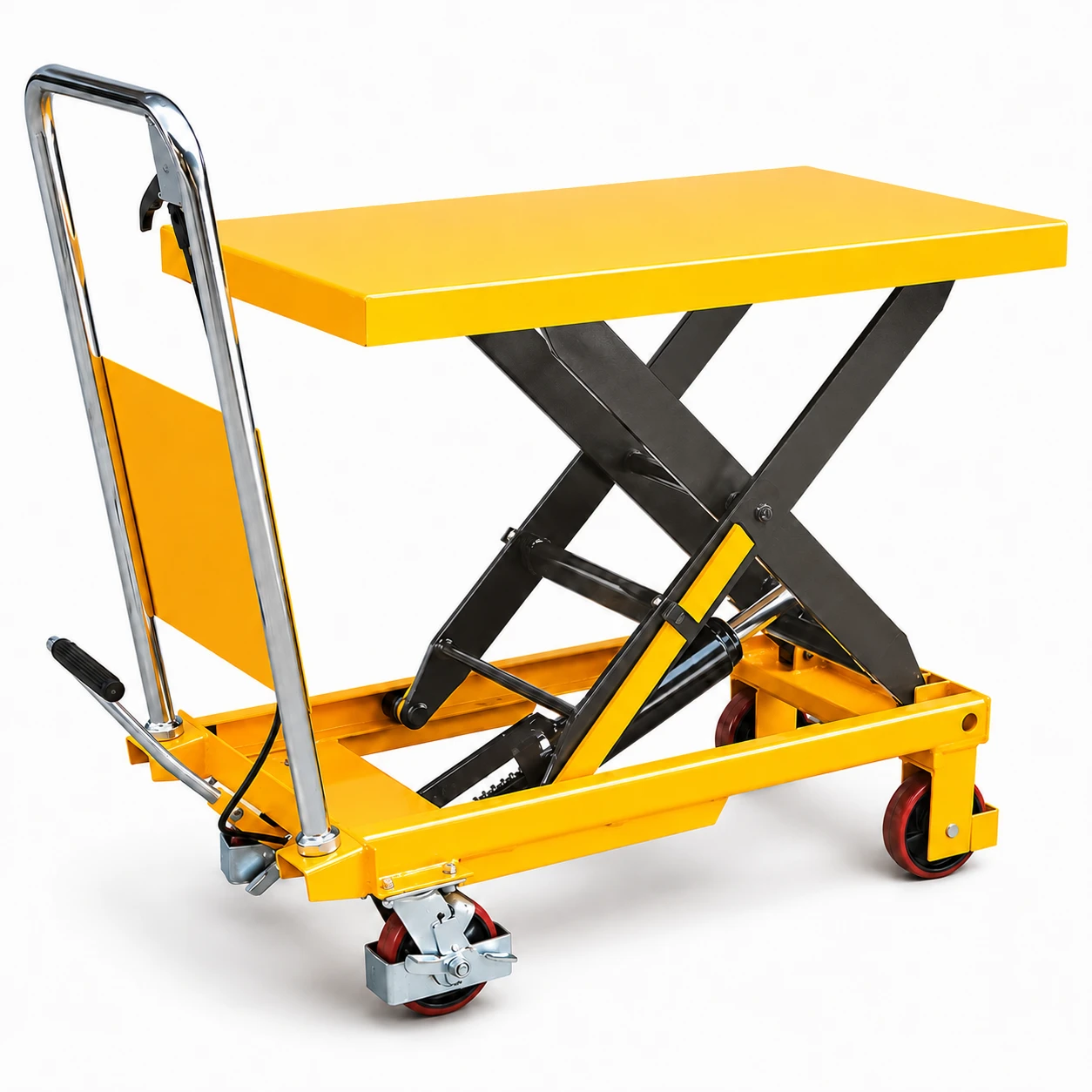
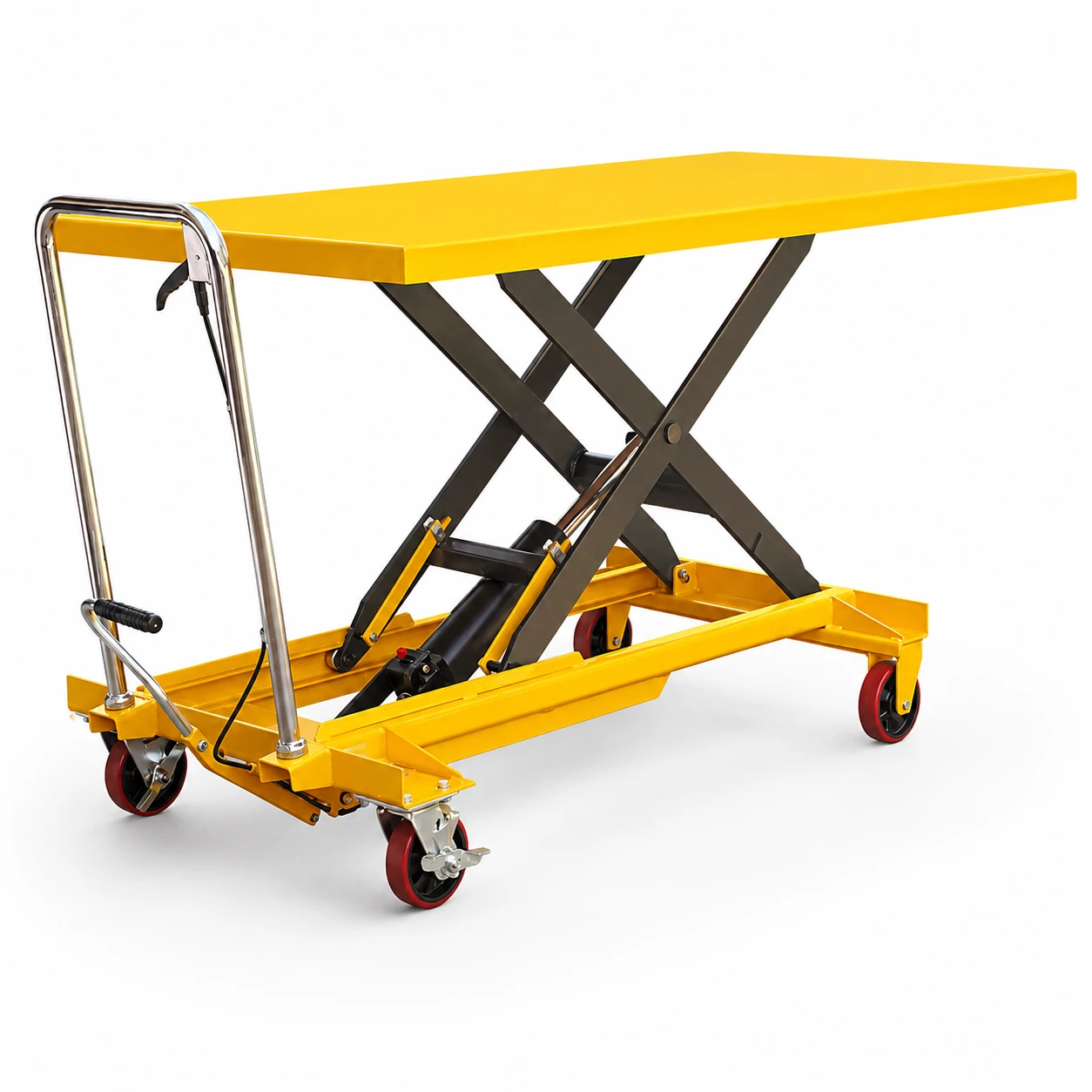
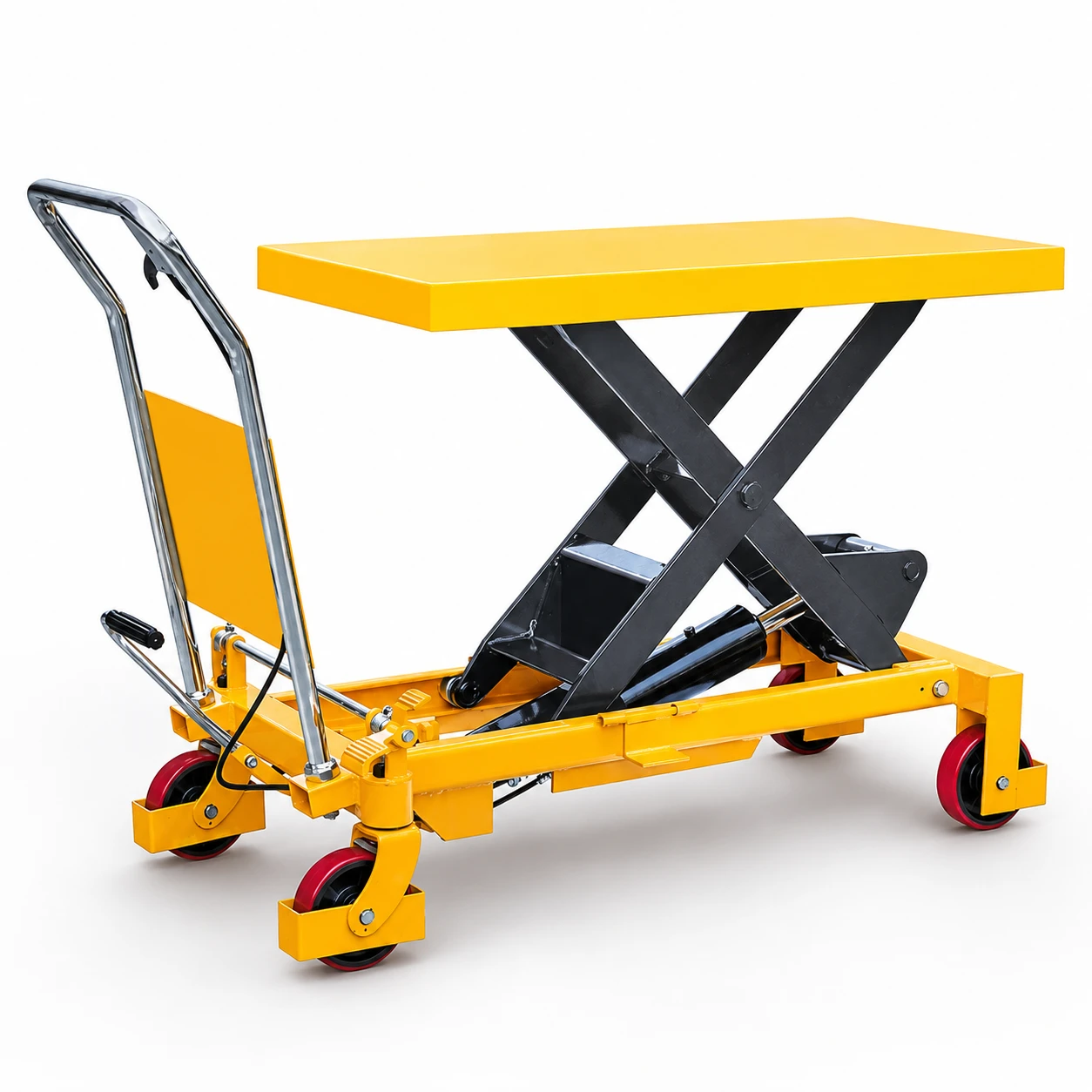
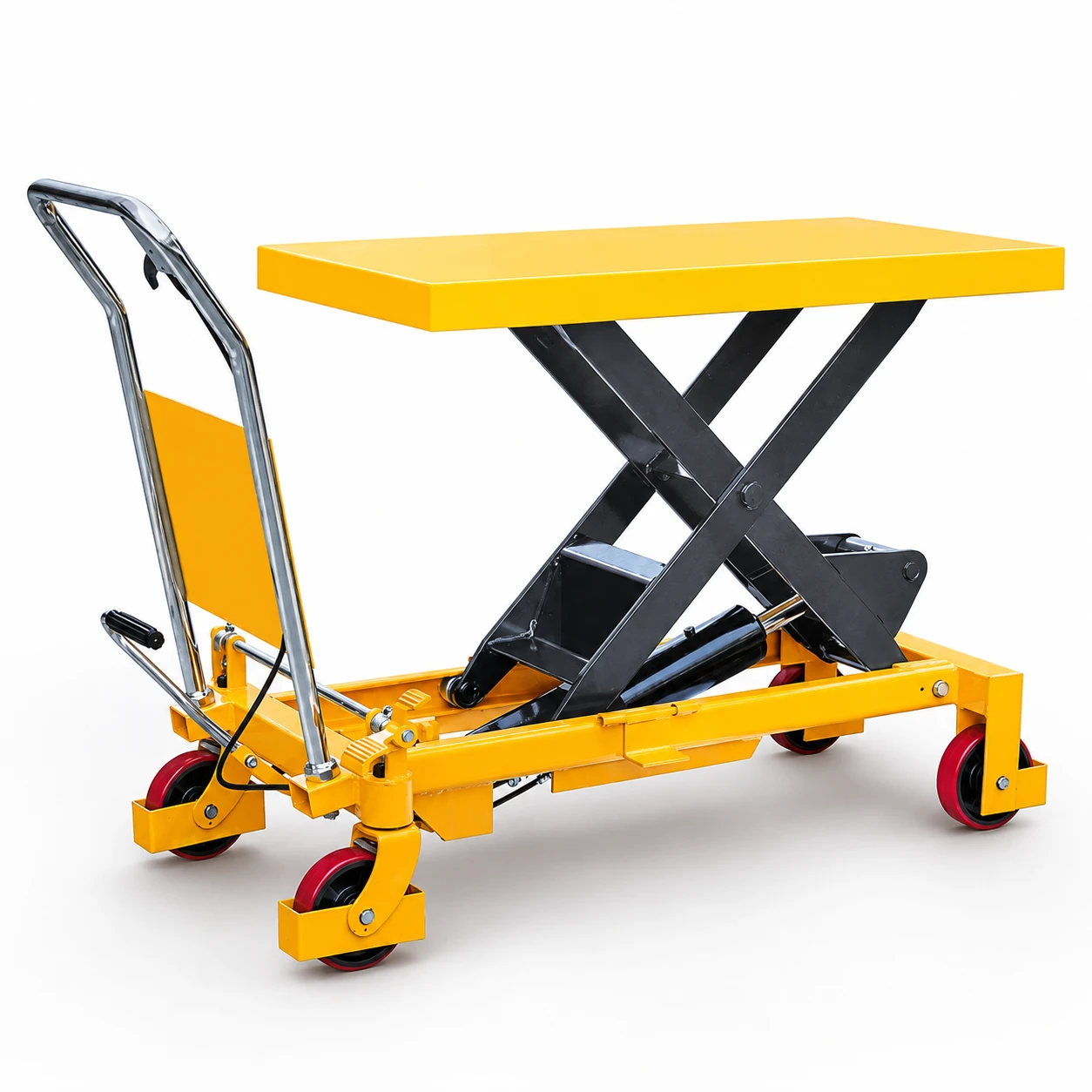
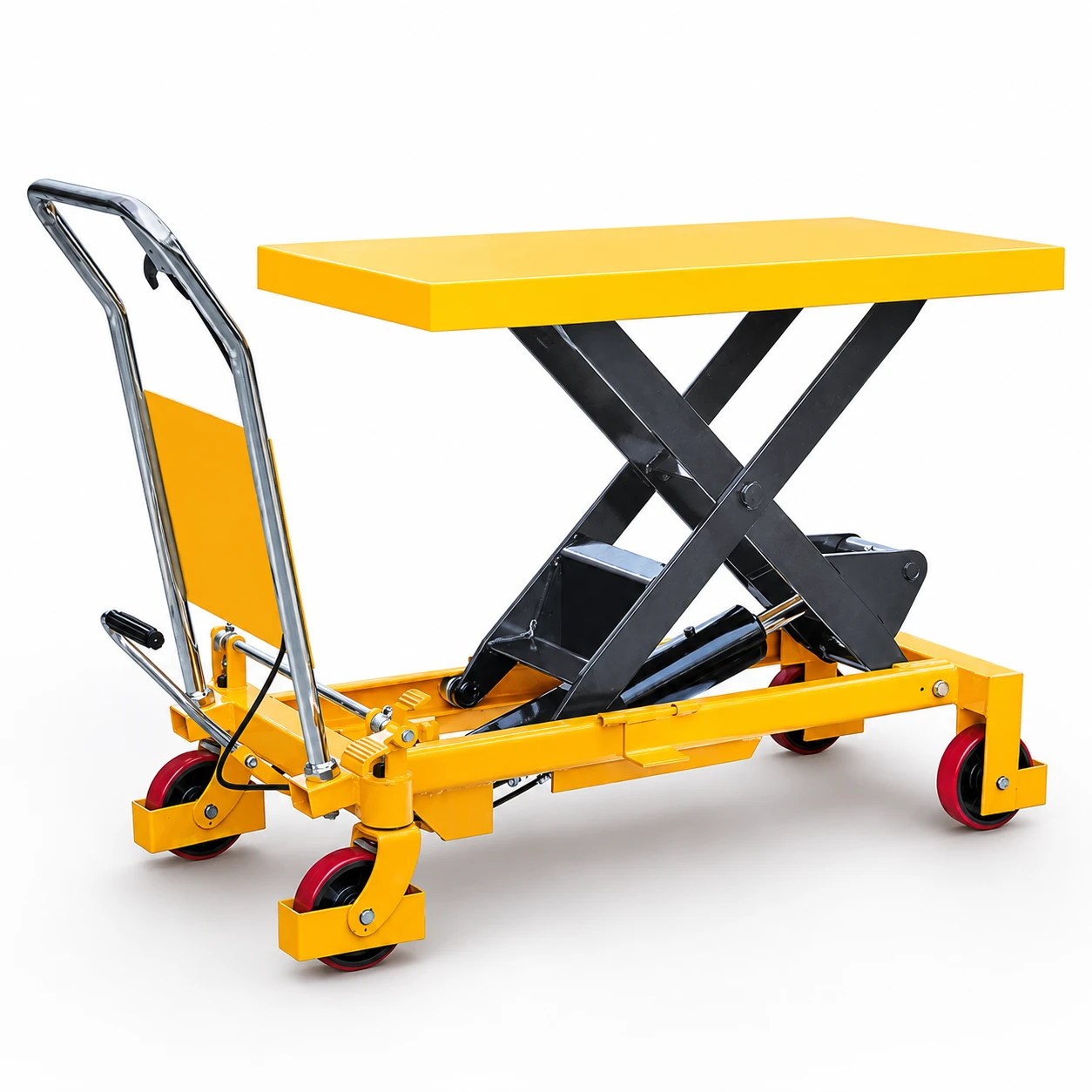
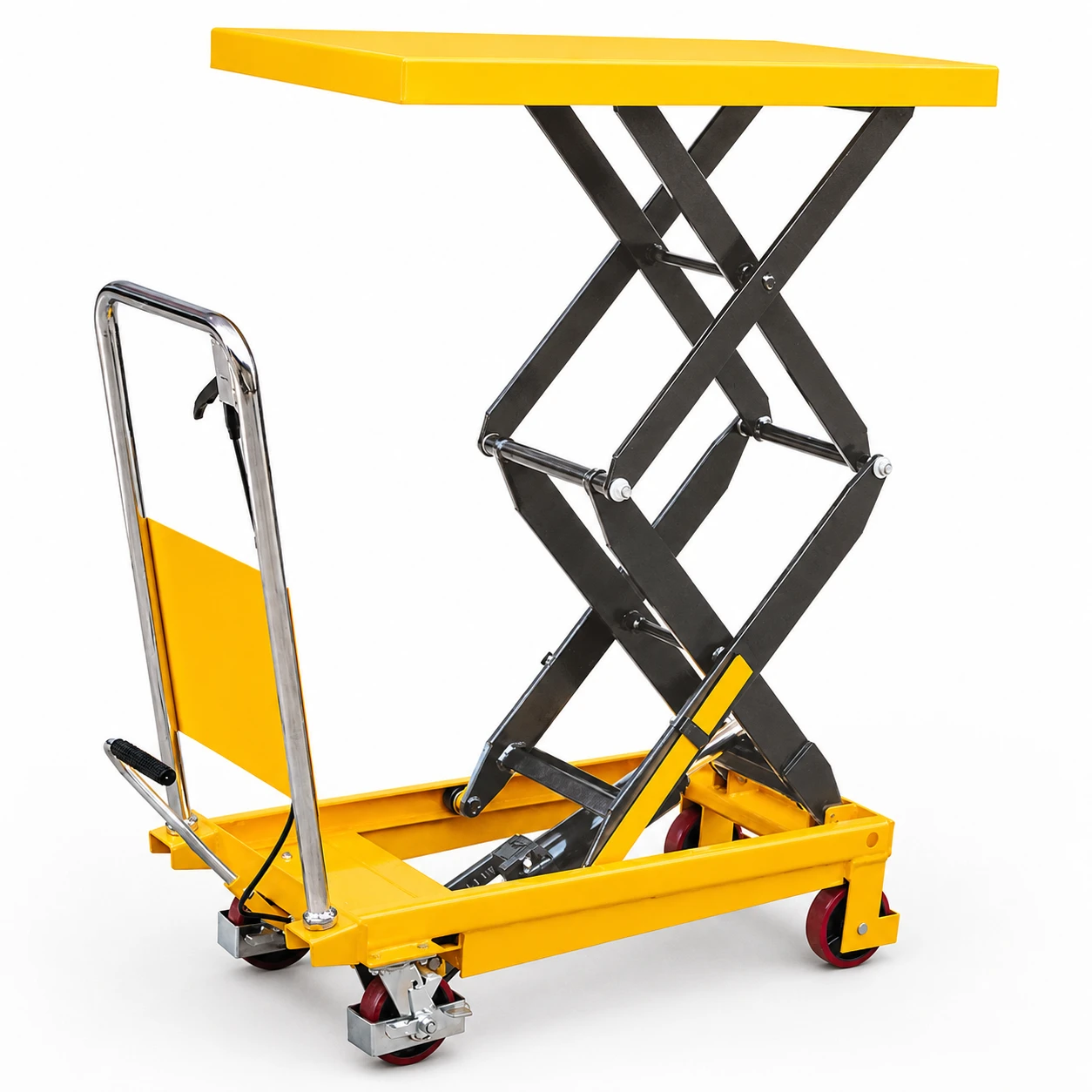
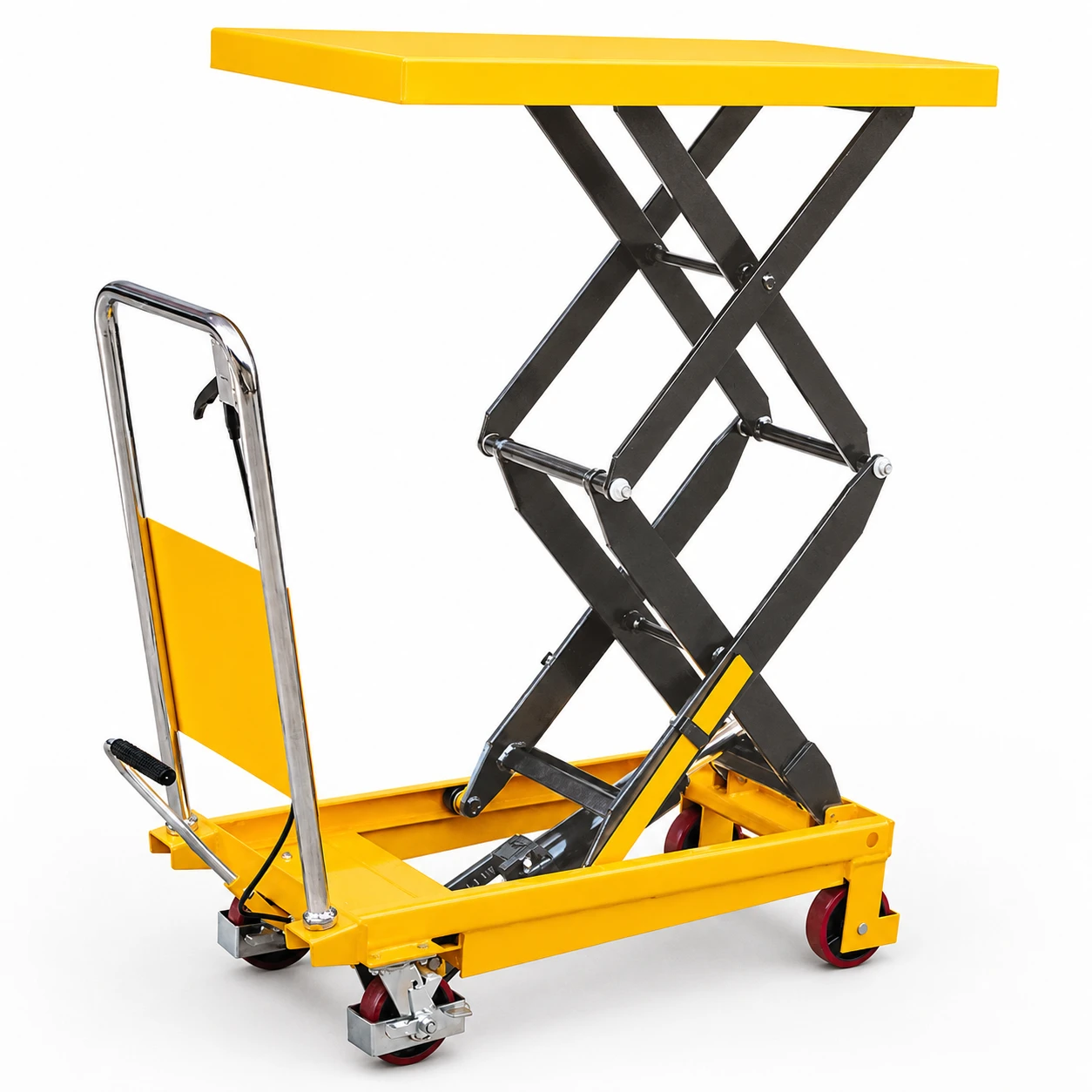
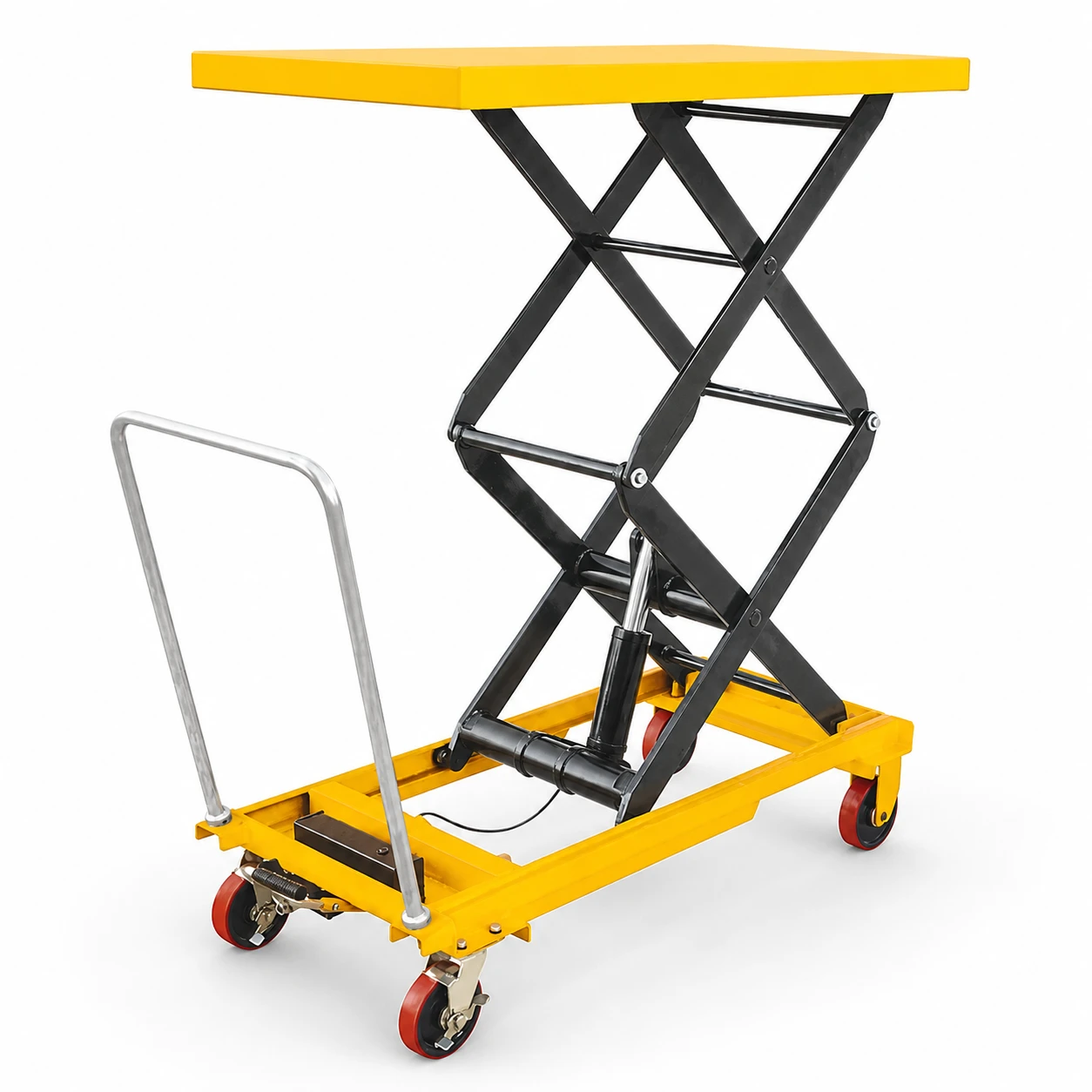
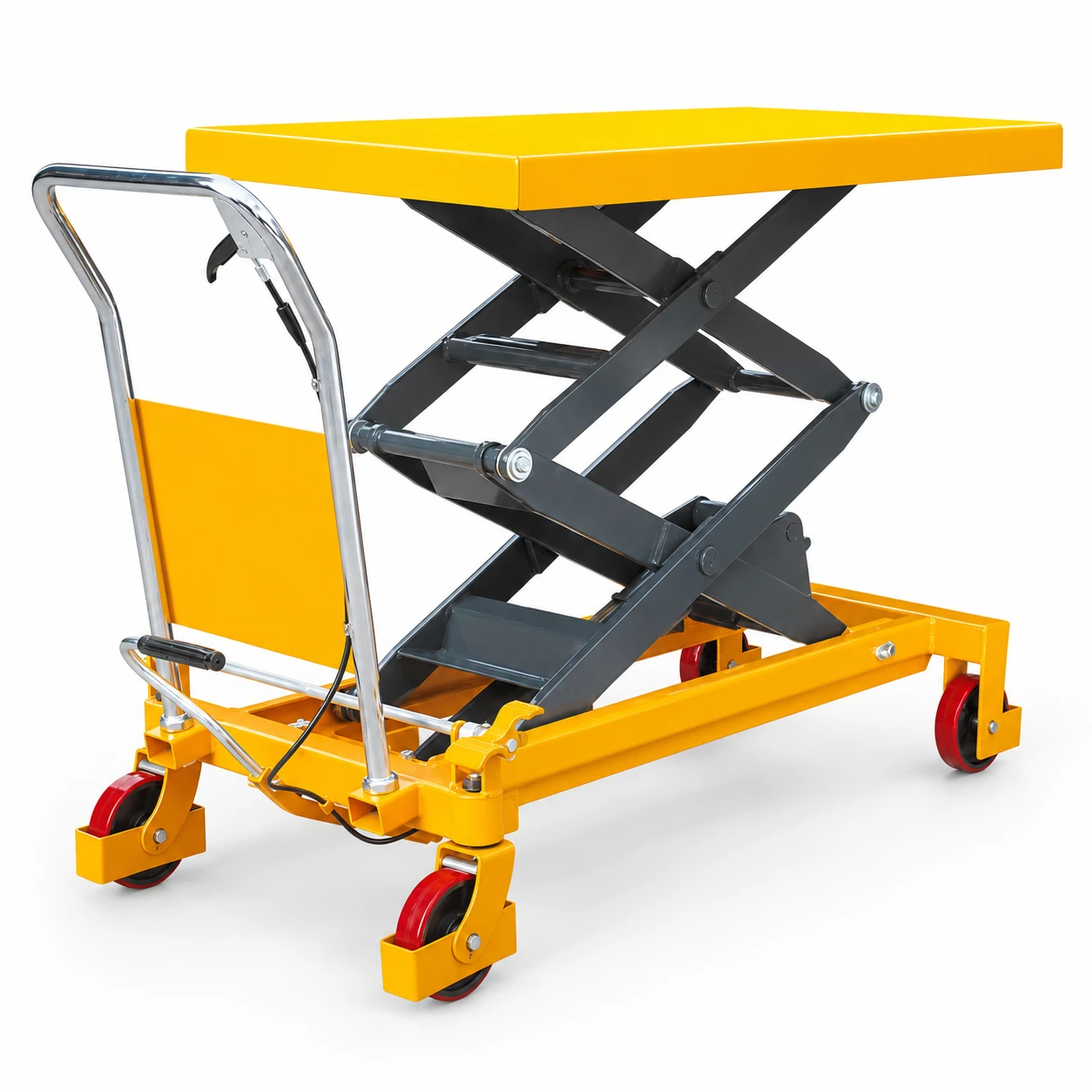
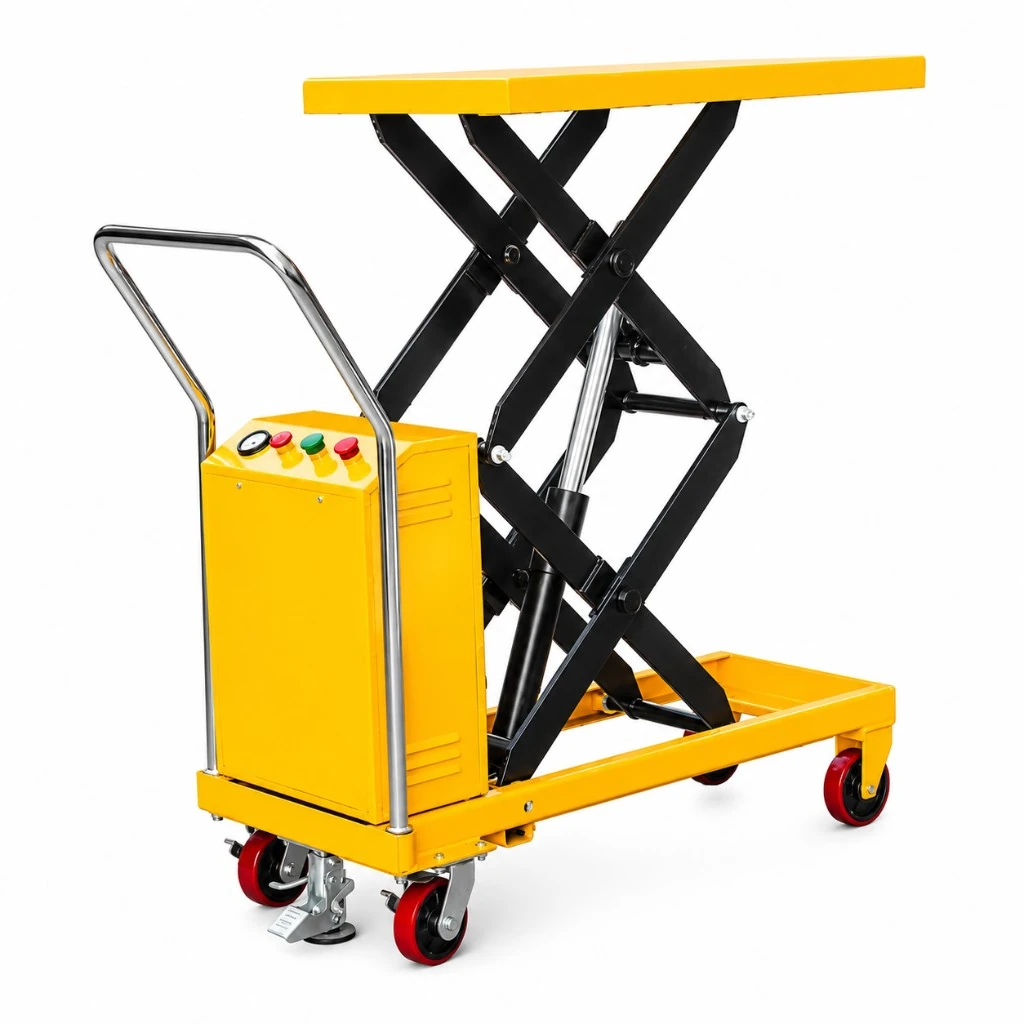
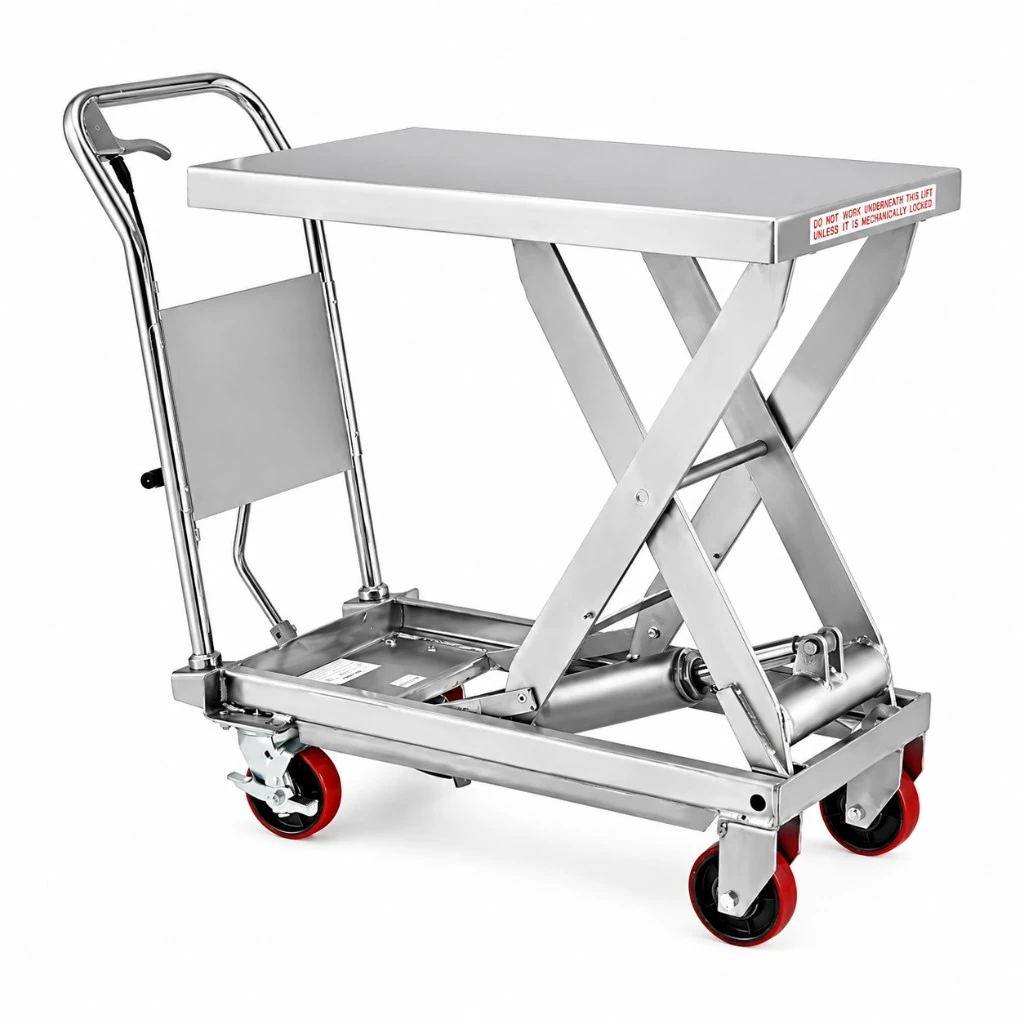
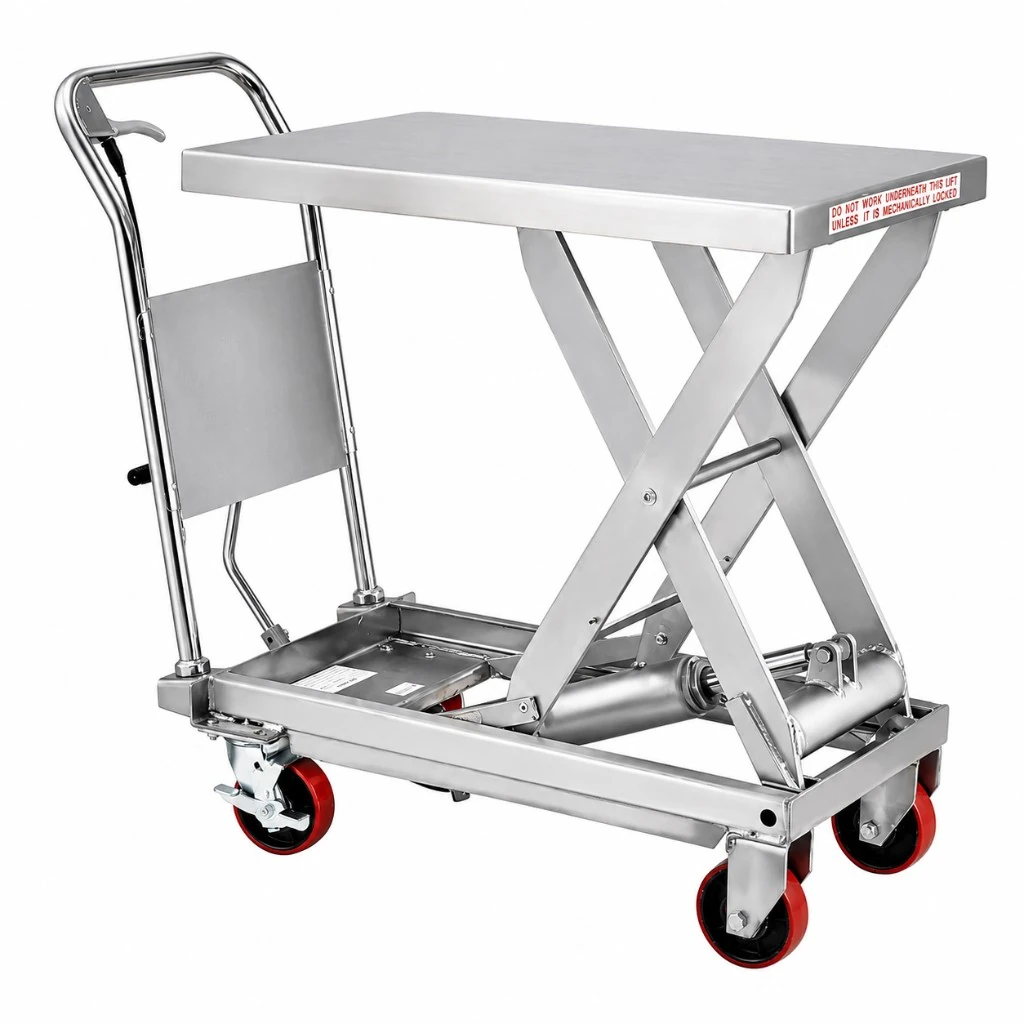
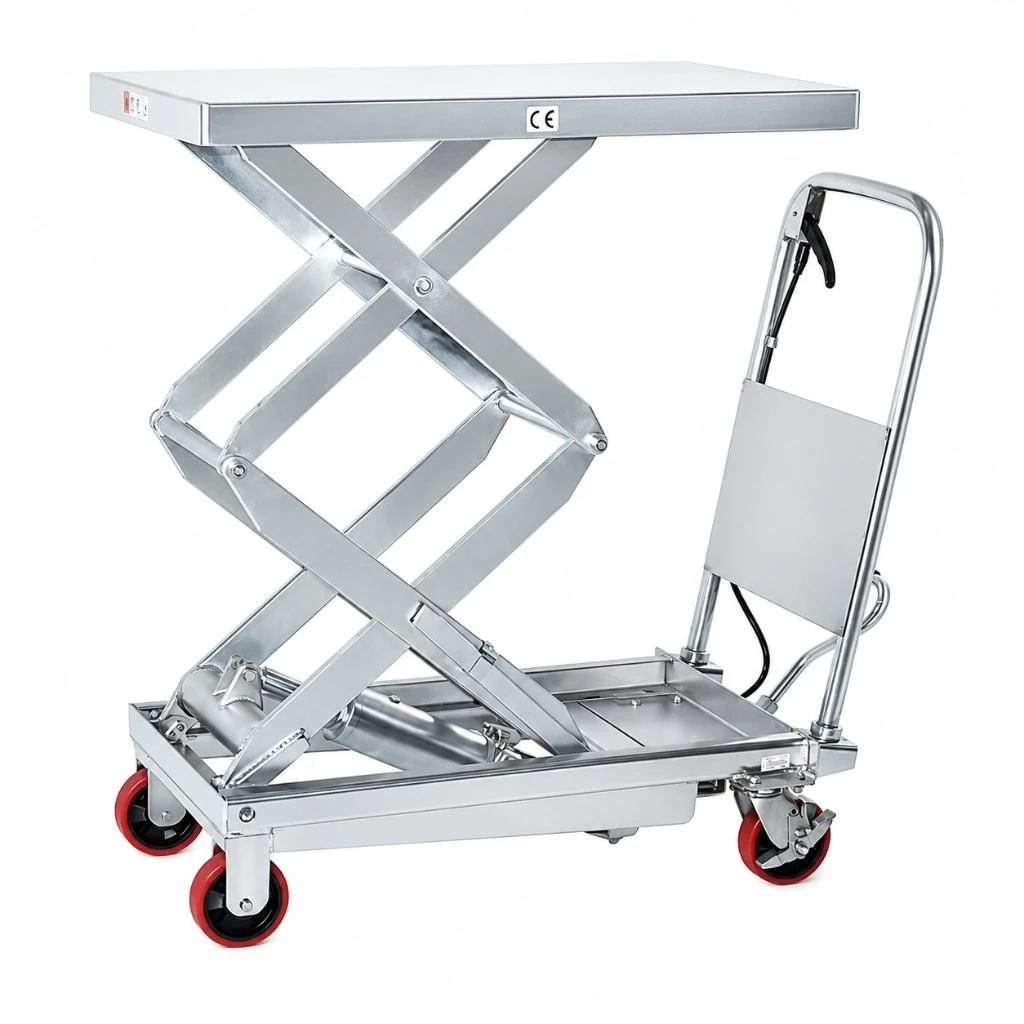
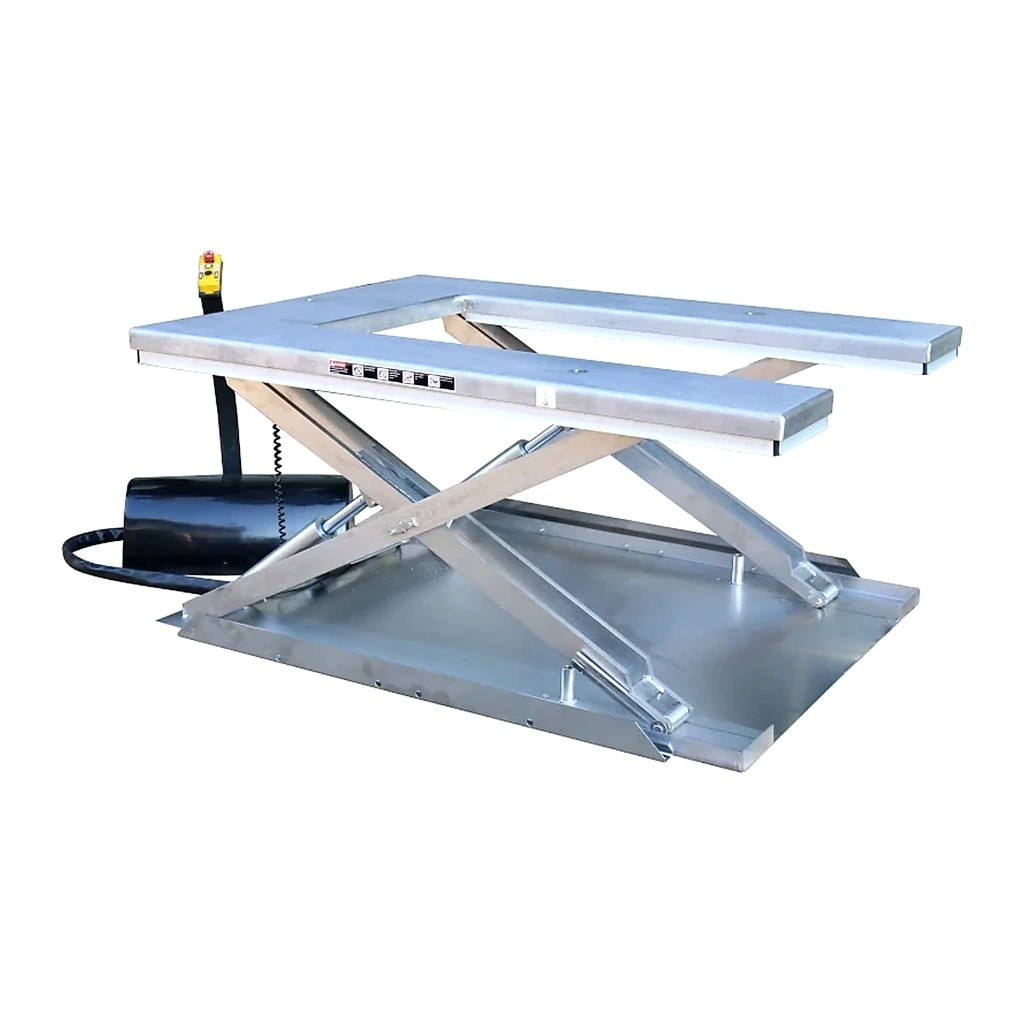
A lift table brings the work to the right height instead of making people bend, lift and stack at floor level — the cheapest ergonomic upgrade a production floor can buy. The families: low-lift tables for feeding machines and workstations; high-lift tables where the load must travel further up; low-profile tables that a hand pallet truck loads directly without a pit; mobile tables on wheels that lift and transport with one device; and stainless tables for food and pharma washdown areas, plus loading ramps for dock-less loading.
Selection is straightforward: load weight, lowered and raised height, platform size and how often the table cycles. Contact us with those four figures and we will match the table — including special platform sizes and controls where the standard programme does not fit.
Frequently asked questions
Which lift table type do I need?
Fixed workstation with pallet loads: low-lift or high-lift table. Loading by hand pallet truck without a floor pit: low-profile model. Load moves between stations: mobile table. Hygienic area: stainless programme. The deciding figures are load, heights, platform and cycle frequency.
Do I need a pit for a lift table?
Not necessarily — low-profile tables accept a hand pallet truck at floor level and U-shaped stainless models take the truck into the platform cut-out. A pit installation remains an option where a completely flush loading surface is required.
How quickly can a lift table be delivered?
Request a quote on the product page with load, heights and platform size and we will confirm the current lead time and the delivery cost for your location.