















Three questions before any catalog page
Equipping a workshop with lifting equipment goes wrong in a predictable way: someone buys the crane first and discovers the workflow second. Do it in the opposite order. Answer three questions — what do you lift, where does it travel, and how often — and the right equipment picks itself. This guide walks through the decision using the workshop cranes and hoists we configure daily.
1. The load stays at one workstation → jib crane
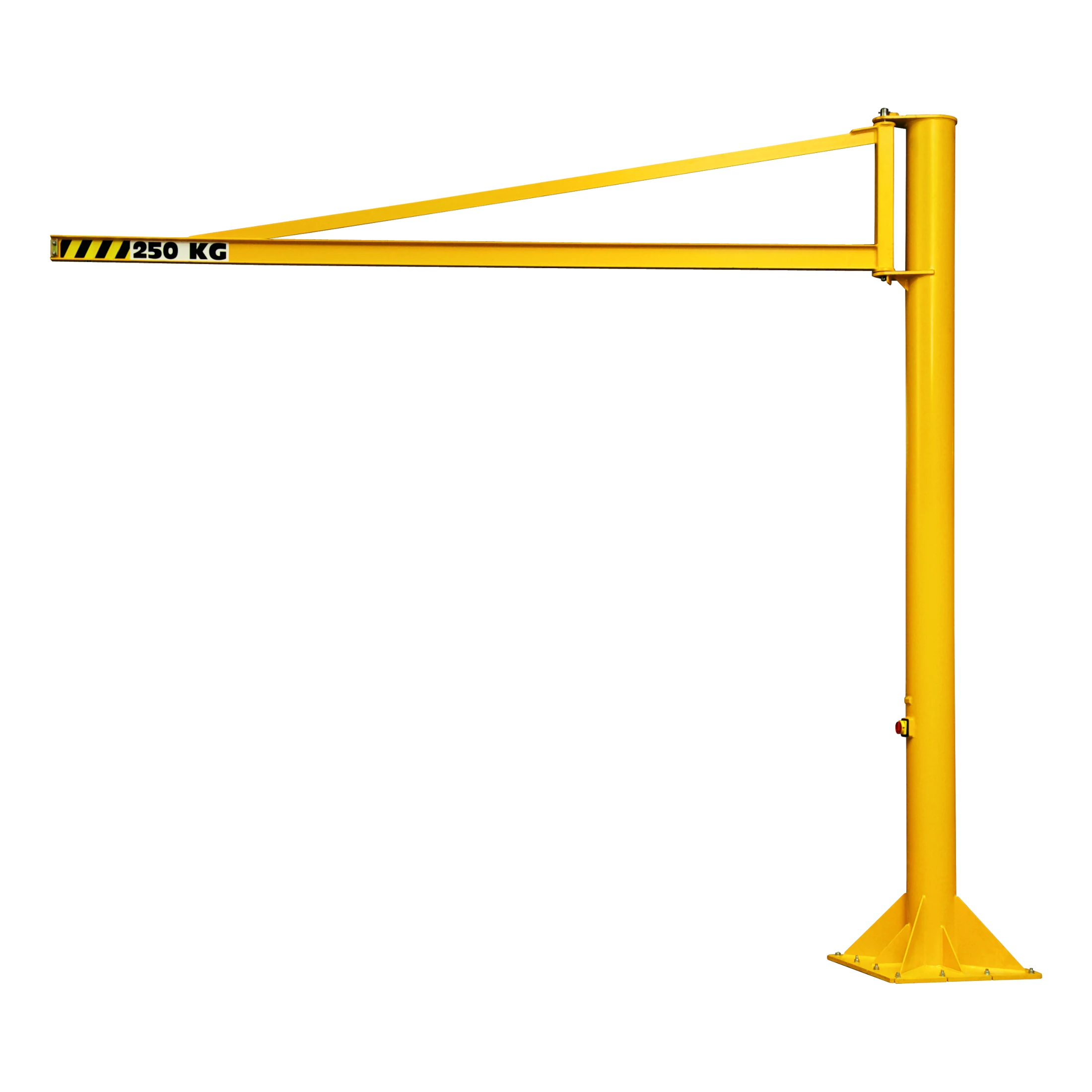
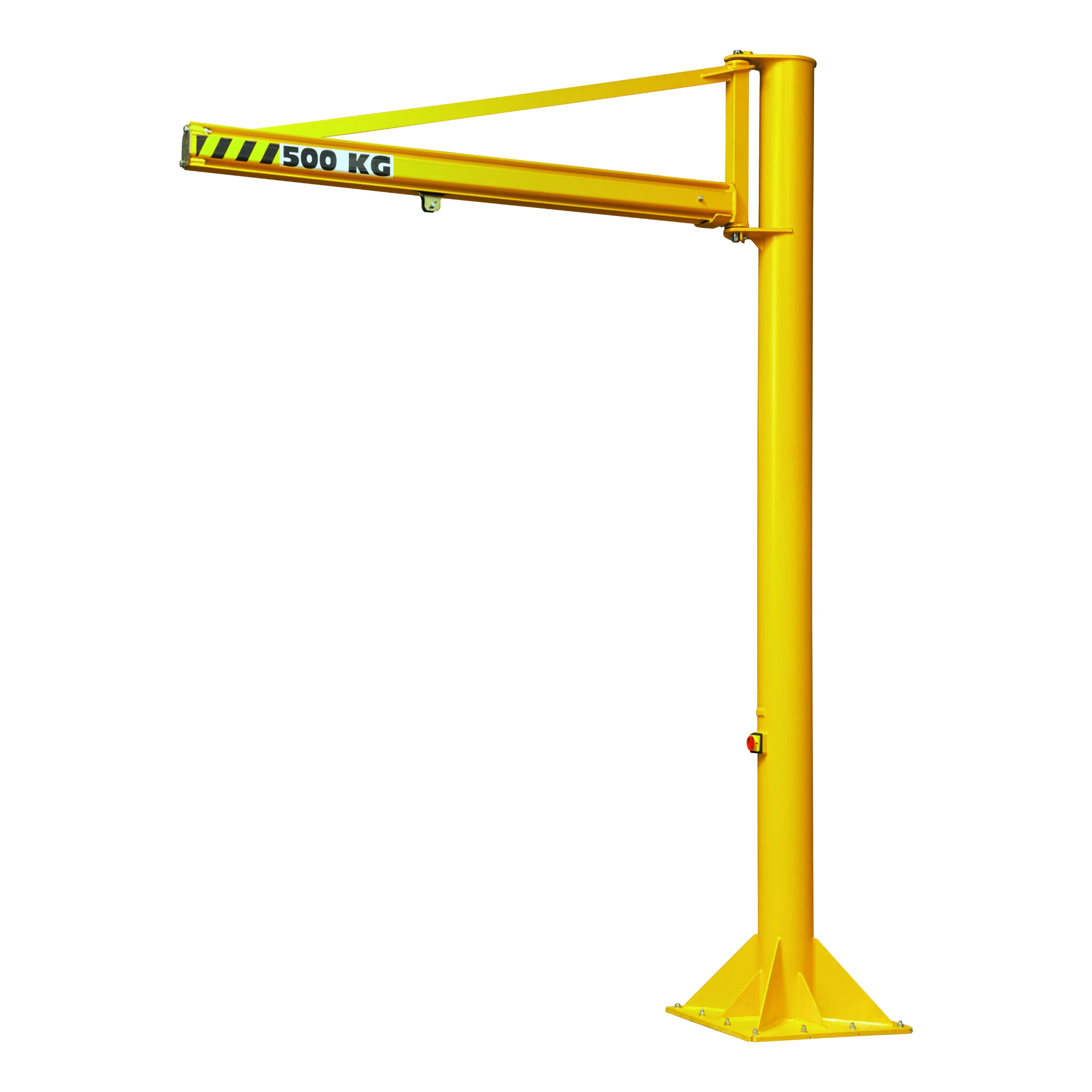
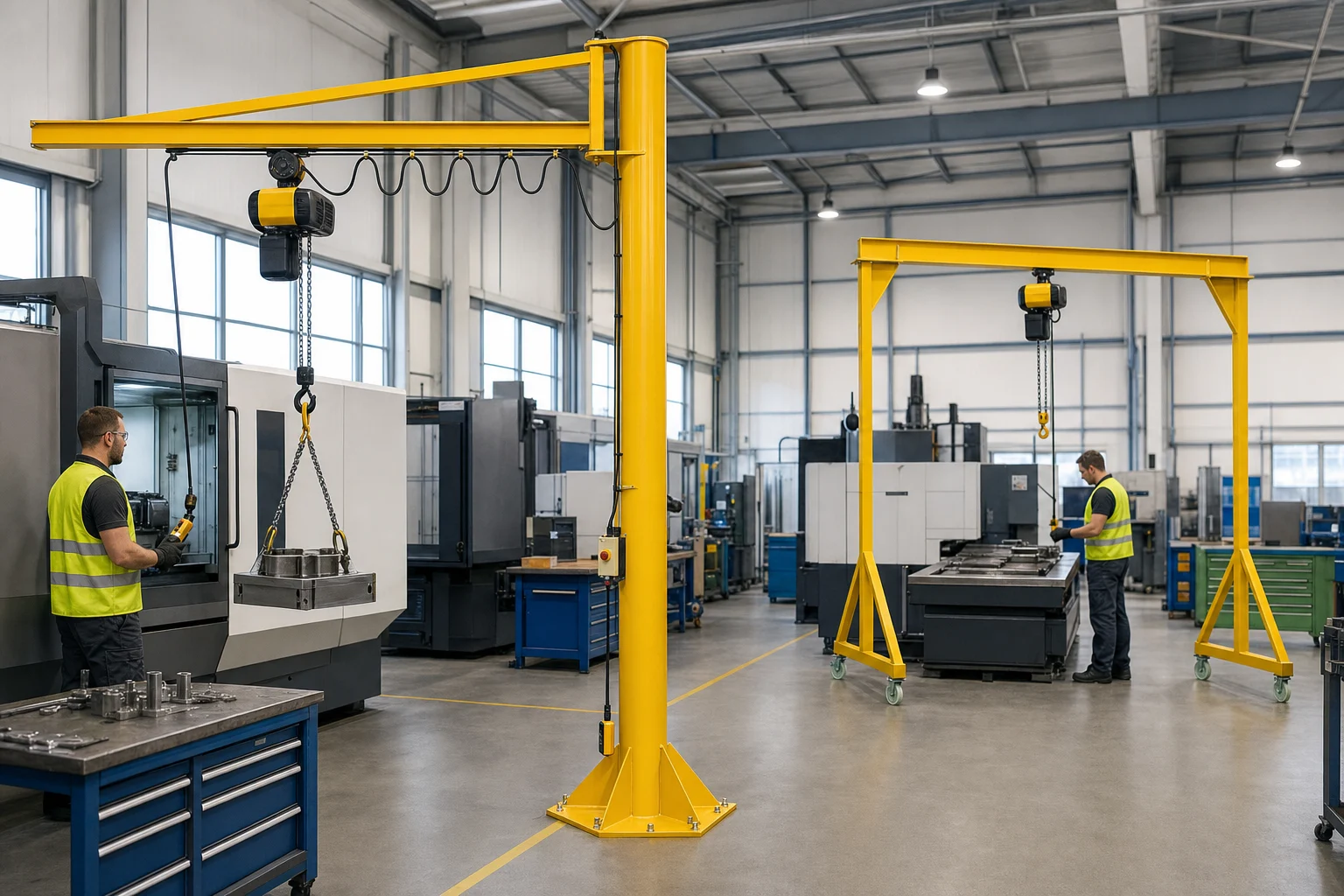
If the lifting happens around a single machine, bench or assembly station, a jib crane owns that circle. A pillar jib crane slews 270° around its own floor-anchored column (full-rotation 360° models reach 10 t); a wall-mounted jib crane uses your building instead and costs less if a strong wall is already there. Capacities run 50–2,000 kg with booms of 2–8 m, with articulated versions that reach around obstacles. Start with the jib crane overview, then go deep with the pillar jib crane guide or the wall-mounted jib crane guide.
2. The load travels anywhere in the hall → mobile gantry crane

When today's lift is over the lathe and tomorrow's is over a trailer, no fixed crane helps. A gantry crane rolls to the job: the steel workshop gantry (500–5,000 kg) is the best price per tonne for one hall, the folding aluminium gantry (250–2,000 kg) travels between sites in a van, and the motorized gantry drives itself with loads to 10 t. For lifting over a single spot — a pit, a shaft — the folding lifting tripod is the lightest answer. Sizing rules are in the gantry crane buying guide.
3. How often you lift decides the hoist
Every crane above is a frame; the hoist does the work. The honest crossover points:
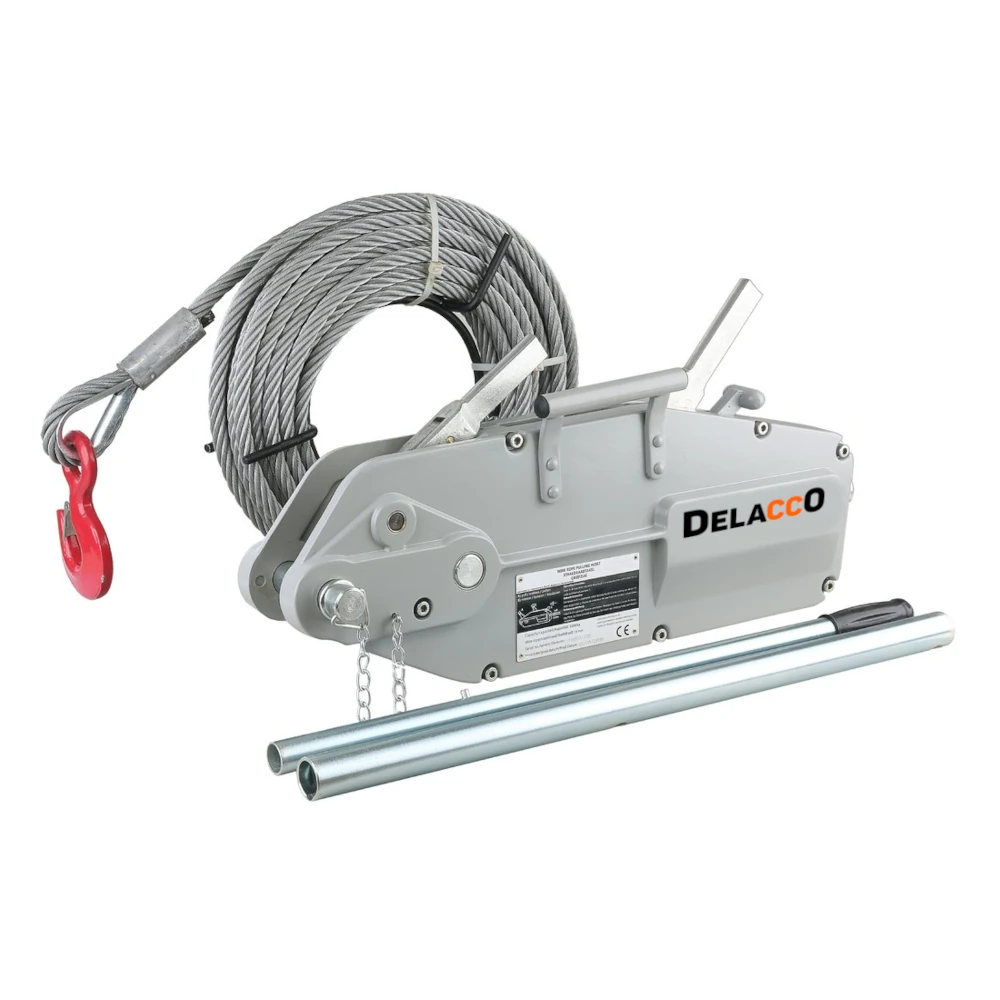
- A few lifts a week: a manual chain hoist on a push trolley — minimal cost, zero electrics.
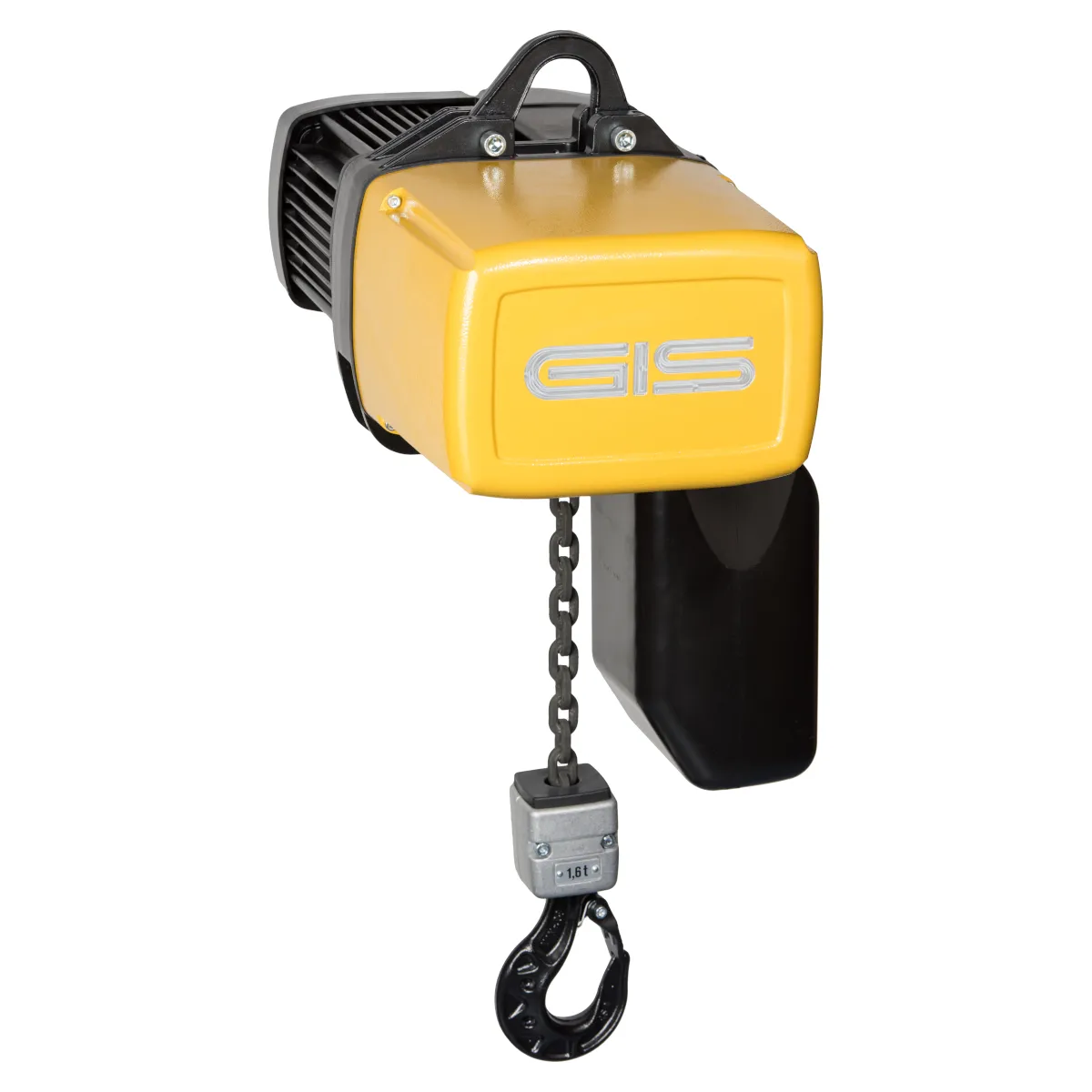
- Daily lifting, loads over ~500 kg, or precise positioning: a GIS GP electric chain hoist (100–6,300 kg, 42 V control, 3-year warranty) pays for itself in saved time.
- High cycle counts or sensitive loads: the frequency-inverter GPFU adds stepless speed and soft starts.
- Low ceiling: the low-headroom GPK recovers the headroom a standard hoist eats.
Capacities, speeds, duty classes and special environments (food-grade, ATEX) are covered in the electric chain hoist buying guide.
4. A worked example: the 1-tonne machine shop
A typical machining workshop — loads to 1,000 kg, one CNC loading station plus occasional lifts elsewhere — ends up with:
- A 270° pillar jib crane, 1,000 kg × 4 m boom, over the CNC loading station, carrying a two-speed GIS GP 1000;
- A mobile steel gantry crane, 2,000 kg × 4 m span, with a manual chain hoist, for everything else in the hall;
- Foundation for the pillar poured during the next floor renovation — the gantry works from day one with no building work at all.
That combination covers virtually every lift a shop of that size performs, for less than the price of a single overhead crane runway.
5. Building checks before you order
- Floor: pillar jibs need a concrete foundation to the supplied drawing; gantries just need a sound, level slab.
- Walls: wall jibs need a structural check — send us photos and dimensions and the bracket forces are verified before the order is confirmed.
- Headroom: measure to the lowest obstacle (lights, ducts), then subtract hoist headroom (300–600 mm) to know your real hook height.
- Power: electric hoists need a supply at the workstation; cable reels are configured with the crane.
- Inspection: all lifting equipment gets a statutory yearly inspection — plan who does it before the equipment arrives, not after.
Everything above is made to order, CE-marked and delivered with the EC declaration of conformity. Configure any combination on the product pages, or send us the workshop layout — we size the crane-and-hoist package the same working day.