















Why an electric chain hoist
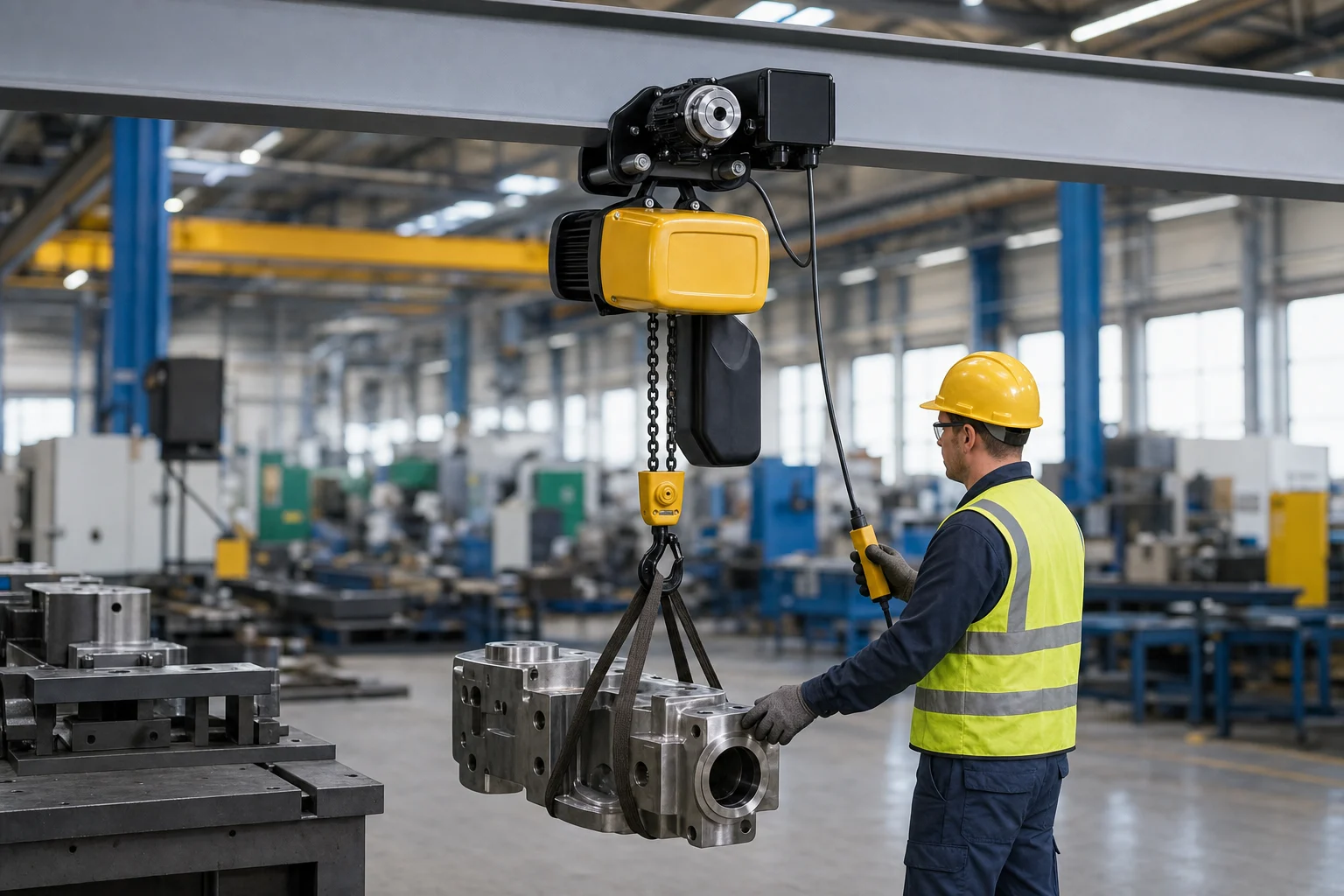
An electric chain hoist replaces muscle with a motor: press a button and loads from 100 kg to 6,300 kg travel up and down at a controlled speed, all day, without fatigue or dropped-load risk from tired hands. Hung from a jib crane, gantry or runway beam it is the heart of almost every workstation lifting setup.
We supply Swiss-made GIS electric chain hoists — developed and manufactured in Switzerland for more than 60 years and covered by a 3-year warranty. The GP series is deliberately simple: no sensitive electronics, which is exactly what you want on equipment that must not stop production. This guide explains how to choose capacity, speed, suspension and options; every combination below can be configured directly on the product pages with an instant price.
1. Capacity: 100 kg to 6,300 kg
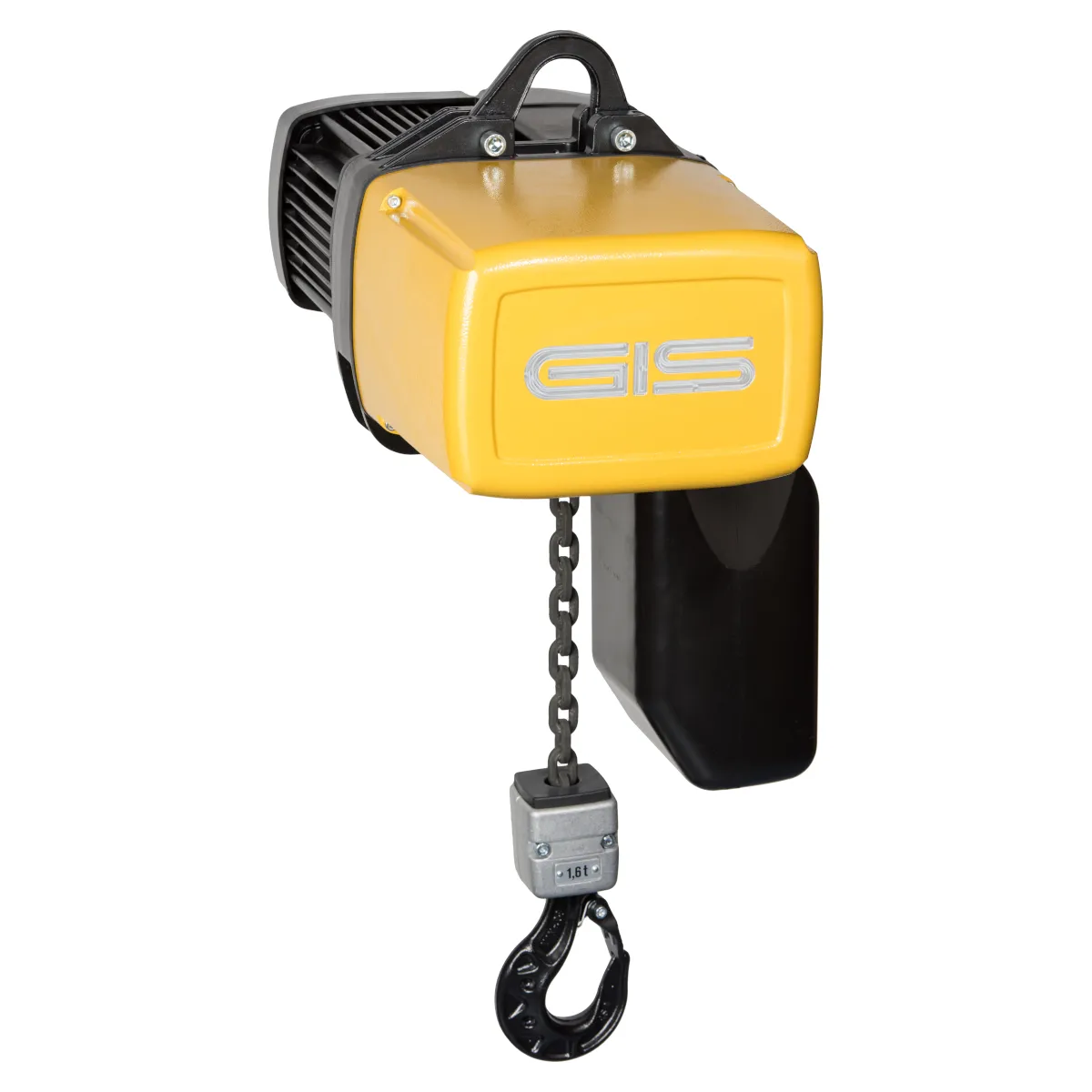
Like every hoist, a chain hoist should be sized to the heaviest regular load. The GIS GP series covers 100–6,300 kg in standard steps (250, 500, 1,000, 1,600, 2,000, 2,500 kg...) using different frame sizes and one- or two-fall chain arrangements. Two-fall versions double the capacity of a frame at half the lifting speed — a useful trade-off when you need 2 tonnes only occasionally. Lift heights are built to measure; standard configurations run from 3 m to tens of metres.
2. Lifting speed: how the work actually flows
Speed is the difference between a hoist that keeps up with production and one that everyone waits for:
- Single-speed — simplest and cheapest; fine for occasional lifts.
- Two-speed — the workshop standard: fast travel plus a creep speed for precise positioning. The speed pair is fixed by the model you select.
- Frequency inverter (stepless) — the GIS GPFU accelerates and decelerates steplessly (15–87 Hz, up to 9.6 m/min, capacities 100–2,500 kg, lift heights up to 60 m, IP65): soft starts protect the load and the structure, and positioning is millimetre-precise. Choose it for high cycle counts, sensitive loads or synchronized lifting.
All GIS hoists use a 42 V low-voltage control pendant for operator safety; radio remote control is available as an option in the configurator.
3. Suspension: hook, manual trolley or motorized trolley
A hoist on a fixed hook only lifts. Mounted on a trolley it also travels along the beam:
- Fixed hook or eye — for a single lifting point.
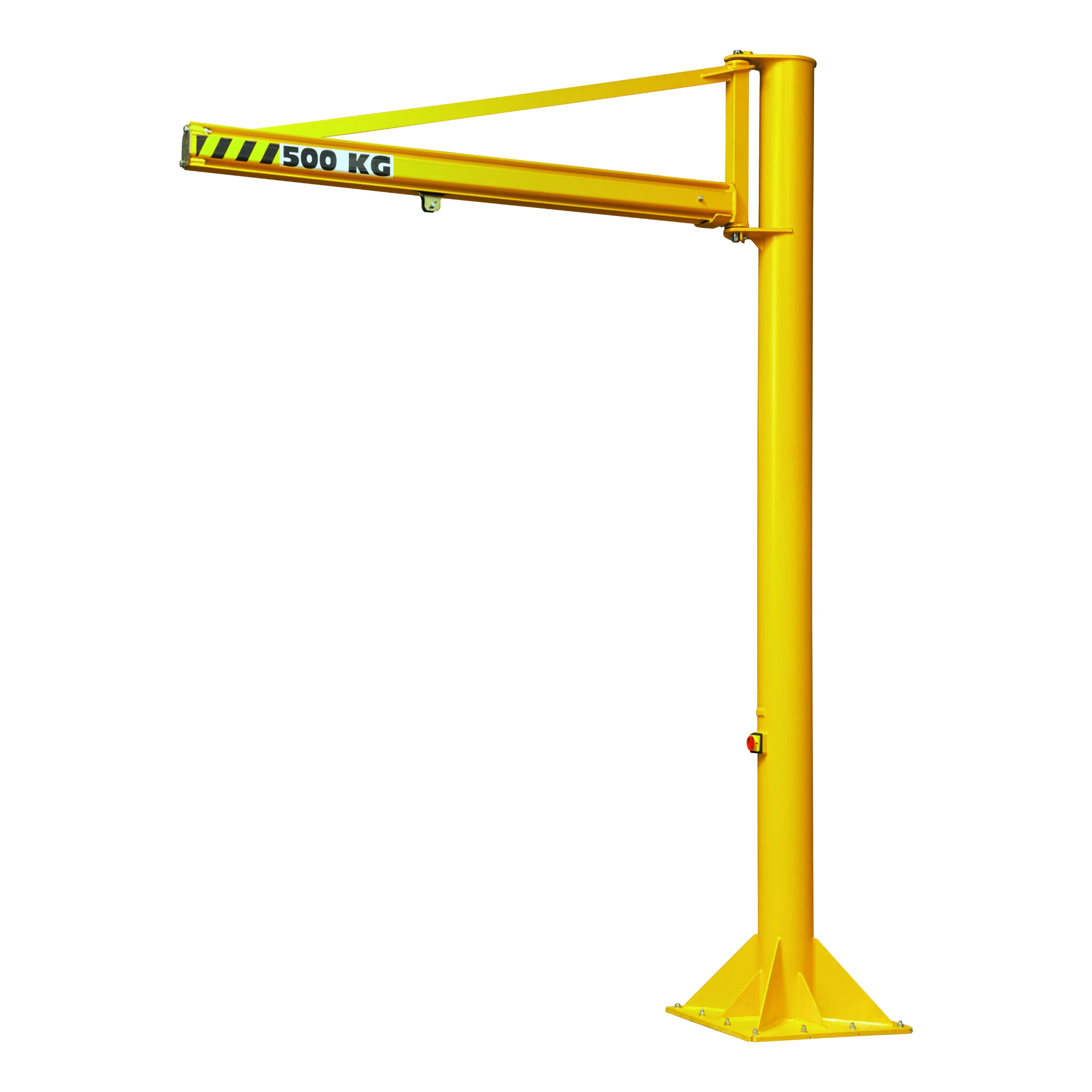
- Manual push trolley — the operator moves the load along the boom by hand; standard on jib cranes.
- Motorized trolley — button-controlled travel; the right choice above roughly 1,000 kg or on long runways where pushing a load by hand stops being reasonable.
If headroom is tight, the GIS GPK low-headroom hoists (250–4,000 kg) put the hoist beside the beam instead of under it, and a lengthened frame with suspension spacing up to 3,000 mm keeps long, bulky loads stable.
4. Duty class: the spec everyone skips (and regrets)
Every hoist is rated to an FEM/ISO duty class — a budget of load spectrum and running hours. A hoist that lifts near its full capacity many times an hour needs a higher duty class than one that occasionally lifts a light load, even at identical capacity. Under-classing is the most common cause of premature gearbox and brake wear. When you configure a GIS hoist you select the duty class; if you tell us the loads and cycles per shift, we calculate it for you.
5. Special environments
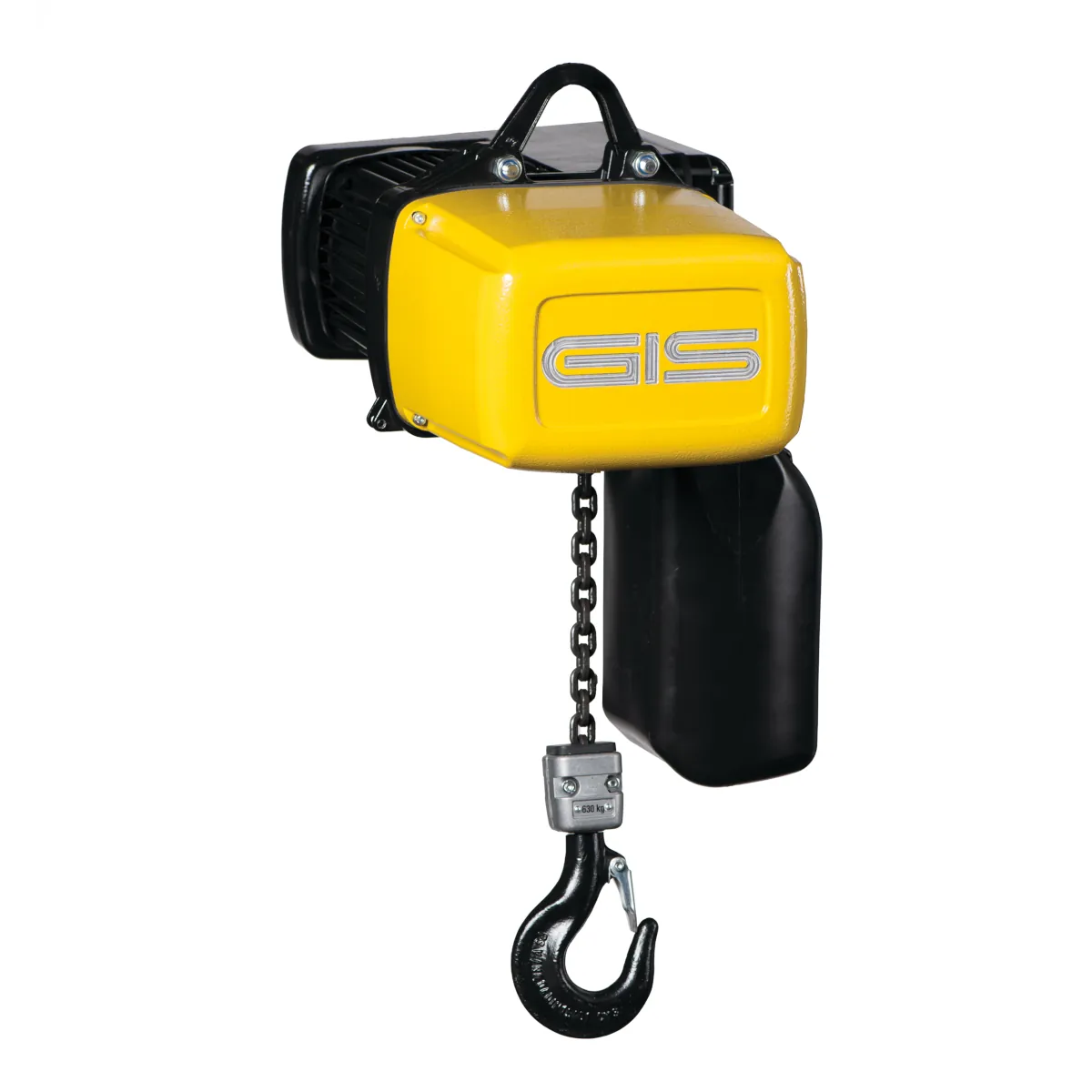
- Food, pharma, chemical, washdown: the GIS GPR corrosion-resistant hoist (125–1,250 kg) has a stainless load chain and load-path parts, KTL-coated aluminium housing, IP65 and NSF H1 food-compatible grease.
- Explosive atmospheres: the GIS GP ATEX covers 100–6,300 kg in certified explosion-proof execution.
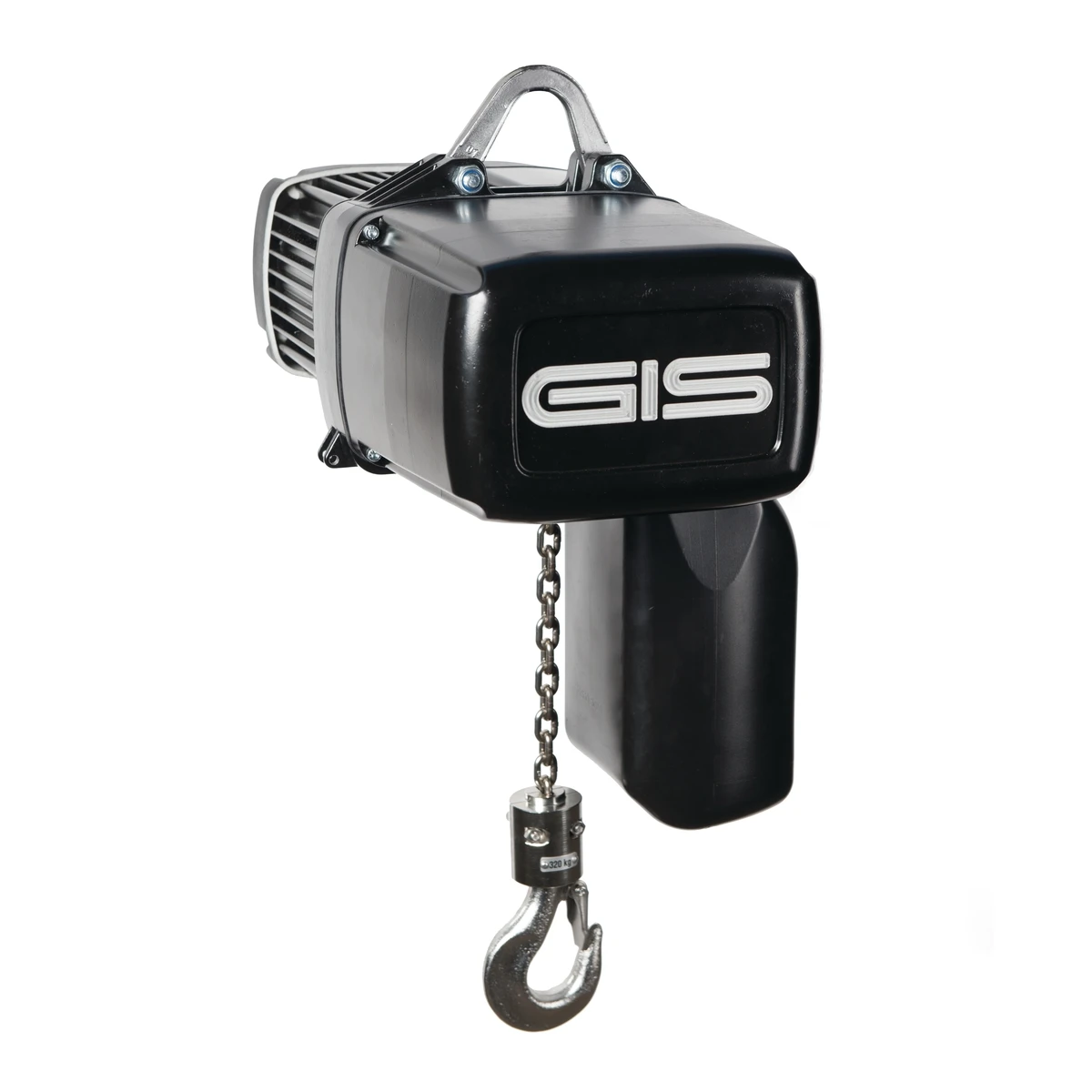
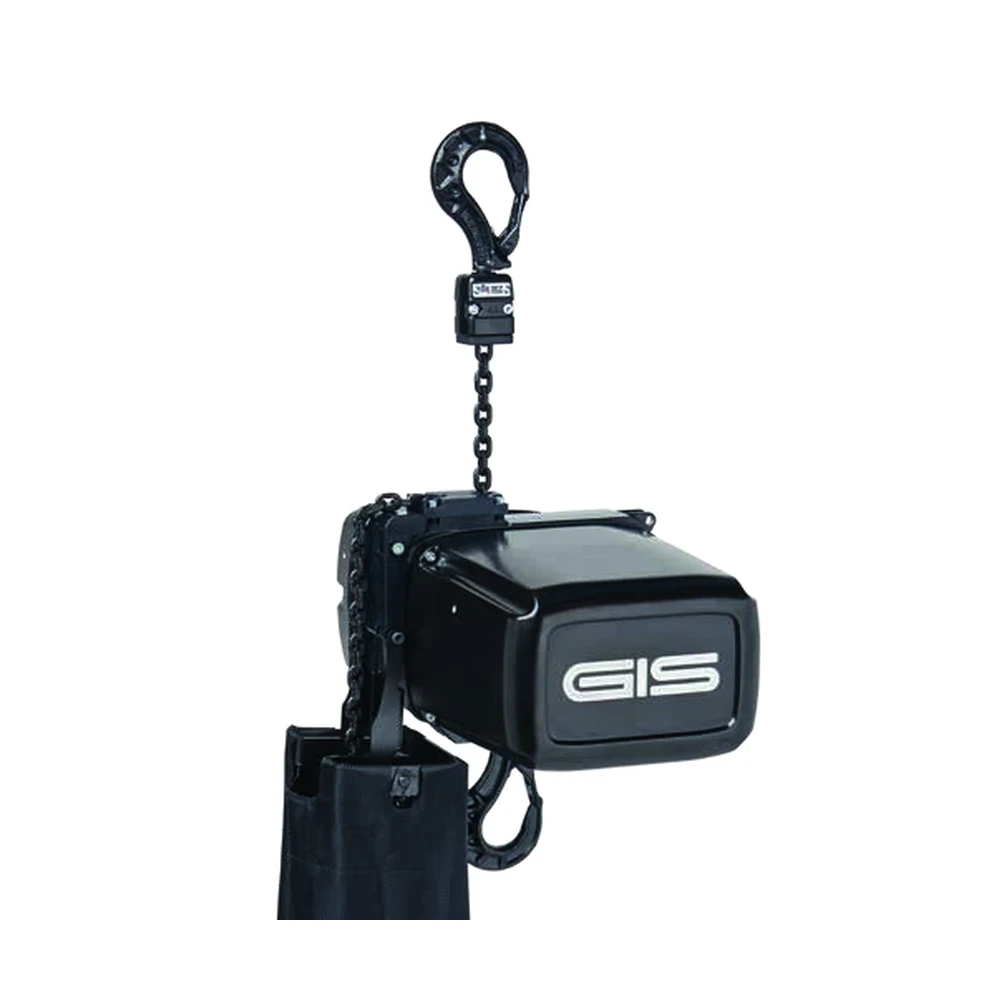
- Stage and events: the quiet, black GIS LP entertainment hoist works stationary or as a climbing hoist without modification, in D8, D8 Plus and C1 versions, IP65 for open-air use.
- One-hand workstation lifting: the GIS GPH Handy (250/500 kg) mounts the control handle directly at the chain end — the operator guides the load and drives the hoist with the same hand, at up to 16 m/min.
6. Electric or manual after all?
If the hoist is used a few times a week, a manual chain hoist (500 kg–10 t, lifts 3–10 m) does the same job for a fraction of the price — you pay with pulling the hand chain. The honest crossover: once lifting happens many times a day, or loads exceed about 500 kg, or precise positioning matters, the electric hoist pays for itself in saved time alone. Pair it with a jib crane (see our jib crane buying guide) or a gantry and the workstation is complete.
7. Standards, inspection, service life
GIS hoists are CE-marked and built to the European machinery and lifting standards (EN 14492-2 for power-driven hoists), with overload protection via slipping clutch and low-voltage control as standard. The 3-year warranty applies when the prescribed inspection and maintenance intervals are kept — plan the statutory yearly inspection and a chain lubrication routine, and a GIS hoist routinely outlives the workstation it was bought for.